


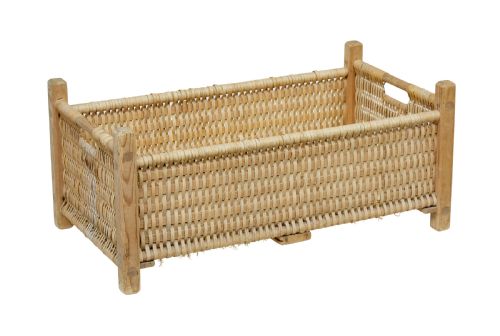


Natural Pine Basket
A natural pine basket brings honest warmth and utility to a room, offering robust storage shaped by Scandinavian country tradition.
Natural Pine Basket
When you search for a natural pine basket, you encounter practical vessels originating mainly from nineteenth-century Scandinavia. These pieces range from standard storage baskets and deep log carriers to larger barrels and tiered stands.
The version you are most likely to meet on this page is the hand-woven pine basket from the nineteenth century. Makers constructed these items for heavy domestic use, employing local timber to create resilient storage solutions.
Beyond basic baskets, the selection includes related forms such as wood split vessels and storage barrels. Each item reflects the rustic farmhouse and rustic country styles characteristic of early Scandinavian domestic life.
Construction and materials
Craftsmen utilised pine, timber, and wood splint to build these baskets by hand. The primary technique relied on weaving flexible strips of wood into sturdy walls capable of bearing heavy loads.
Selected pieces incorporate metal and iron elements for added reinforcement and structural stability. This combination of timber and iron ensured the vessels could withstand rigorous daily demands like holding logs.
Natural Pine Basket Retail Price Guide 2026
Typical asking prices for natural pine basket among the pieces listed under this phrase on Sellingantiques today, from the lower quarter to the upper quarter. They describe what is for sale here now, not the wider market.
The listings span the nineteenth century up to 1920, uniting pine, wood splint, and iron elements within Scandinavian country styles.
Assessing quality and craftsmanship
Quality in a natural pine basket rests upon the tightness of the weave and the uniformity of the split wood. Superior examples display disciplined hand manipulation that maintains structural integrity across the entire vessel.
The presence of supplementary materials like iron work distinguishes exceptional storage barrels and stands from simpler domestic wares. Well-preserved surfaces retain an honest patina that speaks to genuine age rather than artificial distress.
The Natural Pine Basket Glossary
- Bentwood
- Wood that has been shaped by heating or steaming. This method allows makers to form curved frames and handles without breaking the timber.
- Wood Splint
- Thin strips of wood peeled or sliced from a log. Craftsmen weave these flexible pieces together to form the body of utilitarian baskets.
- Pine
- A softwood commonly utilised in Scandinavian furniture and utility objects. It provides a light colour and workable grain suitable for hand weaving.
- Log Basket
- A heavy-duty vessel designed specifically for holding firewood near a hearth. These forms typically feature reinforced bases to handle heavy timber.
- Tiered Stand
- A multi-level structure utilised for vertical storage or display. Early twentieth-century examples apply woven pine techniques to standing furniture.
Natural Pine Basket: Frequently Asked Questions
What were natural pine baskets used for?
These vessels served everyday domestic needs in Scandinavian homes, acting as reliable containers for household goods and provisions.
Larger variations functioned specifically as log baskets or storage barrels to manage heavy supplies near the hearth.
How do I date a pine basket?
Dating relies on examining the construction methods, tool marks, and the specific characteristics of the woven pine or wood splint.
Nineteenth-century examples display hand-formed qualities distinct from later twentieth-century production standards.
Are these baskets suitable for daily storage?
The robust materials and historical weaving techniques make these pieces well-suited for holding items like blankets or firewood.
Their sturdy timber construction ensures they remain functional decorative objects in modern interiors.
Where do these pieces originate?
The items recorded here stem predominantly from Scandinavian country workshops, reflecting regional rural traditions.
Swedish makers contributed heavily to the surviving inventory of hand-woven pine storage vessels.