
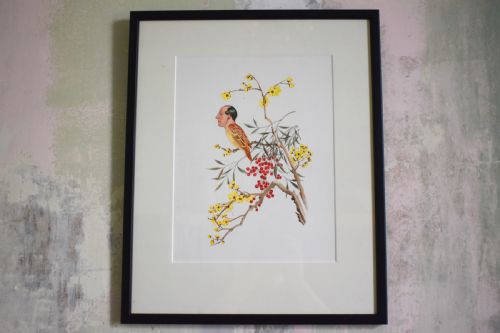
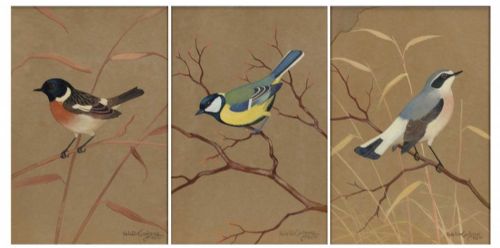


Natural History Watercolour Painting
These natural history watercolour painting works capture birds, animals and flora with precise detail, offering both scientific observation and decorative charm for your walls.
Natural History Watercolour Painting
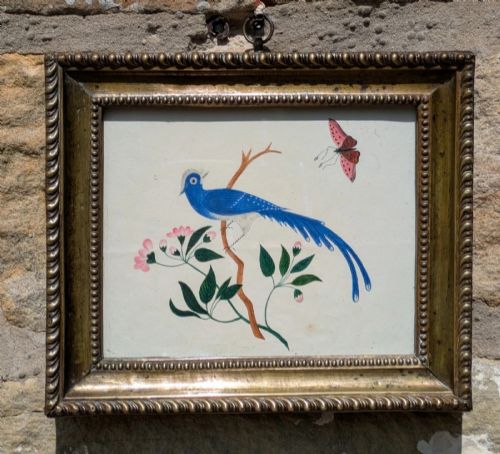
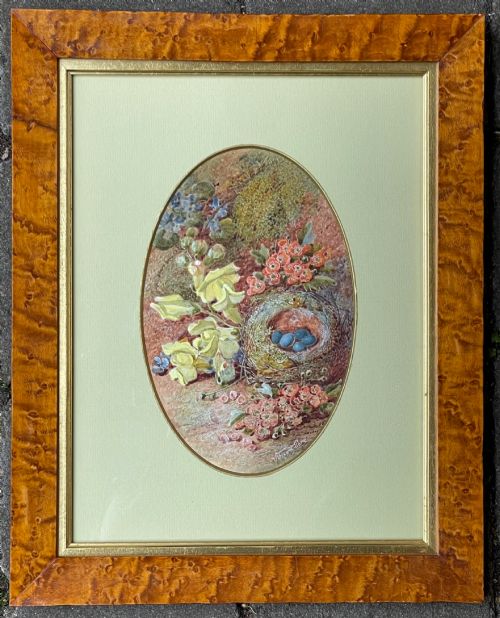
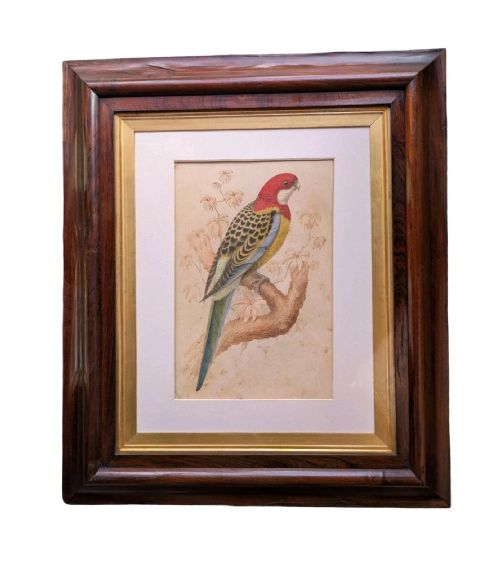
A natural history watercolour painting depicts subjects from the natural world, focusing predominantly on birds, animals, flowers and insects. These works range from rigorous scientific illustrations to more expressive avian studies created across various centuries.
The pieces available span multiple periods including the Regency era, Victorian times, the Edwardian period and mid-century modern decades. You will frequently encounter framed paintings of exotic parrots, songbirds, lapwings and botanical studies.
Originating from both British and international hands, these artworks appear on paper surfaces and pith, often preserved behind glass within ebonised or giltwood frames. They serve as historical records of flora and fauna as well as accomplished decorative art.
Materials and Techniques
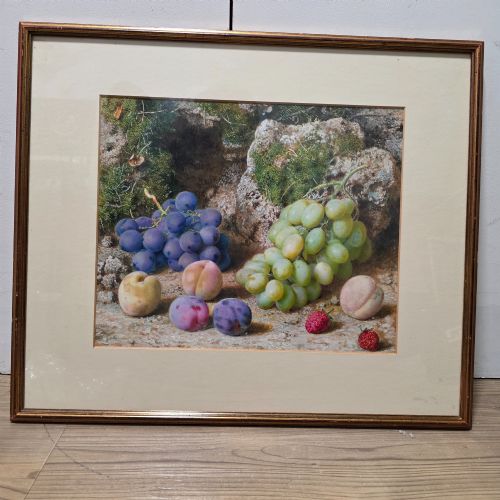
Artists utilise watercolour pigment and gouache applied directly onto paper or pith. The water-soluble paints allow for delicate washes and translucent layering to render the fine plumage of birds or the subtle tones of fruit and flowers.
Many works are housed in traditional wooden frames, sometimes featuring ebonised finishes alongside deep giltwood mounts or protective glass. These framing elements protect the fragile watercolour surface from environmental damage over time.
Mother Faux’s Macaw peers out from history alongside a menagerie of parrots, jays, thrushes and prowling leopards.
Assessing Quality
Quality rests upon the precision of the draughtsmanship and the artist's ability to render anatomical accuracy in birds, animals or botanical specimens. Superior examples display meticulous brushwork that captures the texture of feathers or petals with vivid realism.
The vibrancy of the pigments and the preservation of the paper also dictate the standing of a piece. Works executed by accomplished named painters command attention through their compositional balance and lifelike portrayal of the natural subject.
Vincent Clare·R. Hurst·John Sherrin·Ralston Gudgeon·M Simpson·Charles F. Tunnicliffe·William Andrews Nesfield·Harry Bright·R Lauritsch VI·Robin Hill·Michael Jackson·Paul-Louis Barruel·Donald Watson·William B.Hough·Cuthbert Edmund Swan
The Natural History Watercolour Painting Glossary
- Gouche
- An opaque water-based paint that includes a white pigment binder, producing a heavier and more solid colour block than traditional transparent watercolour.
- Pith painting
- Artwork created on thin slices of spongy plant pith, commonly produced in nineteenth-century China for export and notable for its luminous, velvet-like surface texture.
- Ebonised frame
- Wood that has been treated or stained black to imitate ebony, providing a dark, contrasting border frequently utilised for antique paintings and works on paper.
- Giltwood mount
- A decorative framing component covered with gold leaf, adding reflective warmth around the border of a watercolour or botanical study.
- Botanical study
- A detailed artistic rendering of plants, flowers or fruit intended to record botanical characteristics with scientific precision.
Natural History Watercolour Painting: Frequently Asked Questions
How were these paintings originally used?
Natural history watercolours served as scientific records for ornithologists and botanists before the advent of colour photography. Naturalists and travellers commissioned or painted them to document newly discovered species in precise detail.
Over time, collectors mounted these studies in portfolios or framed them to display their appreciation for natural philosophy and domestic decoration in period interiors.
Are these paintings executed on paper?
The majority of these works use watercolour pigment or gouache applied directly onto paper surfaces. You will also find examples painted on delicate Chinese pith.
Artists favoured paper for its ability to absorb fine washes of pigment, allowing them to build up translucent layers of colour for feathers and petals.
How should I frame and display them?
Watercolours are sensitive to direct sunlight, so they require placement away from bright windows to prevent the pigments from fading. Framing behind glass with conservation-grade mounts protects the fragile paper surface from atmospheric moisture.
Many period pieces retain their original ebonised wood frames or giltwood mounts, which complement the traditional aesthetic of the artwork.
How do I identify the period of a piece?
Dating relies on stylistic clues, framing methods, artist signatures and the type of paper or support used. Victorian and Edwardian works often feature detailed naturalism, whereas mid-century pieces display a different stylistic hand.
Signatures and inscriptions on the reverse or front of the paper frequently point directly to the working dates of the artist.