

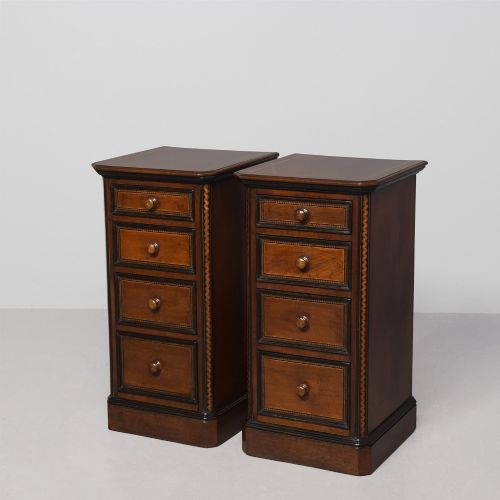
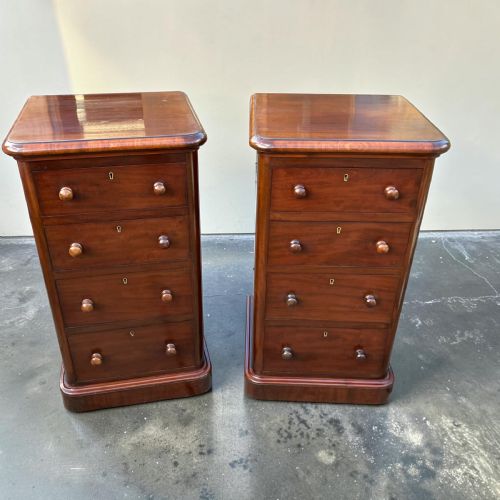
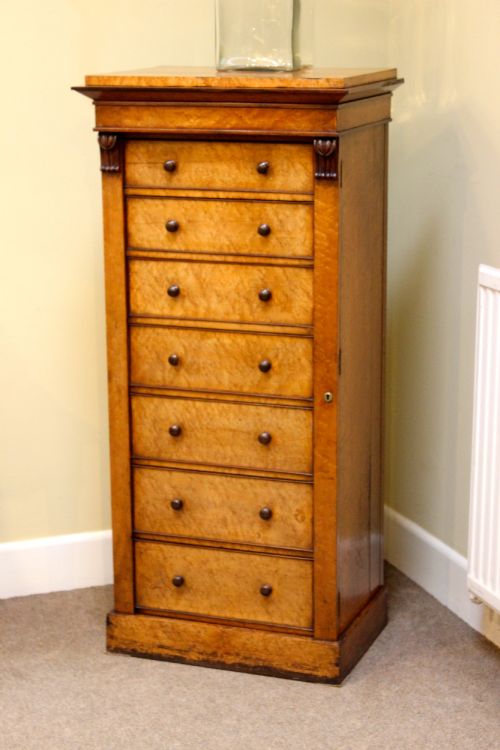
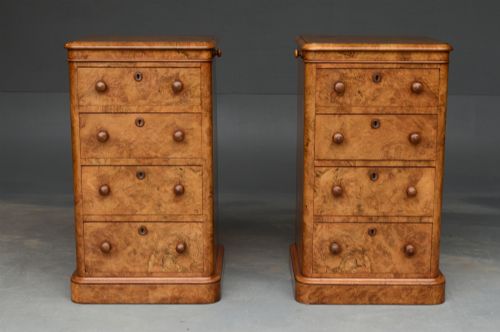
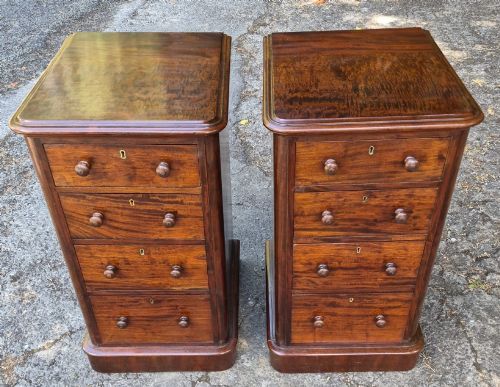
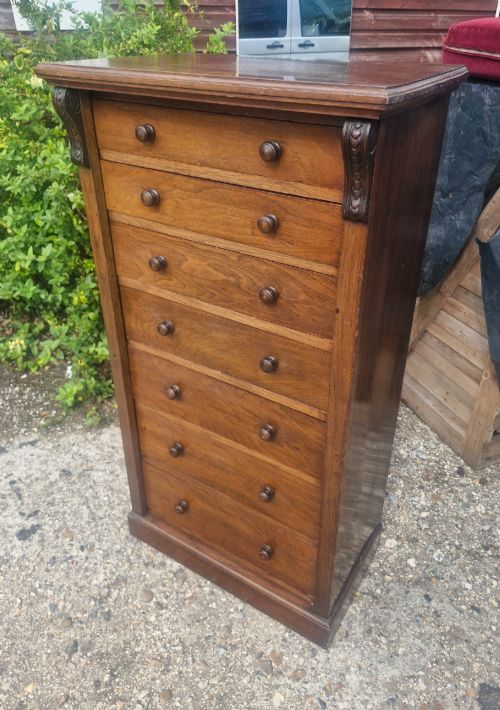
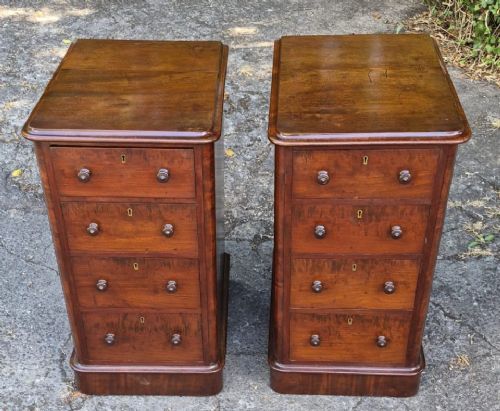
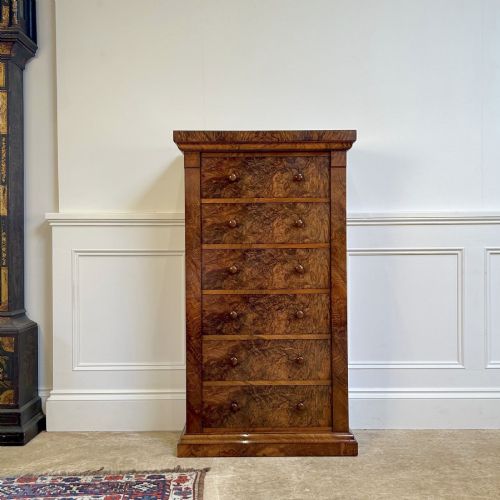
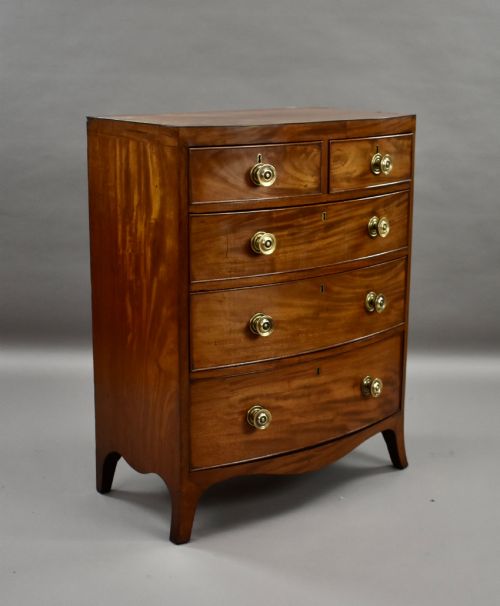
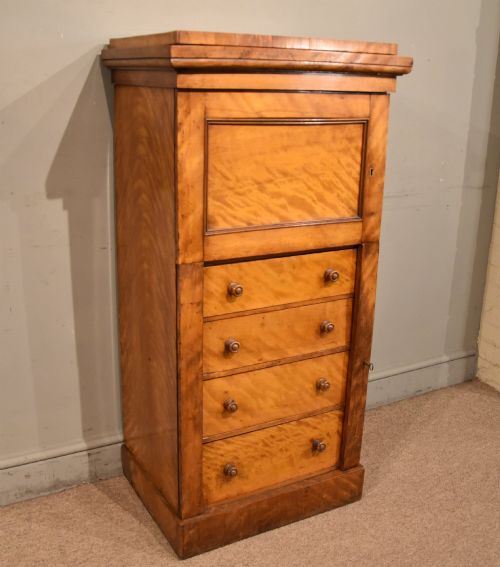

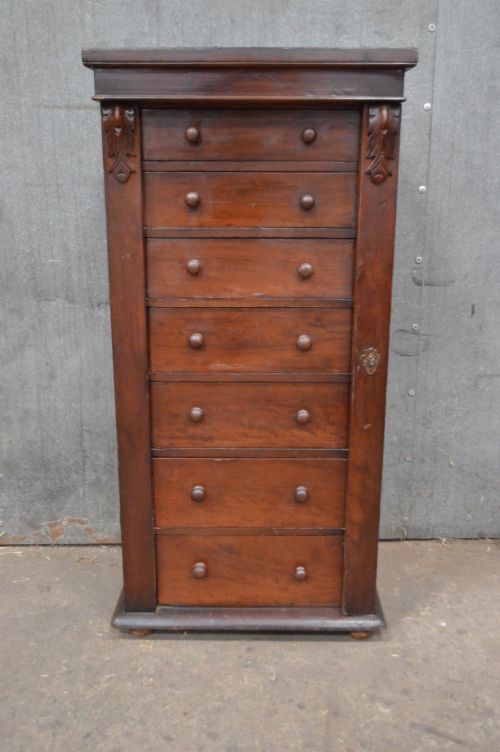
Narrow Wooden Tallboy
A narrow wooden tallboy brings vertical storage into a room without dominating the floor space, answering the old problem of where to put things.
Narrow Wooden Tallboy
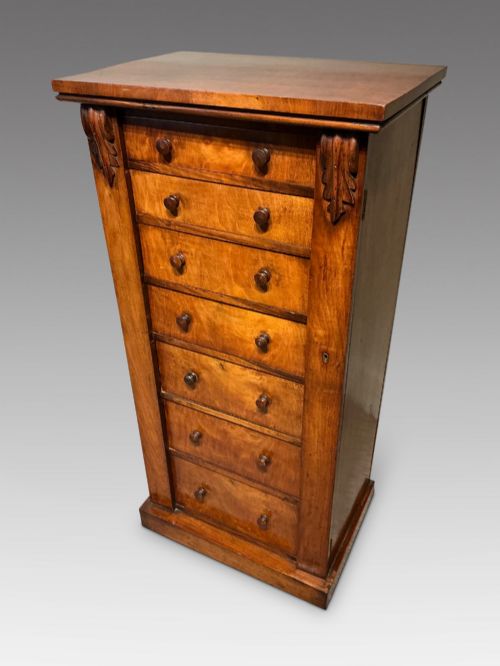
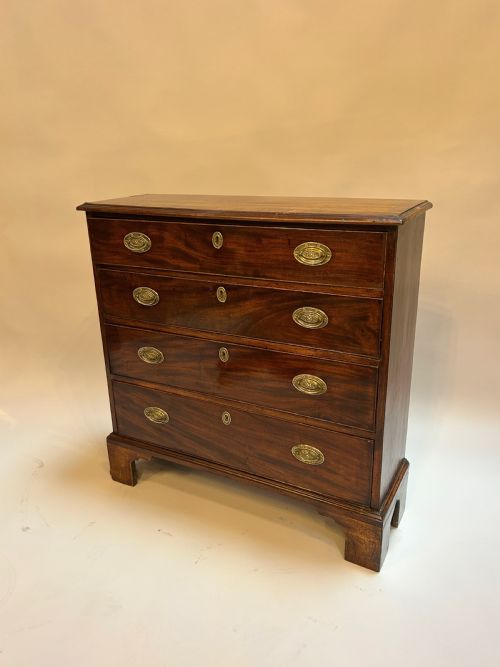
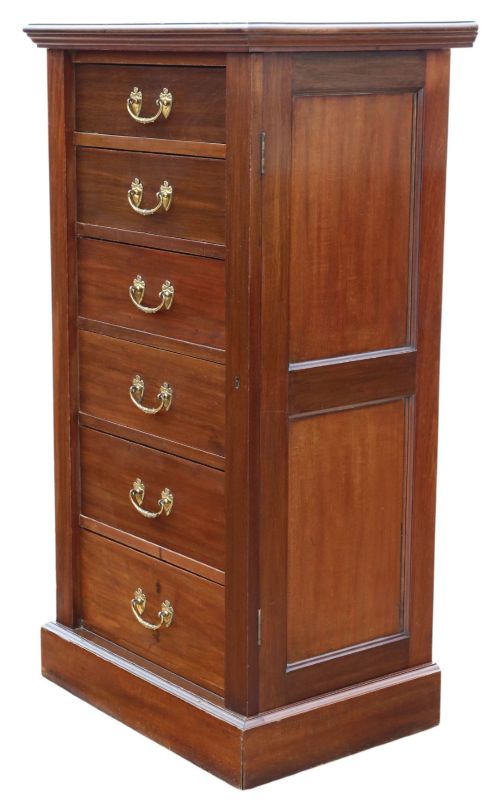
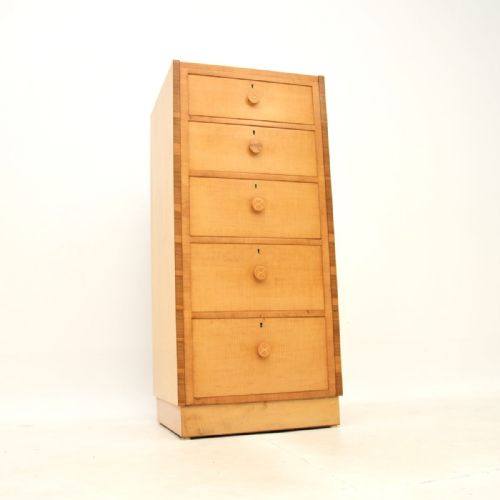
A narrow wooden tallboy stands tall and slim, designed to hold much in a small footprint. These pieces include Wellington chests, tall chests of drawers, and compact cupboards built for modest rooms.
The most common version on this page is the Victorian mahogany or burr walnut Wellington chest, hinged with a locking stile down the right side to secure the stack of drawers.
Makers and cabinet-makers built these vertical chests from the Georgian period through the Edwardian years, using dense timbers to keep the narrow frames rigid and true.
Materials and construction
Cabinet-makers relied on solid mahogany, walnut, oak, and pine, often faced with figured burr veneers to catch the light on narrow drawer fronts. Dovetail joints hold the drawer corners together, while oak or pine formed the secondary internal framing.
Brass handles, drop pulls, and locking mechanisms add weight and function to the drawer faces. Timber was chosen for its grain and stability, allowing tall, narrow carcasses to withstand decades of opening and closing.
Narrow Wooden Tallboy Retail Price Guide 2026
Typical asking prices for narrow wooden tallboy among the pieces listed under this phrase on Sellingantiques today, from the lower quarter to the upper quarter. They describe what is for sale here now, not the wider market.
Listings feature narrow wooden tallboys spanning the Georgian, Victorian, and Edwardian periods, constructed in mahogany, walnut, oak, and pine.
The measure of quality
Quality rests in the choice of veneer and timber figuring, where book-matched burr walnut or rich mahogany elevates a utilitarian chest into a showpiece. The crispness of the drawer linings and the weight of the locking stile dictate the standard of the workshop.
Proportion and restraint separate fine cabinet work from ordinary joinery. A well-made narrow wooden tallboy maintains clean vertical lines without twisting, keeping drawers running smoothly in their tracks.
Hille·Reprodux·S. Mordan & Co·Gillows of Lancaster·Maple & Co
The Narrow Wooden Tallboy Glossary
- Wellington chest
- A tall, narrow chest of drawers featuring a hinged locking stile on the right side that secures all drawers with a single padlock or key. It originated in the early nineteenth century.
- Tallboy
- A tall chest of drawers, often built in two sections with a smaller set stacked upon a larger base. It maximises vertical storage in rooms with limited floor space.
- Veneer
- A thin slice of figured wood, such as burr walnut or mahogany, applied over a stable secondary timber carcass. This technique allows cabinet-makers to display striking grain patterns.
- Dovetail joint
- A method of joining two pieces of wood by interlocking wedge-shaped fingers. It provides exceptional tensile strength for drawer construction.
- Stile
- A vertical framing member of a panelled door or the locking bar on the side of a Wellington chest. It provides structural rigidity to the piece.
Narrow Wooden Tallboy: Frequently Asked Questions
What is a narrow wooden tallboy used for?
These tall chests provide substantial drawer space within a minimal footprint, making them suitable for bedrooms or dressing rooms where floor area is limited. They hold folded garments, linens, or papers without crowding the room.
The vertical design draws the eye upward, utilising height rather than width to solve storage problems in period and modern interiors alike.
How do I spot a Wellington chest?
A Wellington chest is identified by its tall, narrow proportions and a hinged wooden locking bar on the right edge of the frame. When the cabinet is locked, this bar swings over the drawer edges to secure them all at once.
Most examples date from the Victorian period and feature six or seven shallow drawers stacked neatly from top to bottom.
Where should I place a tall chest?
Place a narrow wooden tallboy against a solid wall in a bedroom, hallway, or study where floor space is tight. Because of their height and narrow base, securing them to the wall with a discreet bracket is wise for safety.
Keep them away from direct heat sources and strong sunlight to protect the polished wood surfaces and delicate veneers from drying out.
How do I date a wooden tallboy?
Dating relies on timber choices, construction methods, and hardware styles found across the piece. Georgian and Regency pieces show hand-cut dovetails and dense mahogany, while Victorian versions often feature burr walnut veneers and locking stiles.
Edwardian and later twentieth-century examples tend to use lighter secondary woods and simpler internal framing while retaining traditional proportions.