

Narrow Wooden Drawers
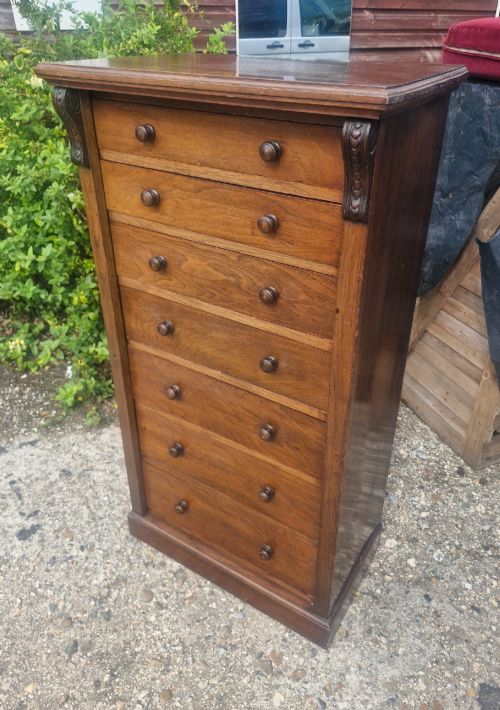
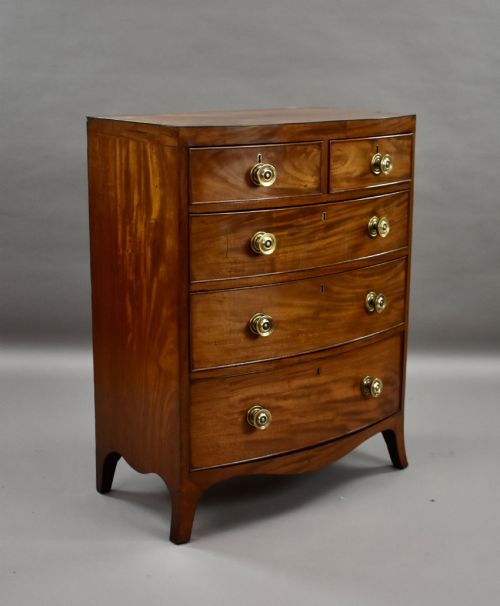
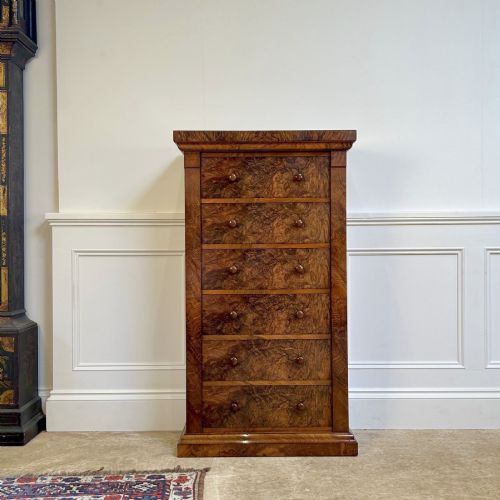
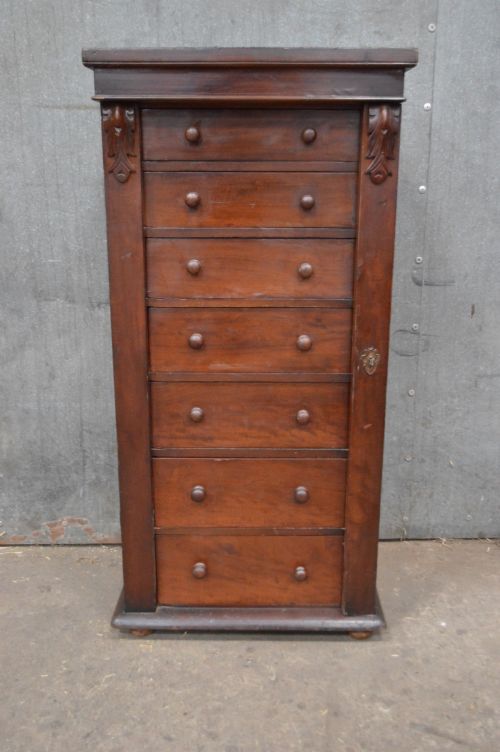
These narrow wooden drawers bring vertical storage and compact proportions into smaller rooms, combining practical capacity with period character.
Narrow Wooden Drawers
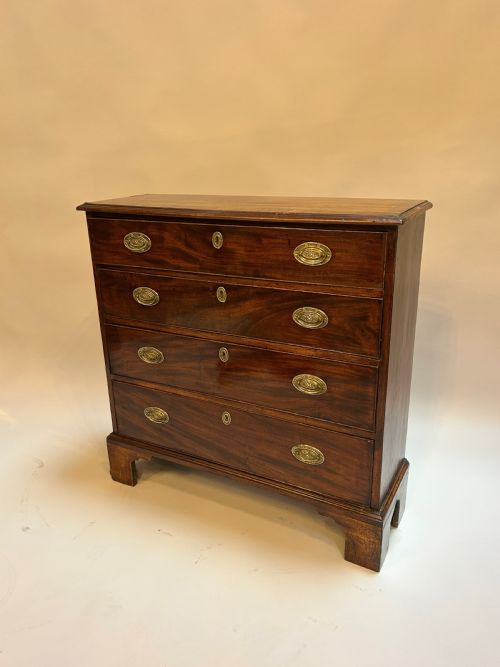
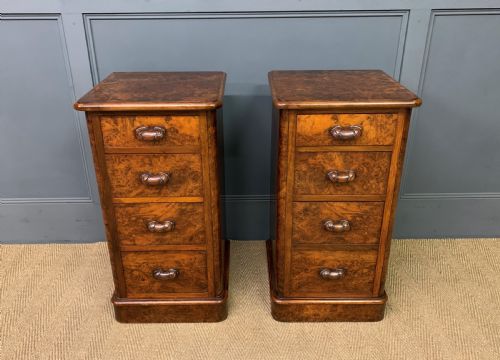
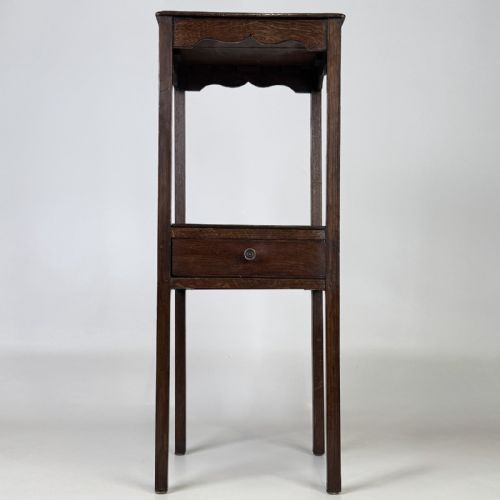
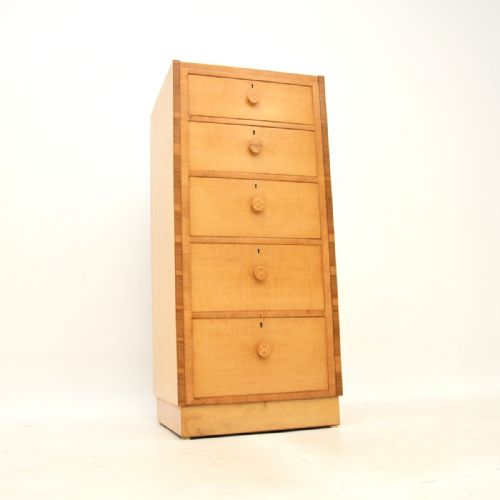
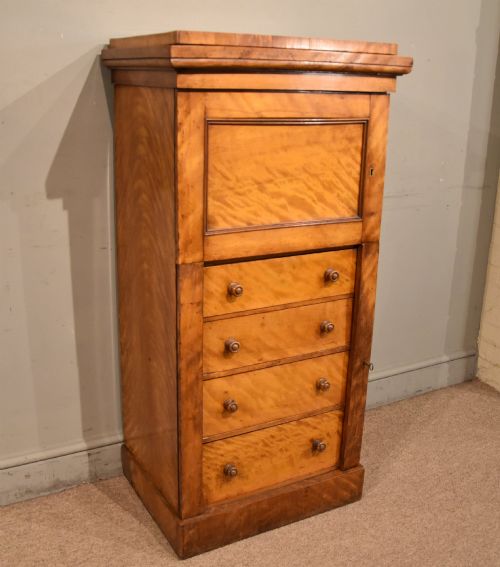
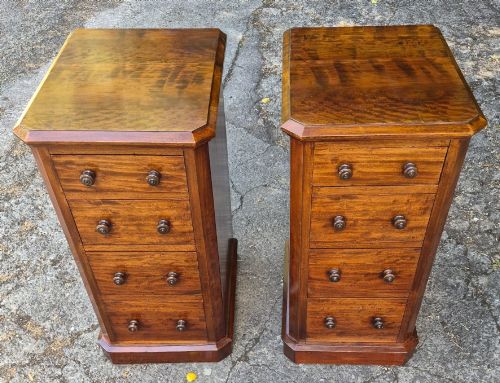
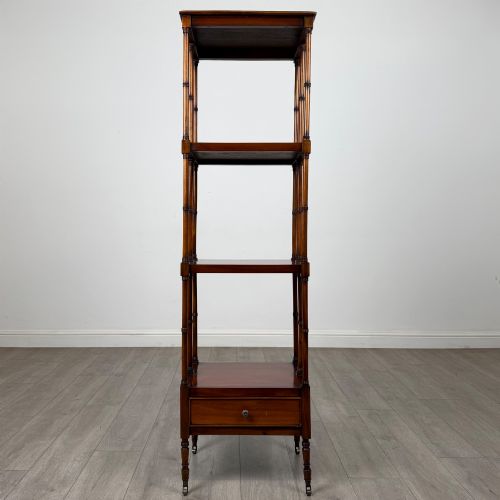
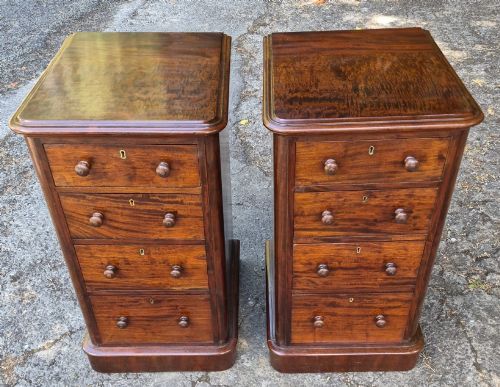
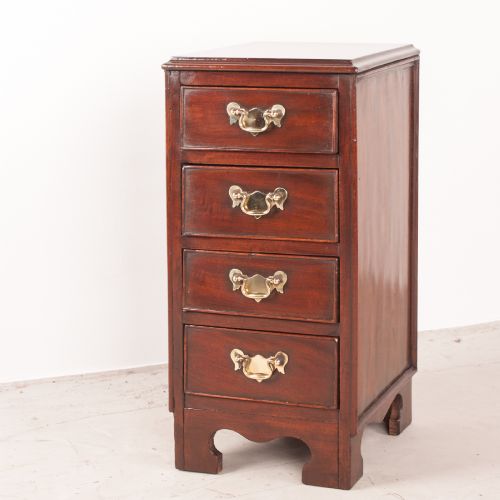
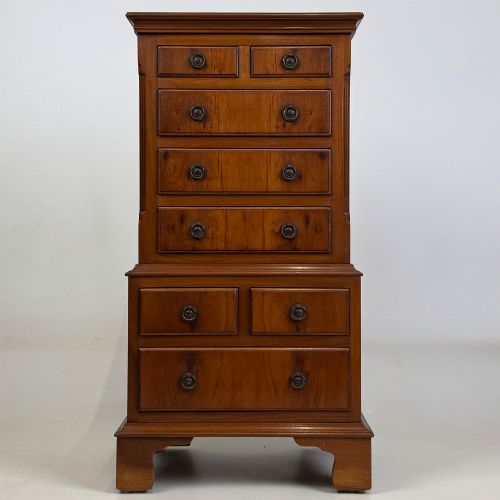
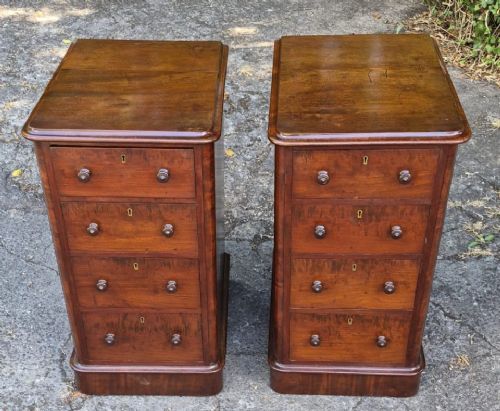
When searching for narrow wooden drawers, buyers encounter tall, compact forms designed to fit tight spaces without sacrificing storage capacity. These pieces primarily manifest as Wellington chests, tallboys, bedside chests, and slim cabinets spanning the Victorian, Edwardian, and Georgian periods.
The selections on this page lean heavily towards mahogany and walnut Wellington chests alongside oak and pine bedside variants. These items serve well in bedrooms and studies where floor space is at a premium yet traditional cabinet work is desired.
Makers represented in the inventory include Hille, Reprodux, and S. Mordan & Co, alongside unmarked pieces from the nineteenth and early twentieth centuries. The assortment ranges from utilitarian pine to finely figured burr walnut and mahogany.
How they were made
Cabinet makers utilised dense hardwoods like mahogany, walnut, and oak to construct these narrow frames, often employing secondary timbers for internal drawer linings. Burr walnut and satinwood veneers added decorative surface pattern to the fronts of finer items.
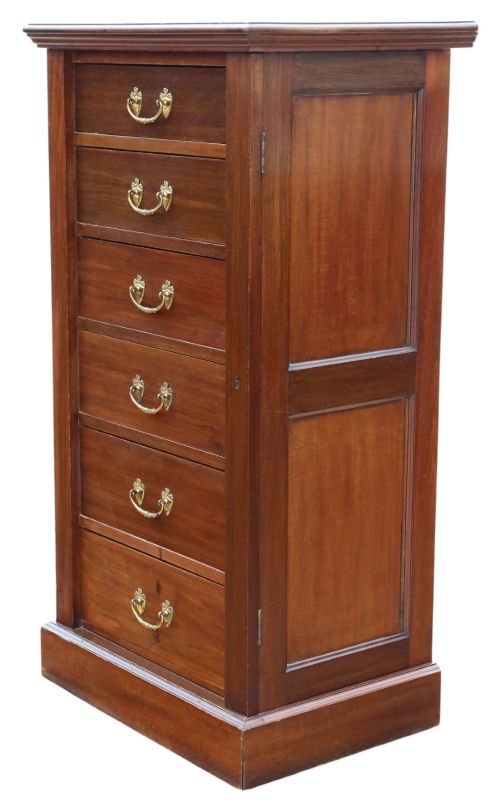
Construction techniques relied on tight dovetail joints for drawer assembly and sturdy mortise and tenon frames to support the vertical load. Wellington chests utilised a hinged locking stile secured with a key to simultaneously lock all drawers in place.
Narrow Wooden Drawers Retail Price Guide 2026
Typical asking prices for narrow wooden drawers among the pieces listed under this phrase on Sellingantiques today, from the lower quarter to the upper quarter. They describe what is for sale here now, not the wider market.
Some Wellington chests lock up tight with a single key, keeping midnight snack stashes safe from curious housemates.
What varies in quality
The grade of timber selection marks the primary distinction between standard utility items and high-end pieces, particularly in the figuring of burr walnut or mahogany veneers. Superior examples display carefully matched grain patterns across every drawer front and vertical stile.
Hardware and internal detailing separate everyday workshop production from bespoke cabinet work. Fine examples feature original brass pulls, secret locking mechanisms, and solid mahogany drawer boxes with hand-cut dovetails.
Hille·Reprodux·S. Mordan & Co·Gillows
The Narrow Wooden Drawers Glossary
- Wellington chest
- A tall, narrow chest of drawers typically featuring seven drawers secured by a hinged locking bar on one side. This design originated in the nineteenth century to store linen or documents securely.
- Tallboy
- A tall chest of drawers standing higher than a standard chest, often built in two stacked sections. They maximise storage while occupying minimal floor space.
- Dovetail
- A traditional interlocking joint used in drawer construction. Hand-cut variations indicate older, pre-machine furniture production.
- Stile
- A vertical framing member of a cabinet or drawer front. On locking chests, one stile acts as a hinged flap to secure the drawers.
Narrow Wooden Drawers: Frequently Asked Questions
What is a Wellington chest?
A Wellington chest is a tall, narrow set of drawers distinguished by a locking side flap that secures the entire column.
These pieces were traditionally used for keeping documents or valuable garments safe in nineteenth-century bedrooms.
How do I style a narrow chest?
These compact chests fit easily into alcoves, narrow hallways, or beside beds where standard furniture is too wide.
Their vertical proportions draw the eye upward, making them functional statement pieces in rooms with limited floor space.
Are these drawers suitable for daily use?
Solid hardwood construction and traditional dovetail joints make period chests durable enough for modern storage needs.
Drawers may require occasional waxing to ensure smooth gliding along their wooden runners.
What woods were commonly used?
Mahogany and walnut dominate the finer examples from the Victorian and Edwardian eras, often featuring decorative veneers.
Oak and pine appear more frequently in utilitarian or country pieces designed for everyday domestic utility.