




Narrow Wooden Bedside Table
A narrow wooden bedside table keeps small nighttime essentials close at hand while fitting into tight spaces beside the bed.
Narrow Wooden Bedside Table
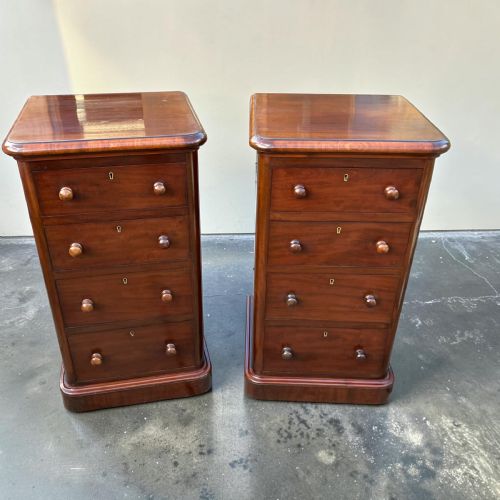
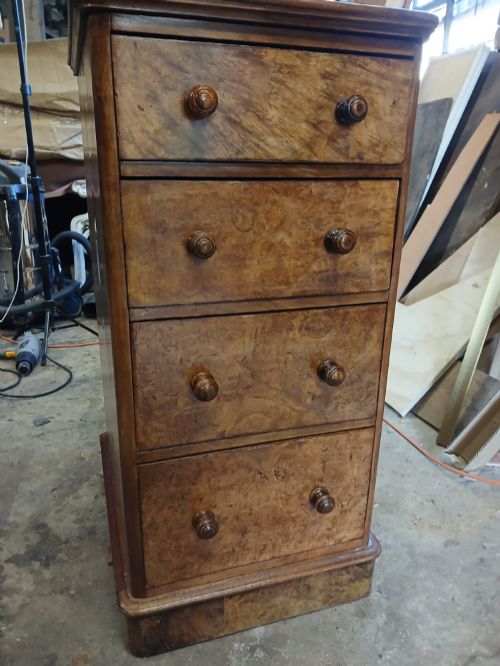
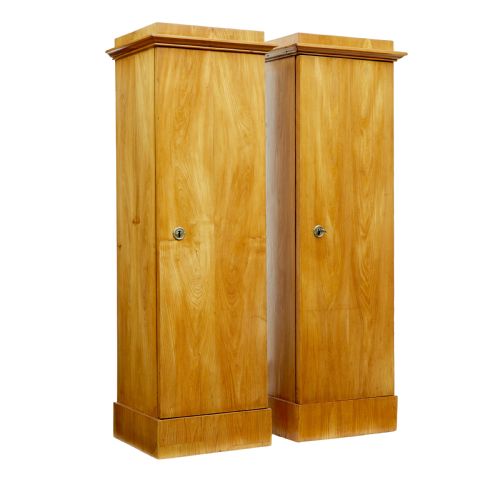
A narrow wooden bedside table provides a compact surface and storage beside the bed, emerging in various forms across the nineteenth and early twentieth centuries. These pieces appear as small chests of drawers, cabinets with cupboards, and simple side tables designed to occupy minimal floor space.
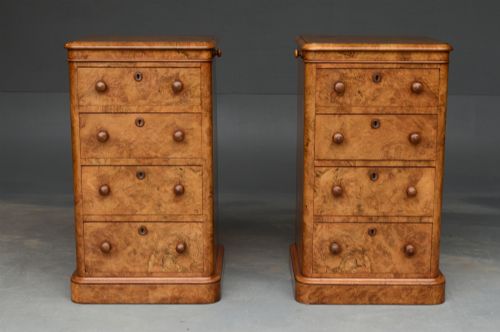
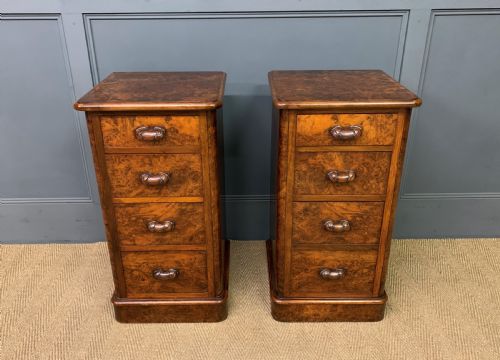
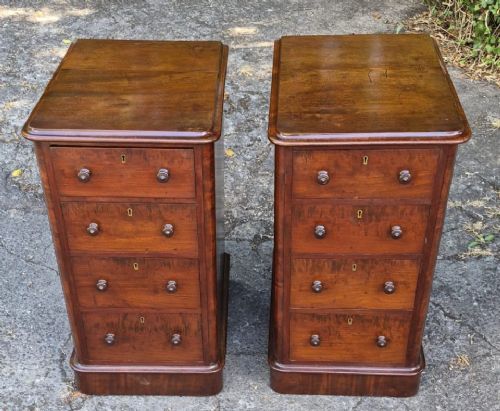
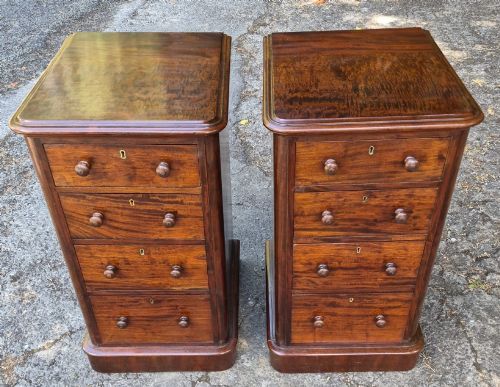
Buyers browsing this selection most frequently encounter Victorian and Edwardian examples made from mahogany or burr walnut. Many of these items survive in matched pairs, offering symmetry for twin beds or larger master bedrooms.
How these tables were constructed
Cabinet makers utilised dense hardwoods such as mahogany, walnut, and oak to build sturdy frames that could withstand daily use. Selected pieces feature flame mahogany veneer or satinwood and brass details to add visual texture to the timber surfaces.
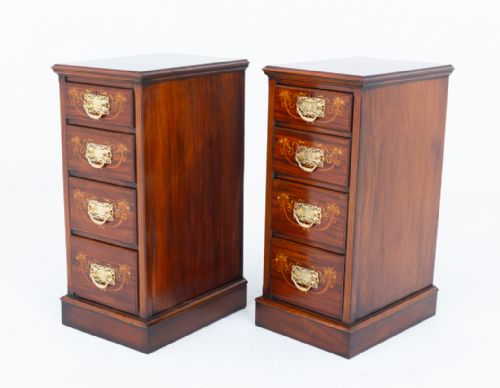
Joinery techniques focused on durability, incorporating dovetailed drawer boxes and panelled cabinet doors. Some variants include inset marble tops or subtle marquetry inlay that demonstrates finer workshop skills of the period.
Narrow Wooden Bedside Table Retail Price Guide 2026
Typical asking prices for narrow wooden bedside table among the pieces listed under this phrase on Sellingantiques today, from the lower quarter to the upper quarter. They describe what is for sale here now, not the wider market.
Victorian campaign bedside cabinets were built ready for rough military travel, yet they ended up holding bedside novels in quiet country bedrooms.
What separates standard pieces from the finest examples
Quality rests heavily on the selection of timber and the precision of the cabinetwork. Tables utilising highly figured burr walnut or carefully matched flame mahogany veneer stand apart from plain utility items.
The integration of original brass hardware, clean drawer movement, and balanced proportions signal superior workshop production. Matched pairs also command greater interest than solitary pieces due to the difficulty of finding identical survivors.
The Narrow Wooden Bedside Table Glossary
- Burr walnut
- A prized timber cut from the growth warts of walnut trees, yielding complex swirling grain patterns. It was frequently utilised on high-status Victorian furniture surfaces.
- Flame mahogany veneer
- A thin slice of mahogany timber cut from the fork of the tree to create a distinctive flickering flame effect. This technique maximised visually striking grain across drawer fronts.
- Campaign style
- Portable furniture originally built for military officers on the move, typically featuring recessed brass handles and reinforced corners. These pieces prioritise practical modular design.
- Inlay
- A decorative technique where contrasting woods or brass are embedded into the primary timber surface to form geometric or floral patterns. Edwardian makers applied this method to lighten darker cabinet woods.
Narrow Wooden Bedside Table: Frequently Asked Questions
How do I measure for a narrow bedside table?
Measure the exact distance from your mattress height to the floor, as older tables vary considerably in elevation. Account for the swing clearance of cabinet doors or drawer pulls so the piece functions smoothly in a confined gap.
Check the overall width against your available wall space, remembering that projecting cornices or hardware can add extra centimetres to the footprint.
Were these tables originally sold in pairs?
Many nineteenth and early twentieth century bedside pieces were indeed produced as matching pairs for principal bedrooms. Surviving pairs remain highly sought after for creating balanced bedroom layouts.
Single tables also appear frequently, often originating from smaller rooms or guest quarters where space dictated a solitary piece.
How do I care for antique wood surfaces?
Maintain timber surfaces by dusting regularly with a soft, dry cloth and avoiding silicone-based polishes that build up over time. Natural beeswax applied sparingly helps nourish older mahogany and walnut.
Keep wooden bedside tables away from direct heat sources and radiators to prevent the timber from drying out or splitting.
Can I use a side table as a bedside chest?
Open side tables and lamp tables function well if you prefer an airy look without enclosed storage. They provide adequate surface area for a reading lamp and a glass of water.
If you require hidden storage for nighttime items, opt for bedside cabinets or small chests of drawers that conceal clutter behind doors.