





Narrow Wood Console
A narrow wood console delivers surface space in tight hallways and compact rooms without crowding the floor.
Narrow Wood Console
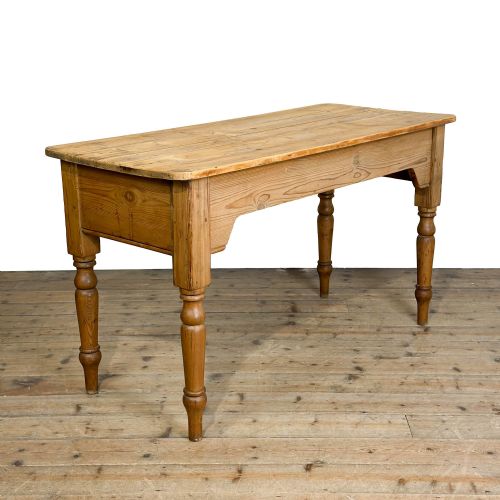
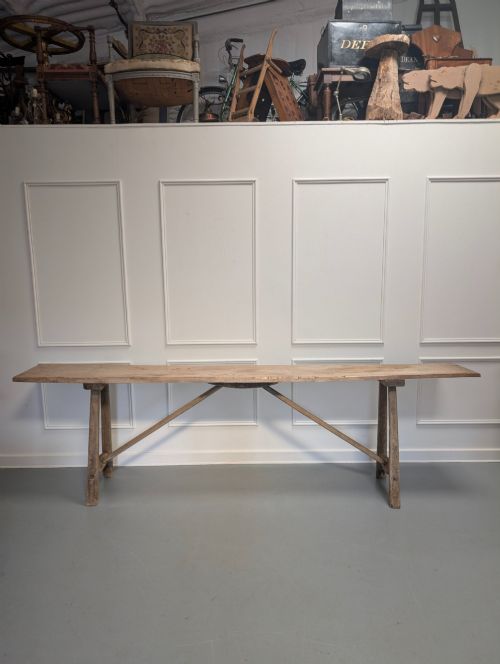
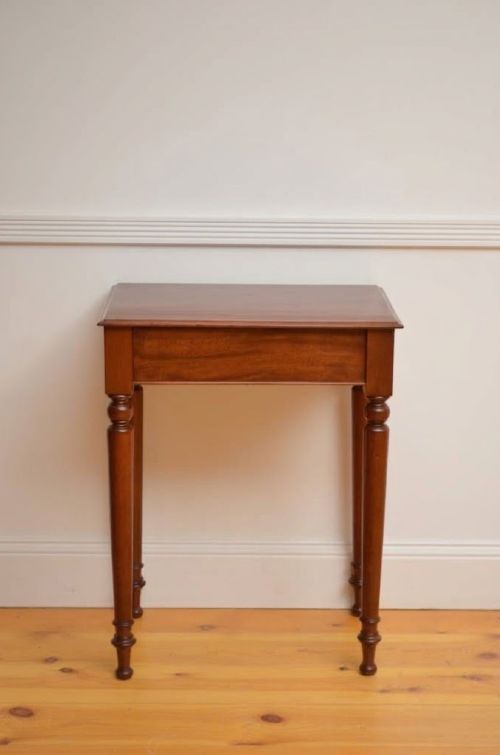
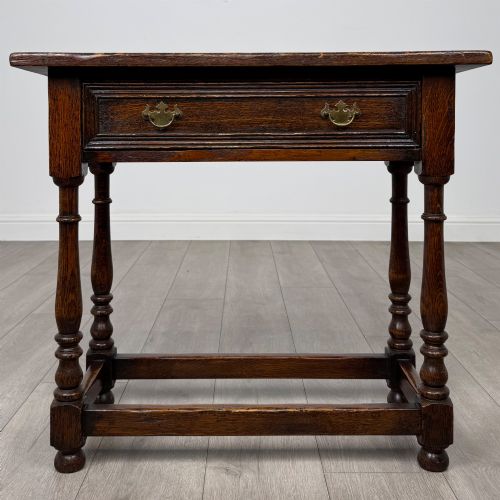
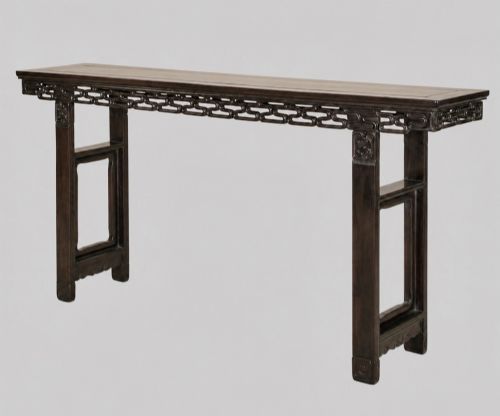
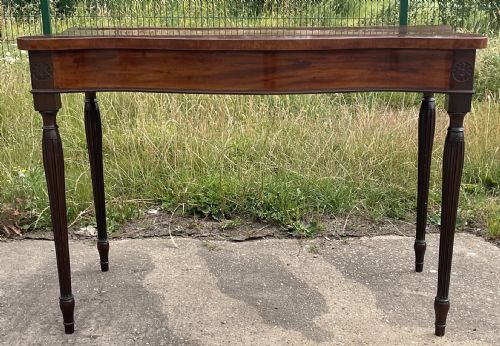
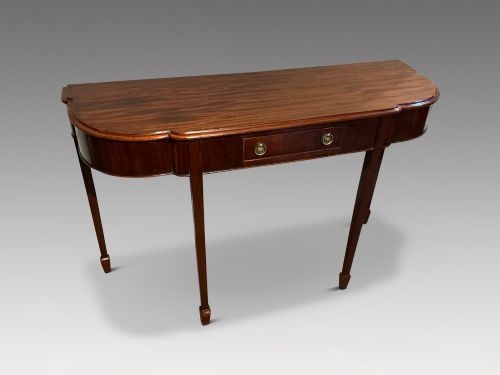
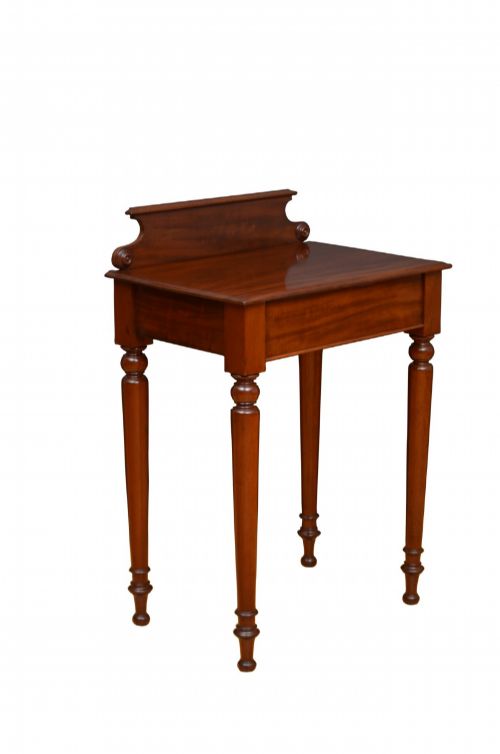
A narrow wood console provides slim proportions designed for halls, corridors and tighter rooms where depth matters. When searching for a narrow wood console, buyers encounter forms ranging from nineteenth century mahogany hall tables to Edwardian oak side tables and Chinese hardwood altar tables.
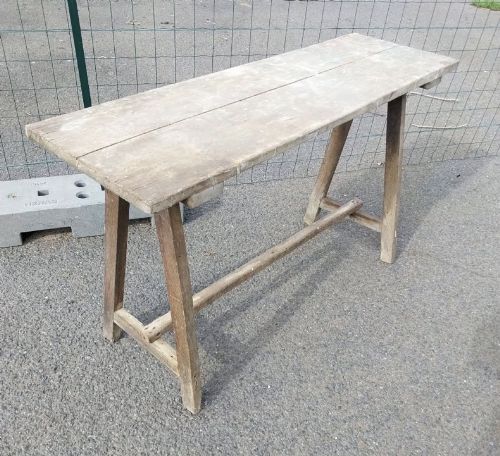
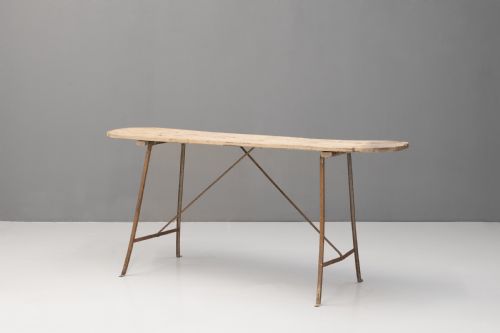
The selection includes console tables, side tables, trestle tables and wash tables originating from diverse periods such as the Victorian era, the Edwardian period, and the late nineteenth century. Pieces often feature specific regional characteristics, including French provincial designs and Qing dynasty construction.
Makers and styles span Georgian proportions, Regency style, neoclassical influences and Scandinavian country aesthetics. These items function primarily as surface furniture for display or passage rather than heavy dining.
Materials and construction
Construction relies heavily on traditional timbers such as mahogany, oak, pine, walnut, beech and imported Asian hardwoods. Craftsmen selected these woods for structural resilience in slim formats, pairing dense hardwoods with softer secondary timbers where appropriate.
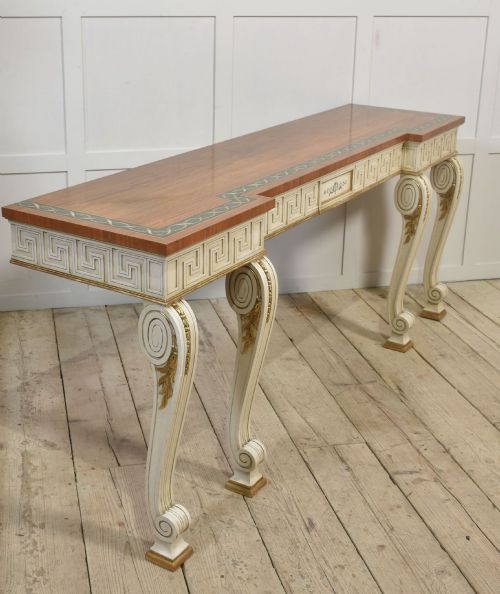
Surface finishes involve clear polishes that highlight timber figures, alongside painted wood treatments utilising solid colours or decorated schemes. Additional detailing incorporates brass hardware, marble tops and ebonised accents on specific stylistic examples.
Narrow Wood Console Retail Price Guide 2026
Typical asking prices for narrow wood console among the pieces listed under this phrase on Sellingantiques today, from the lower quarter to the upper quarter. They describe what is for sale here now, not the wider market.
Listings feature woods spanning mahogany, oak, pine and painted hardwood alongside periods from the nineteenth century through the Edwardian era.
Evaluating construction and finish
Quality separates through the selection of timber, visible in the grain of figured mahogany or the tight growth rings of older oak. Superior pieces display precise joinery in the frame and drawer construction, maintaining rigidity despite narrow proportions.
The finish dictates the visual character, whether a French polished surface with deep lustre or an authentic painted skin that shows age naturally. Detail work, such as carved mouldings, brass fittings or marble tops, distinguishes standard utilitarian tables from finer stylistic interpretations.
Druce and Co
The Narrow Wood Console Glossary
- Console table
- A table designed to stand against a wall, frequently secured to it or supported by front legs. These items provide narrow surfaces for display in hallways and reception rooms.
- Altar table
- A traditional Chinese form featuring elongated proportions and elevated ends, adapted as a narrow console in western interiors. They are constructed from dense Asian hardwoods.
- Demi-lune
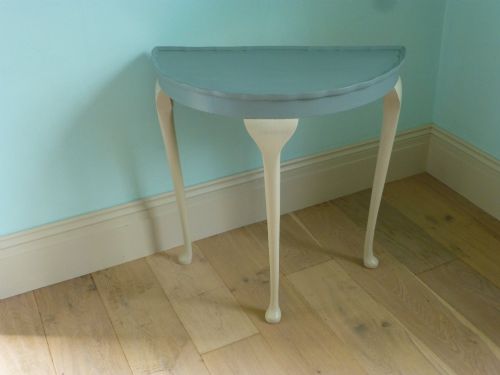
- A half-moon shape characteristic of small console and hall tables designed to sit flush against a wall. This profile minimises floor protrusion in restricted spaces.
- Trestle table
- A table structure where the top rests on folding or fixed trestle supports rather than four corner legs. Examples appear in French country and provincial contexts.
- Pier table
- A low table designed to stand against the wall beneath a pier glass mirror. They frequently utilise mahogany or gilded and painted wood.
Narrow Wood Console: Frequently Asked Questions
Where should I place a narrow wood console?
These pieces suit narrow hallways, entryways, landings and behind sofas where standard depth furniture obstructs movement. Their shallow footprint offers display space for lamps, mirrors and everyday objects without blocking pathways.
Position them against blank walls to anchor a room visually. Pairing a console with a matching mirror creates a traditional entrance arrangement.
How do I care for antique wood surfaces?
Maintain polished wood surfaces with traditional wax applied sparingly and buffed with a soft cloth to preserve the finish. Avoid placing furniture in direct sunlight or near heat sources to prevent timber from drying out.
Use coasters and felt pads beneath objects placed on the top. Painted or polished tables require only dusting with a dry lint-free cloth.
What is the difference between an altar table and a console?
Altar tables originate from Chinese traditions, featuring narrow rectangular tops and distinctive joinery, often built from dense Asian hardwoods. Standard western console tables developed in European contexts with styles ranging from Georgian to Edwardian.
Both serve similar functional roles in modern interiors as slim surface tables. Altar tables frequently incorporate upturned ends, distinguishing their silhouette from flat console tops.
Can these tables hold heavy lamps and books?
Solid timber construction in oak, mahogany and hardwood provides adequate structural strength for standard lamps and decorative items. Narrow proportions mean stability depends on correct placement against a flat wall surface.
Heavier items distribute safely across the length of the top. Ensure any freestanding piece rests evenly on the floor to prevent rocking.