


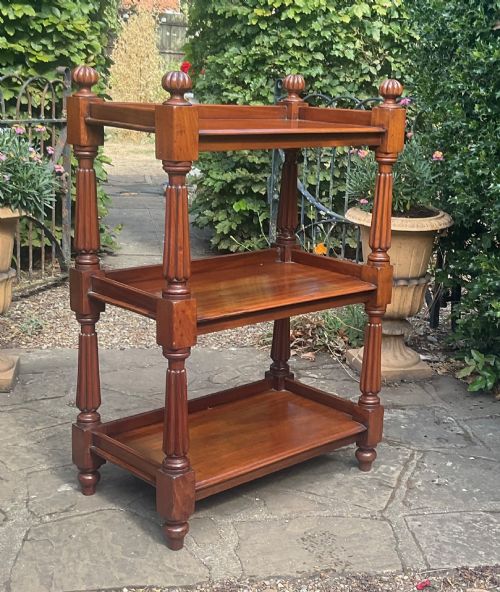
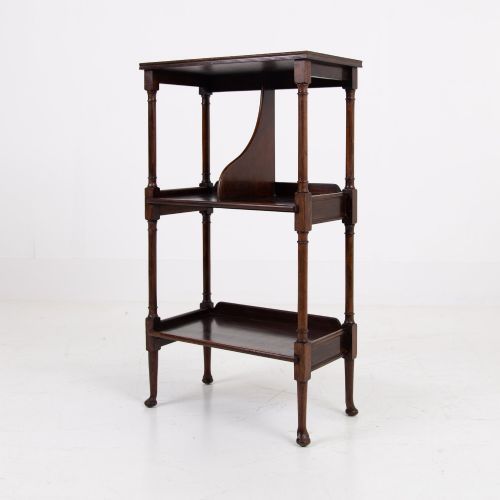


Narrow Tiered Shelving
Narrow tiered shelving offers multiple levels of vertical display, bringing practical surface space into compact rooms.
Narrow Tiered Shelving
Narrow tiered shelving provides vertical storage through stacked levels, taking the form of bookcases, etageres, whatnots, and plant stands. These pieces appear across periods from the nineteenth century into the twentieth century, reflecting styles such as Victorian, Edwardian, and Arts and Crafts.
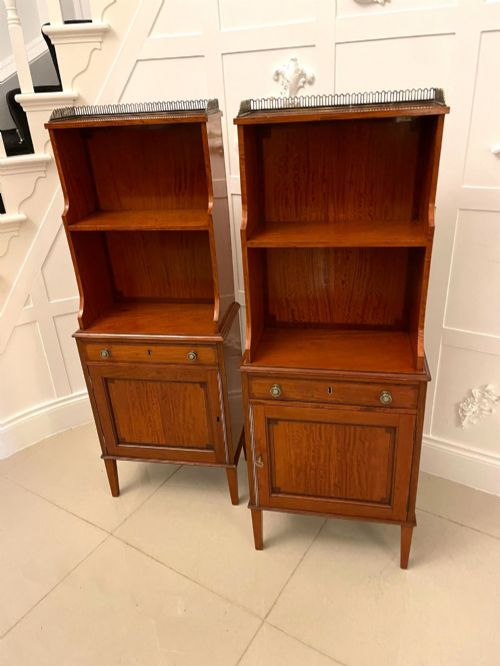
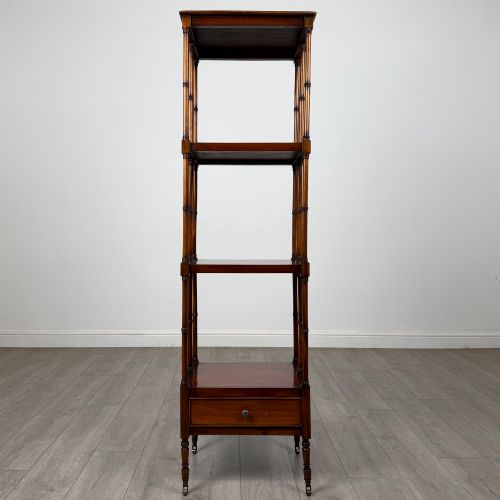
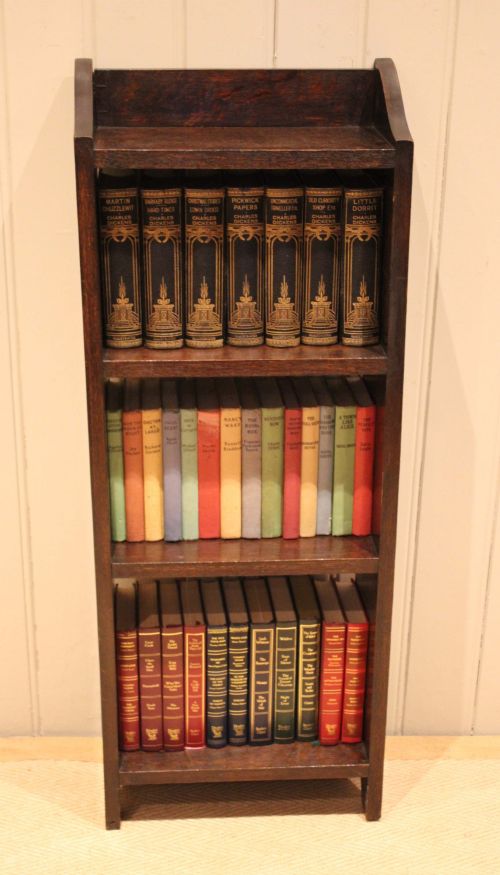
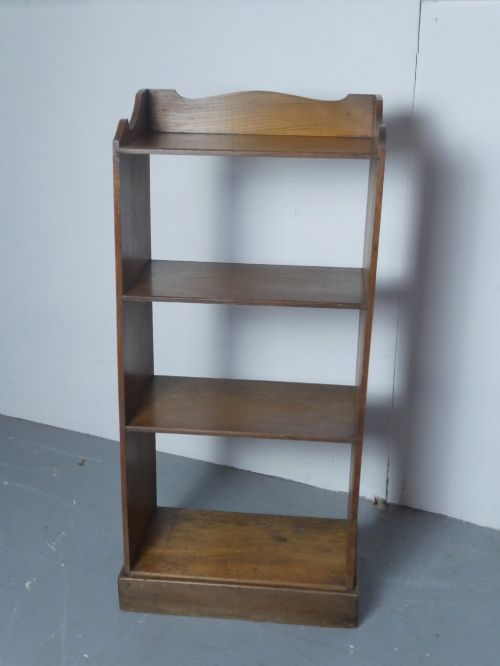
A buyer examining this page will most frequently encounter mahogany and oak examples alongside rosewood, satinwood, and yew wood pieces. Forms range from waterfall bookcases with slender pillars to open bookcases with raised galleries and freestanding shelving stands.
Originating to maximise floor space while displaying books or decorative objects, these tiered units suit corners and narrow wall spaces. Their construction varies from simple functional storage racks to finely detailed display furniture.
How they were made
Cabinetmakers utilised dense hardwoods like mahogany, oak, rosewood, satinwood, and yew wood to build stable vertical frameworks capable of supporting stacked shelves. Selected timbers were often polished to highlight natural grain patterns.
Structural elements include turned feet, slender pillars, and raised galleries, sometimes fitted with original castors for mobility. Construction combined traditional joinery techniques to secure multiple tiers safely within a compact footprint.
Narrow Tiered Shelving Retail Price Guide 2026
Typical asking prices for narrow tiered shelving among the pieces listed under this phrase on Sellingantiques today, from the lower quarter to the upper quarter. They describe what is for sale here now, not the wider market.
Materials recorded across current pieces include mahogany, oak, rosewood, satinwood, yew wood, brass, and wrought iron.
What varies in quality
The choice of timber underpins the distinction between standard utilitarian storage and finer decorative pieces, with figured satinwood or rosewood indicating higher craftsmanship than basic painted pine or utilitarian oak. The selection of materials directly influences the visual weight and elegance of the tiered structure.
Refinement of detail distinguishes workshops, seen in the proportion of slender pillars, the turning of feet, and the integration of original castors or raised galleries. Simpler pieces rely purely on functional utility, whereas elevated examples demonstrate careful attention to proportion across every tier.
Gillows
The Narrow Tiered Shelving Glossary
- Etagere
- A piece of furniture consisting of a set of open shelves for displaying small objects or ornaments. These tiered stands gained popularity in the nineteenth century for drawing rooms and boudoirs.
- Waterfall bookcase
- A set of open shelves where each tier steps back progressively from the bottom to the top, creating a cascading profile. This silhouette became a favourite in mahogany and rosewood during the nineteenth and early twentieth centuries.
- Raised gallery
- A low decorative railing or pierced upstand running along the edge of a shelf or top board. It prevents items from sliding off the surface.
- Slender pillars
- Thin vertical supports used in place of solid side panels to hold up individual shelves. They create an open, airy appearance suitable for narrow rooms.
Narrow Tiered Shelving: Frequently Asked Questions
What is narrow tiered shelving used for?
These pieces provide vertical storage and display space for books, ornaments, and small collections without occupying excessive floor area. Their multiple levels make them particularly useful in hallways, studies, and bedrooms.
Historically, they served to keep frequently used volumes or decorative items within reach while maintaining an open room layout.
Where should I place a whatnot?
Whatnots and etageres suit corners and narrow wall expanses where a standard bulky bookcase would overwhelm the space. Their open sides allow light to pass through, keeping small rooms feeling bright.
They function effectively beside seating areas or against blank partitions to display decorative objects at eye level.
How do I identify an Edwardian bookcase?
Edwardian bookcases often feature lighter timbers such as satinwood or mahogany, reflecting the refined tastes of the early twentieth century. They frequently incorporate slender pillars and delicate proportions.
Comparing the timber grain and construction methods against known periods helps determine the exact era of manufacture.
What is the difference between a bookcase and an etagere?
A bookcase is primarily designed for holding volumes, whereas an etagere focuses on open display for ornaments and decorative wares across multiple tiers. Etageres generally feature lighter supports and open sides on all levels.
Both forms belong to the wider family of tiered shelving found across nineteenth and twentieth-century interiors.