

Narrow Tall Chest
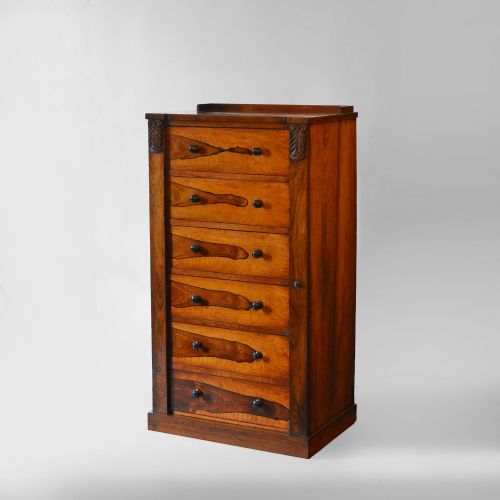
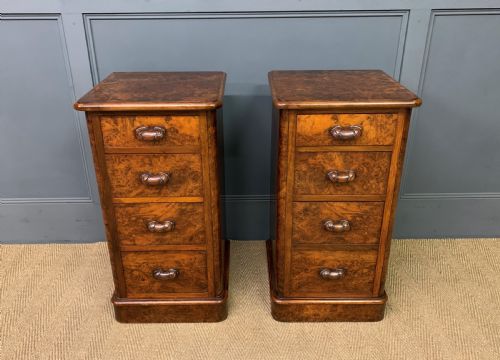
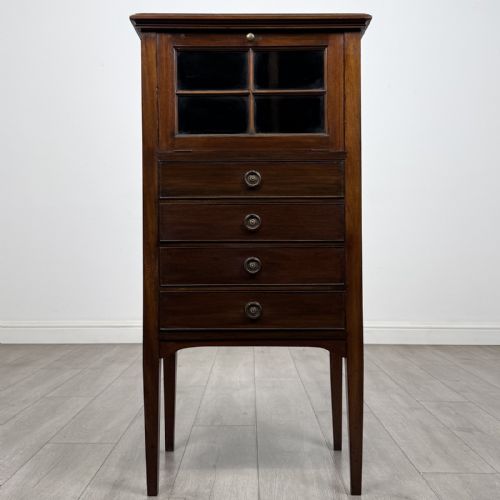
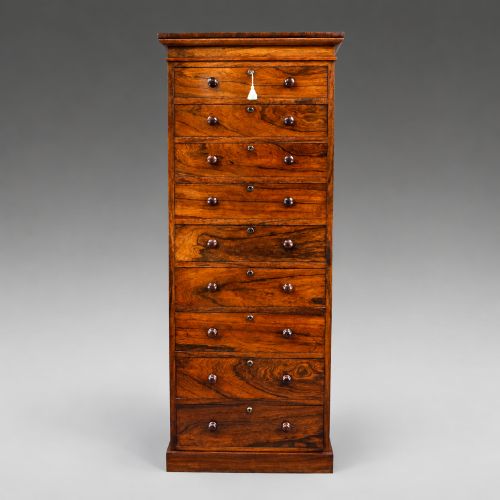
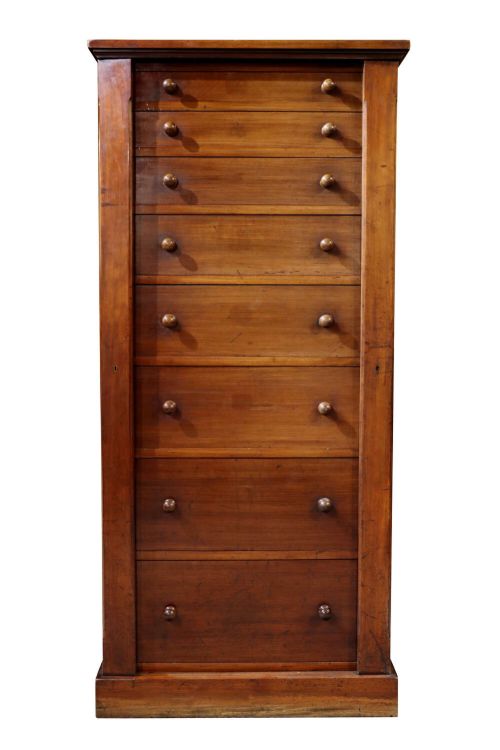
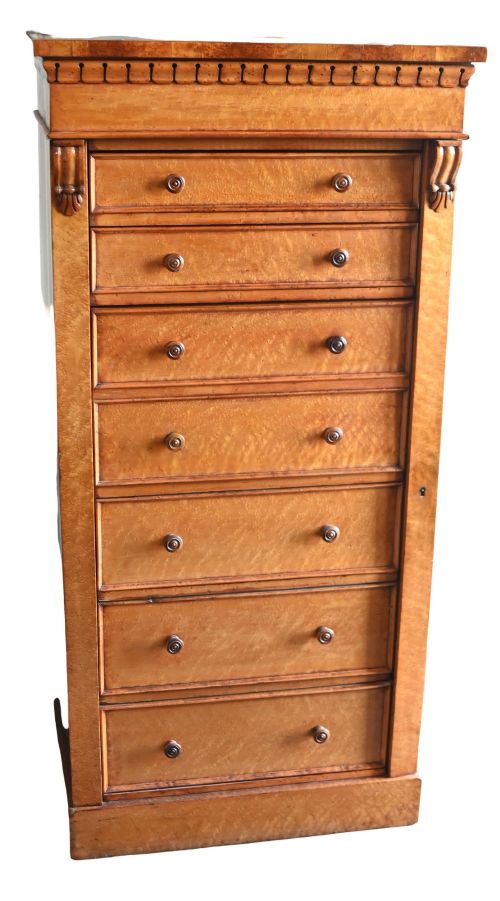
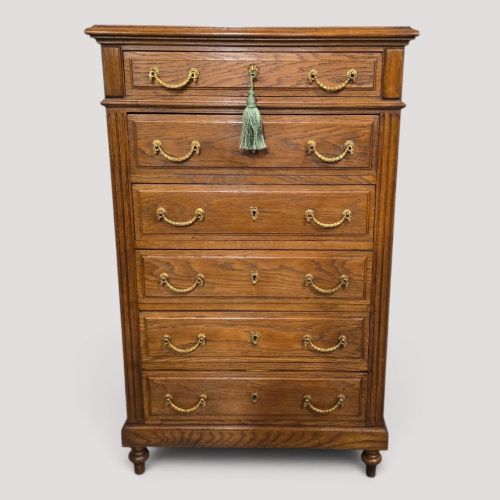
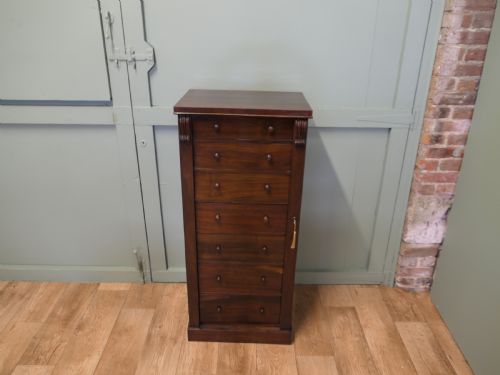
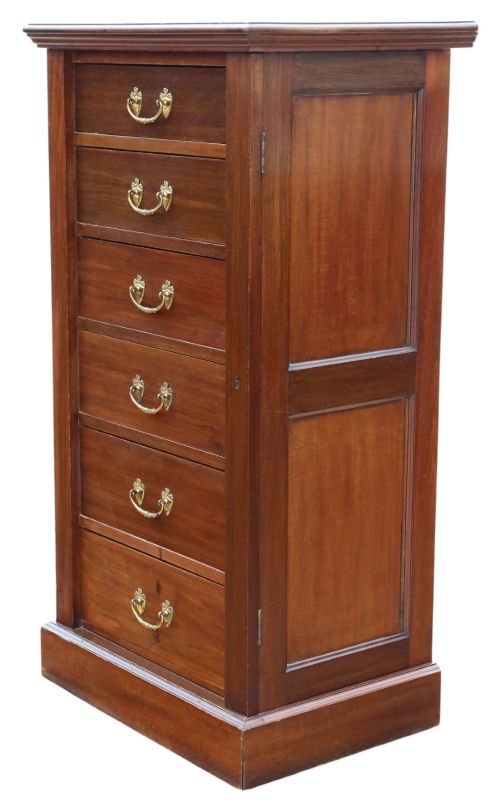
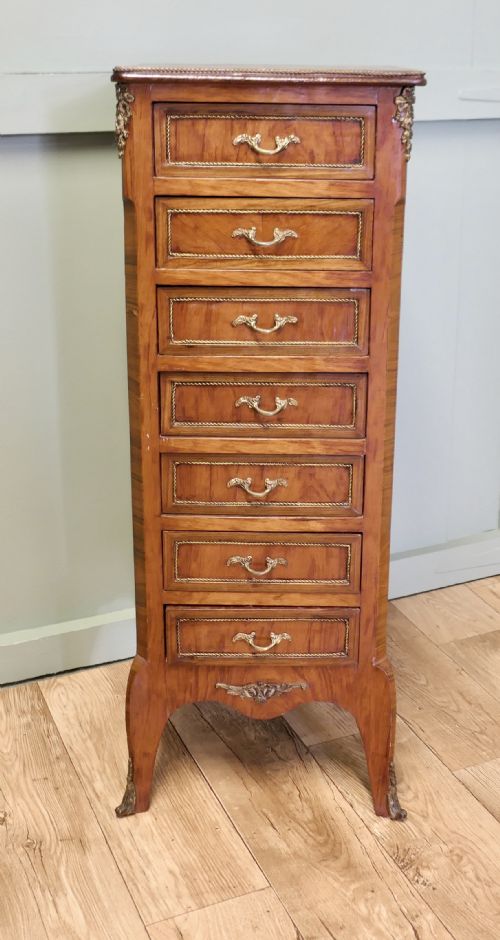
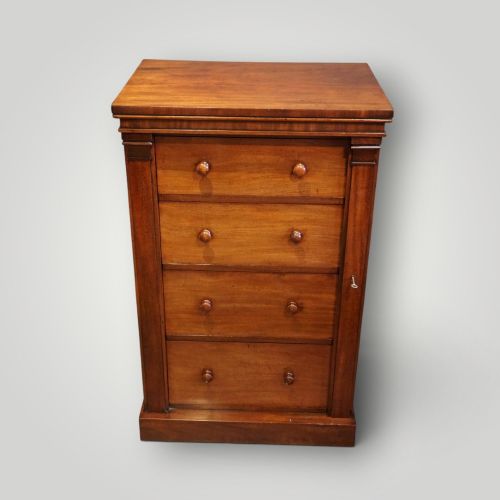
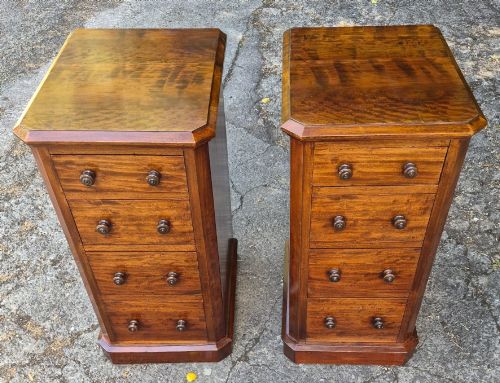
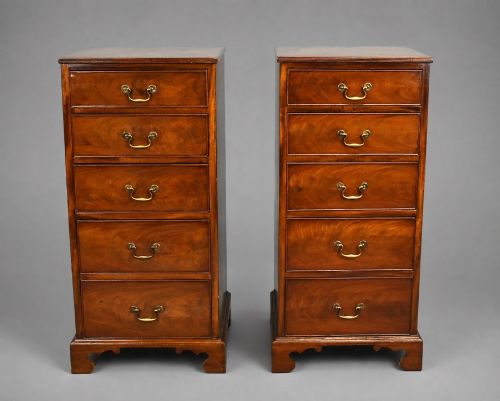
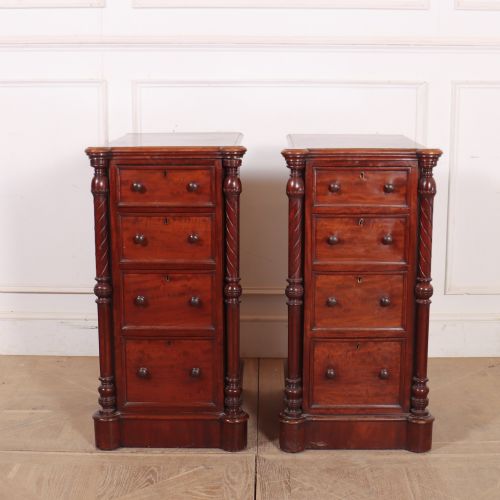
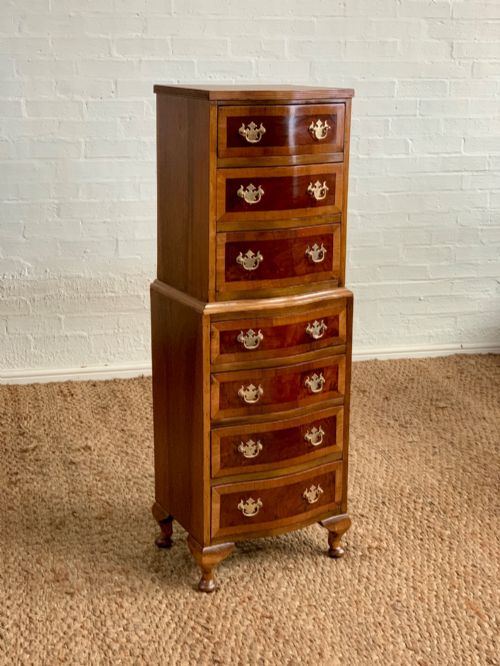
A narrow tall chest saves floor space while offering deep storage, usually appearing here as a Victorian Wellington chest or a French semainier.
Narrow Tall Chest
A narrow tall chest concentrates storage upward rather than outward, making it useful in bedrooms and dressing rooms where floor space is limited. The search for a narrow tall chest typically leads to vertically proportioned storage furniture designed to hold garments, papers or personal items without dominating a room.
The versions most common on this page are Victorian Wellington chests and French semainiers, both built with multiple stacked drawers in a compact footprint. These pieces range from mid-nineteenth-century mahogany examples to early twentieth-century walnut and oak editions, often featuring six or more drawers within a slender frame.
Makers and cabinetmakers constructed these forms using dense hardwoods to ensure stability despite the high, narrow proportions. Variations include bedside pedestals, pillar chests, and two-piece tallboys that maintain the characteristic narrow stance while serving different domestic functions.
How they were made
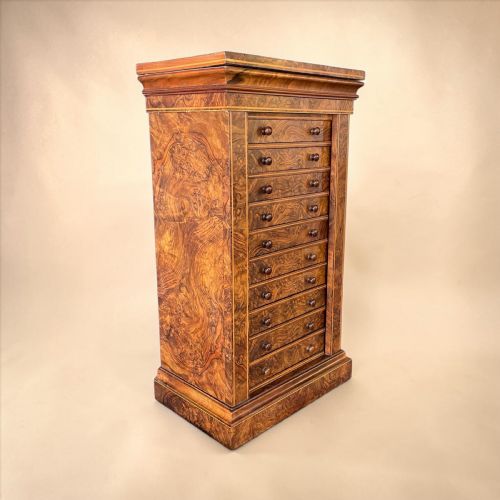
Cabinetmakers relied heavily on mahogany, walnut, and oak, often selecting figured veneers such as burr walnut or bird's-eye maple for the primary display surfaces. These timbers were applied over secondary woods to construct the carcass, ensuring stability and preventing the tall, narrow frames from warping over time.
Construction techniques involved tight dovetail joints for the drawer boxes and robust vertical locking mechanisms on specific forms like Wellington chests. Drawers were fitted precisely into tall carcases, sometimes utilising original turned knobs or brass pulls fixed securely to the drawer fronts.
Narrow Tall Chest Retail Price Guide 2026
Typical asking prices for narrow tall chest among the pieces listed under this phrase on Sellingantiques today, from the lower quarter to the upper quarter. They describe what is for sale here now, not the wider market.
Listings feature woods including mahogany, walnut, burr walnut, oak, pine, and rosewood across Victorian and Edwardian periods.
What varies in quality
The choice of timber and veneer figure largely dictates the distinction between standard utility pieces and finer examples. Selection of highly figured mahogany, burr walnut, or amboyna elevates a piece, whereas plain pine or standard oak reflects simpler domestic utility.
The crispness of execution in the joinery, the presence of original locking bars and keys, and the integrity of the surface polish separate standard workshop output from superior cabinetmaking. Finer examples retain original turned knobs, subtle inlay work, and well-balanced proportions that withstand the physical stress of numerous stacked drawers.
Maple & Co.
The Narrow Tall Chest Glossary
- Wellington chest
- A tall, narrow chest of drawers featuring a hinged locking stile on one side that secures all drawers when locked. This form originated in the nineteenth century and is typically fitted with six to eight stacked drawers.
- Semainier
- A French tall chest of drawers traditionally designed with seven drawers, one for each day of the week. These pieces emphasise vertical storage and often incorporate fine French walnut or parquetry.
- Tallboy
- A chest on chest comprising a lower section with large drawers surmounted by a smaller upper chest. This two-piece form provides substantial vertical storage capacity.
- Pillar chest
- A cylindrical or very slender column-like chest of drawers designed for minimal floor occupation. They frequently appear in mahogany with circular or bowed drawer configurations.
- Campaign furniture
- Portable furnishings built for travel, often featuring recessed brass handles and reinforced corners. Pieces in this category are designed for durability and compact transport.
Narrow Tall Chest: Frequently Asked Questions
What is a Wellington chest?
A Wellington chest is a tall, narrow set of drawers distinguished by a hinged vertical locking bar on the right side. This bar secures all the drawers simultaneously when locked with a key.
Cabinetmakers designed these pieces during the nineteenth century to store documents, shirts, or small valuables securely in a compact footprint.
How do I use a tall chest in a small bedroom?
A tall chest provides maximum storage while occupying minimal floor space, making it ideal for tight corners or beside a wardrobe. The vertical arrangement of drawers utilises height rather than width.
Ensure the piece is anchored securely to the wall if it is exceptionally tall or narrow to maintain stability during daily use.
What is the difference between a tallboy and a semainier?
A tallboy is typically a two-piece chest on chest, combining a larger base with a slightly smaller upper chest. A semainier is a single tall cabinet traditionally built with seven drawers.
Both offer vertical storage solutions, but the semainier leans toward continental French design while the tallboy follows English cabinetmaking traditions.
How do I date an antique narrow chest?
Dating relies on observing timber choices, construction methods, drawer dovetailing, and surface finishes. Mid-nineteenth-century examples often feature solid mahogany with hand-cut dovetails, while later pieces may incorporate applied veneers or differing secondary woods.
Hardware styles, such as turned wooden knobs versus brass campaign handles, also help narrow down the period of manufacture.