

Narrow Storage Cabinet
A narrow storage cabinet brings vertical proportion and disciplined storage to tight spaces through traditional cabinetmaking.
Narrow Storage Cabinet
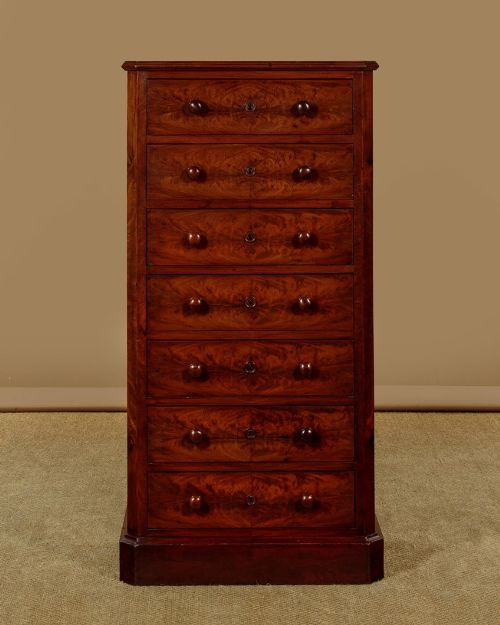
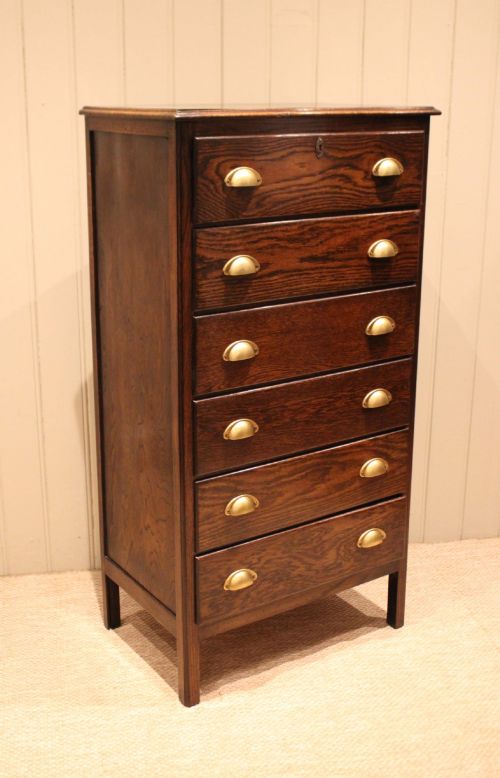
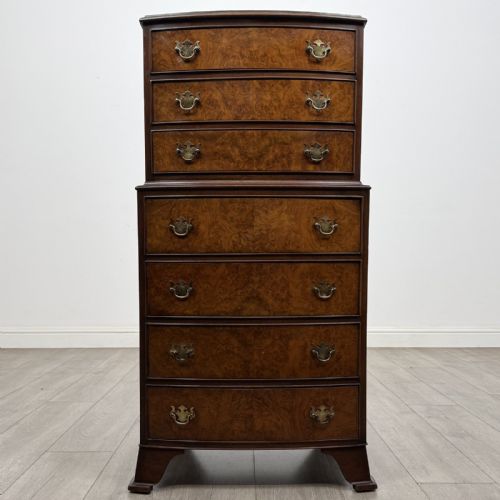
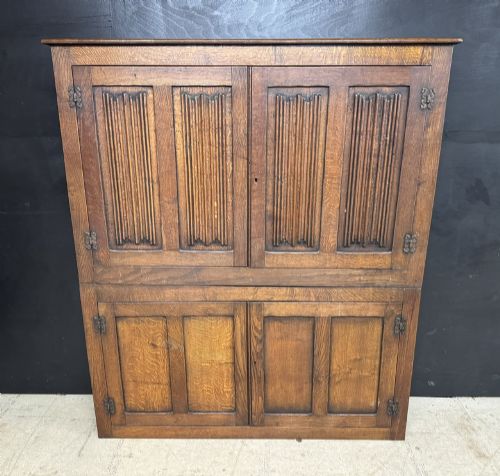
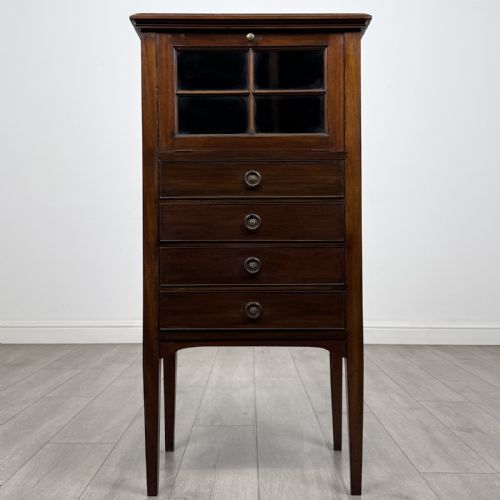
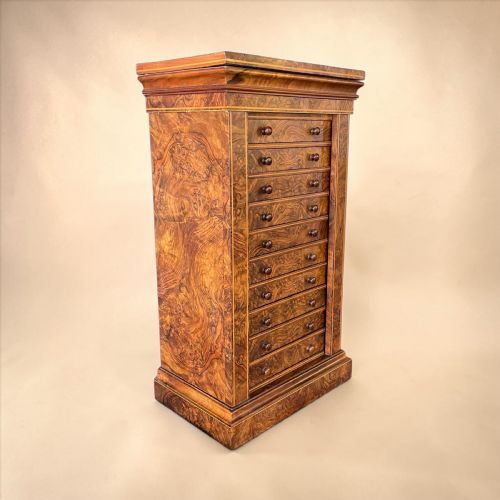
A narrow storage cabinet provides compact vertical storage in formats ranging from bedside chests and tall Wellington chests to slim bookcases and housekeepers cupboards. These pieces solve space limitations in bedrooms, halls and living rooms by using height rather than floor area.
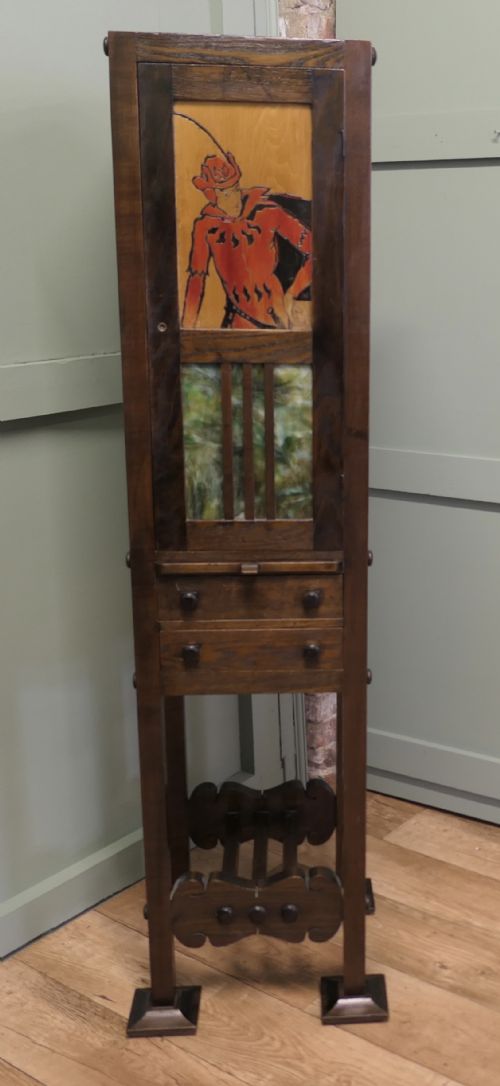
The pieces appearing on this page span the nineteenth century through the early twentieth century, taking stylistic cues from Victorian, Edwardian, Georgian and Regency revivals. Mahogany, pine and oak dominate the forms, supplemented by walnut, rosewood and exotic veneers.
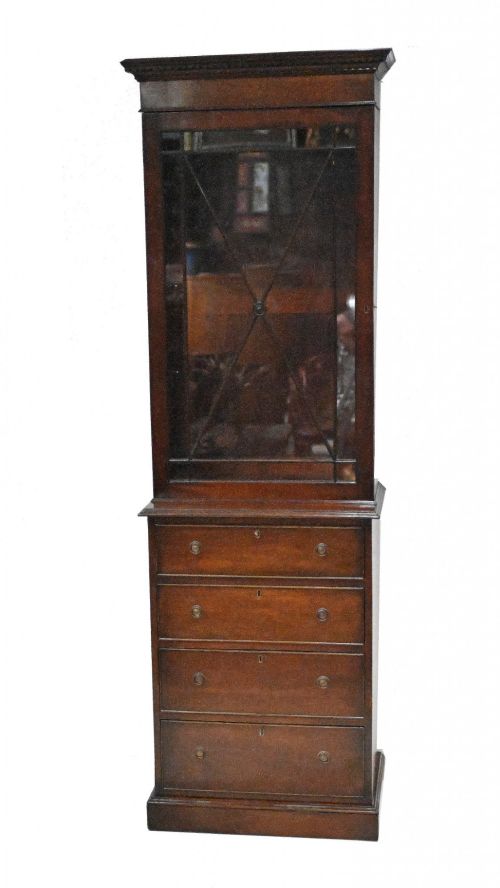
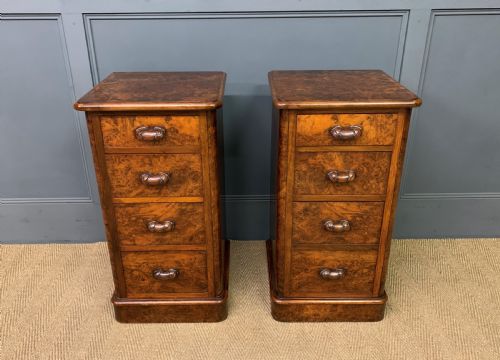
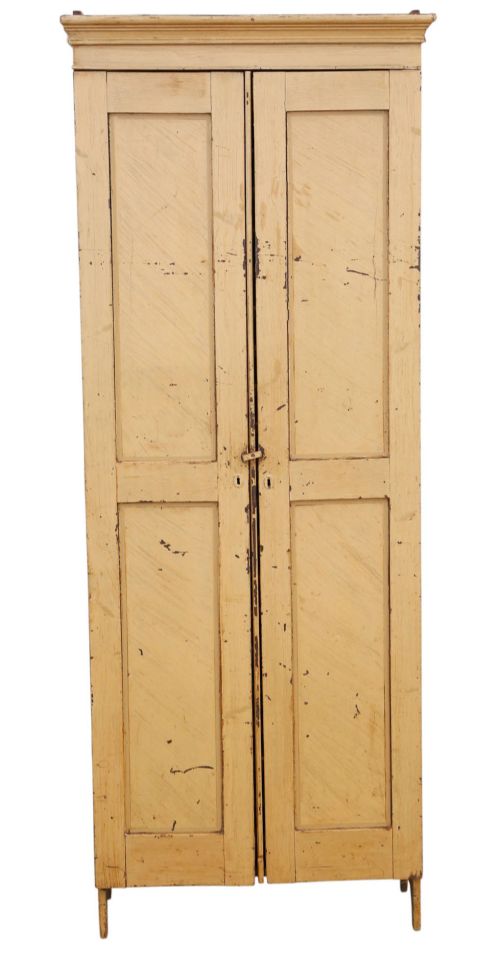
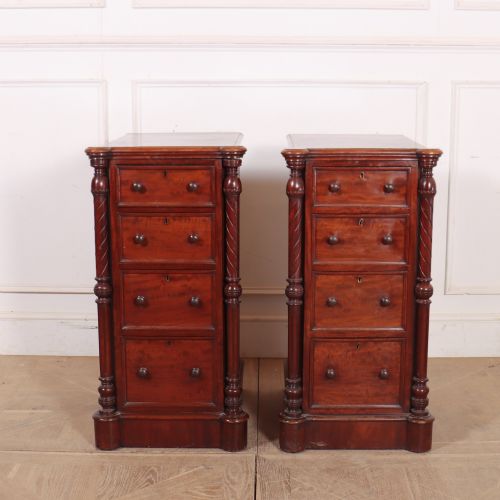
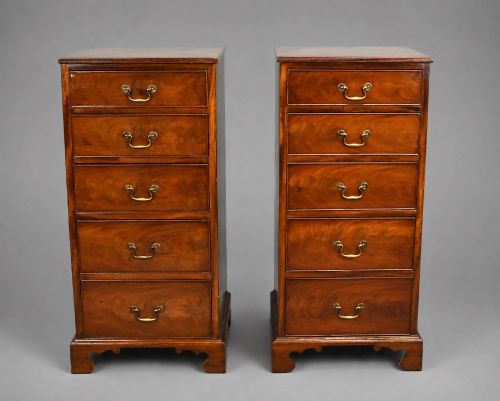
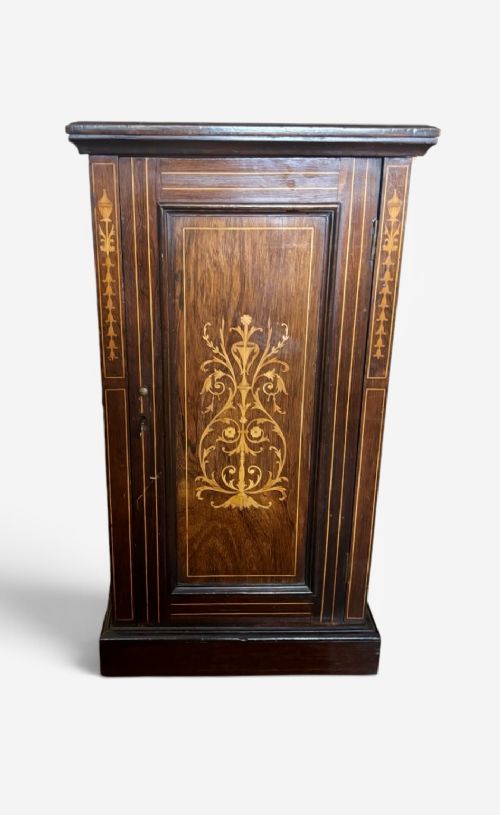
Buyers seeking a narrow storage cabinet encounter variations including multi-drawer bedside units, tall slim cupboards with single doors, and open or shelved bookcases. Each configuration serves a specific domestic function while maintaining a slender footprint.
How they were made
Traditional construction relies on solid hardwoods like mahogany, oak and walnut, alongside utilitarian softwoods such as pine. Cabinetmakers joined frames using dovetailed drawer construction and mortise and tenon joints to ensure rigidity in tall, narrow proportions.
Surface ornamentation involved timber selection rather than applied decoration, using burr walnut, satinwood inlay, parquetry veneer and painted finishes. Brass fittings, handles and locking mechanisms provided both utility and visual accent to the timber.
Narrow Storage Cabinet Retail Price Guide 2026
Typical asking prices for narrow storage cabinet among the pieces listed under this phrase on Sellingantiques today, from the lower quarter to the upper quarter. They describe what is for sale here now, not the wider market.
Listings feature narrow storage cabinets spanning the nineteenth century through the 1920s, constructed primarily in mahogany, pine and oak.
What varies in quality
The standard of a narrow storage cabinet rests on the selection of timber figures and the precision of the joinery. Cabinets utilising matched mahogany flame, burr walnut or intricate satinwood inlay sit at the upper end of the scale.
Structural integrity in tall pieces depends on weight distribution and drawer action, where well-fitted drawers slide smoothly within tight tolerances. Original brass hardware, uncompromised backboards and preserved surface patination distinguish finer examples.
The Narrow Storage Cabinet Glossary
- Wellington chest
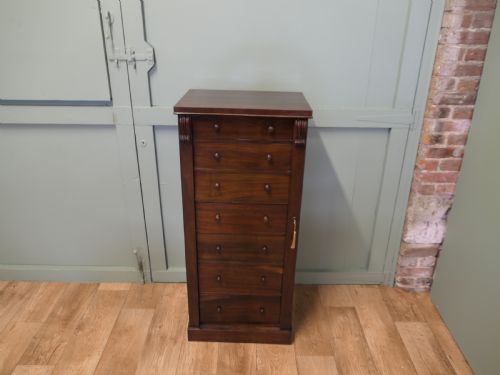
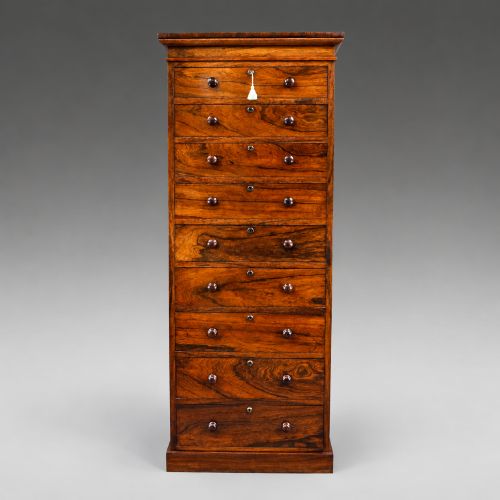
- A tall, narrow chest of drawers typically featuring seven drawers secured by a hinged locking side pilaster. This form originated in the nineteenth century to maximise vertical storage.
- Bedside chest
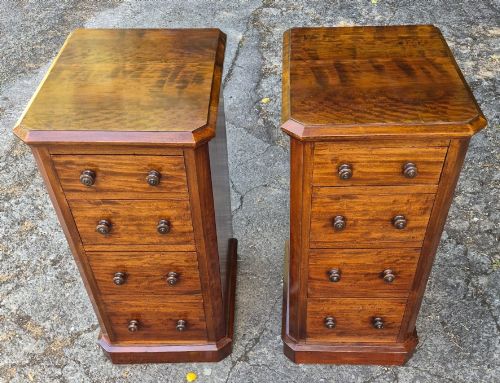
- A miniature cabinet or set of drawers designed to stand beside a bed for night storage. These pieces frequently appear in matched pairs across nineteenth and early twentieth century periods.
- Inlay
- A decorative technique where contrasting woods or metals are set into recesses flush with the surrounding surface. Satinwood and rosewood are common in Edwardian and Victorian examples.
- Parquetry
- A geometric mosaic of wood pieces used for decorative veneer on cabinet surfaces. This technique appears on specific Edwardian bedside tables listed here.
- Waterfall bookcase
- A set of open bookshelves where each successive shelf is set back from the one below it, creating a stepped profile. Yew wood is a typical timber for this form.
Narrow Storage Cabinet: Frequently Asked Questions
Where should a narrow storage cabinet go?
These compact pieces fit easily into alcoves, beside beds, along narrow hallways or within smaller reception rooms where floor space is limited. Their vertical orientation provides substantial storage without dominating the room.
Positioning depends on the specific form, as bedside chests suit sleeping quarters while slim cupboards and bookcases function well in living areas and studies.
How do I identify a Victorian piece?
Victorian narrow cabinets typically feature dense timbers like mahogany, rosewood or walnut, often combined with hand-cut dovetails and heavy brass hardware. Construction methods from this era prioritise sturdy solid timber frames.
Stylistic markers include deep polishing, rich patination and specific locking mechanisms such as the side pilaster found on Wellington chests.
What is a Wellington chest?
A Wellington chest is a tall, narrow drawer unit distinguished by a locking wooden flap down one side that secures all drawers simultaneously. This secure vertical design was popular throughout the nineteenth century.
These chests provide high-capacity storage within a very small floor footprint, making them practical for compact rooms.
Are Edwardian cabinets different from Victorian ones?
Edwardian pieces generally exhibit lighter proportions, brighter timber tones and more delicate decorative elements such as satinwood stringing and floral inlay. Makers in this period favored limed oak and lighter mahogany.
Victorian cabinets lean toward heavier construction, darker finishes and formal revival styles, whereas Edwardian design introduces greater variety in painted finishes and transitional forms.