
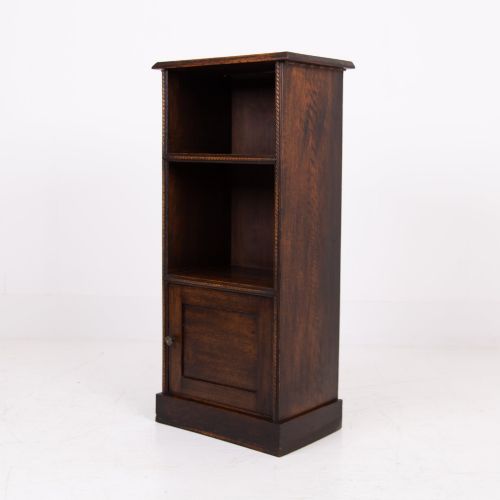
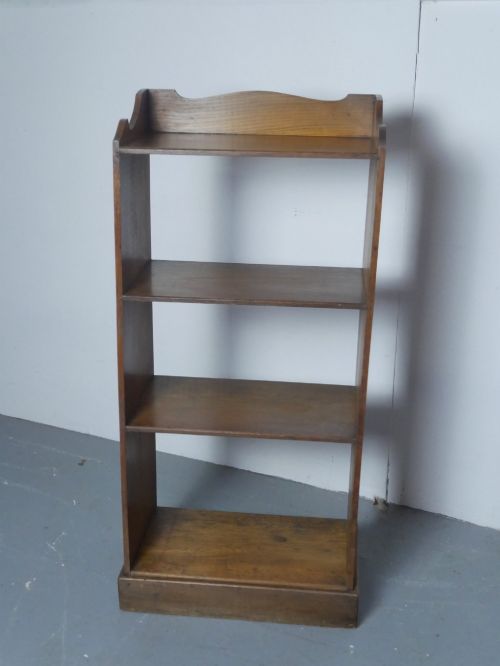
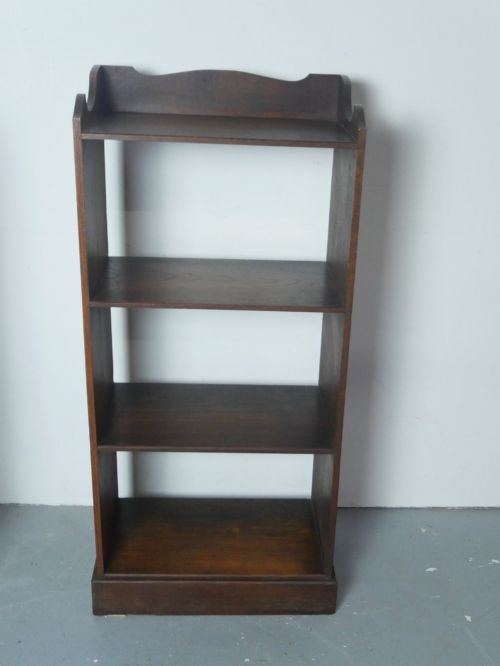
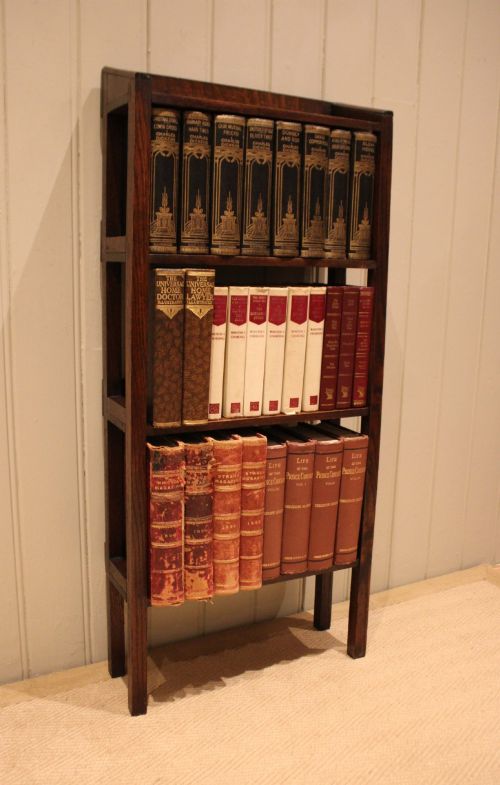
Narrow Shelving Unit
A narrow shelving unit offers vertical storage for compact spaces, bringing period timber and proportion to a room.
Narrow Shelving Unit
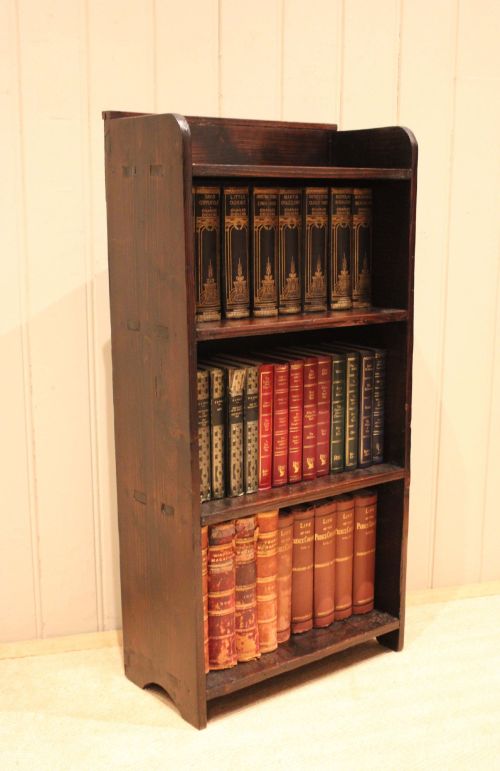
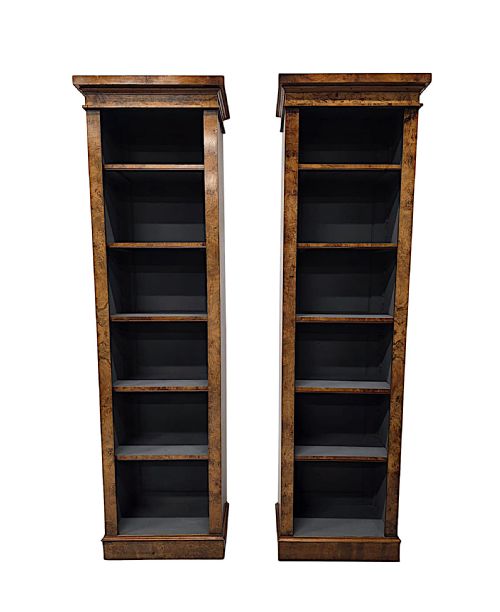
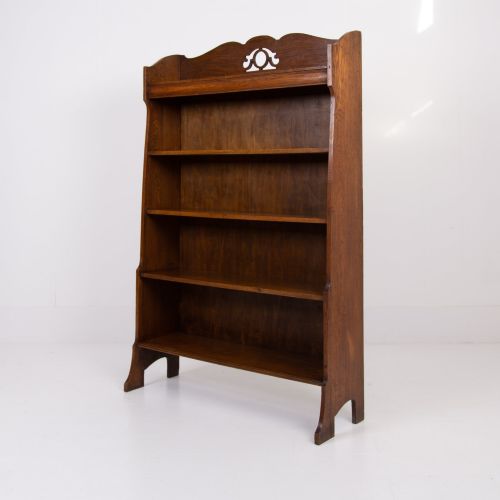
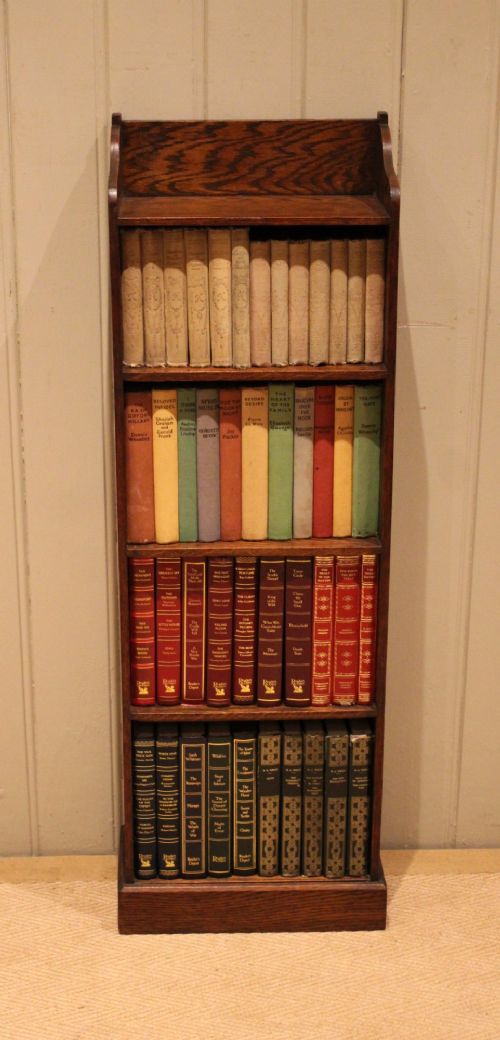
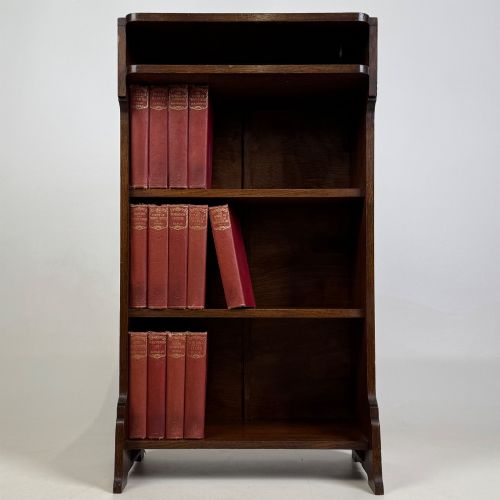
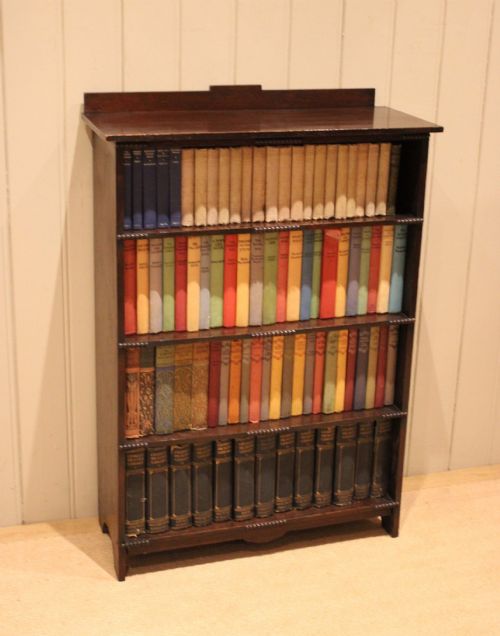
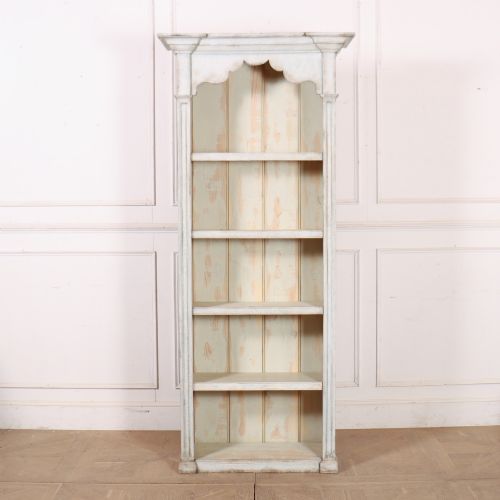
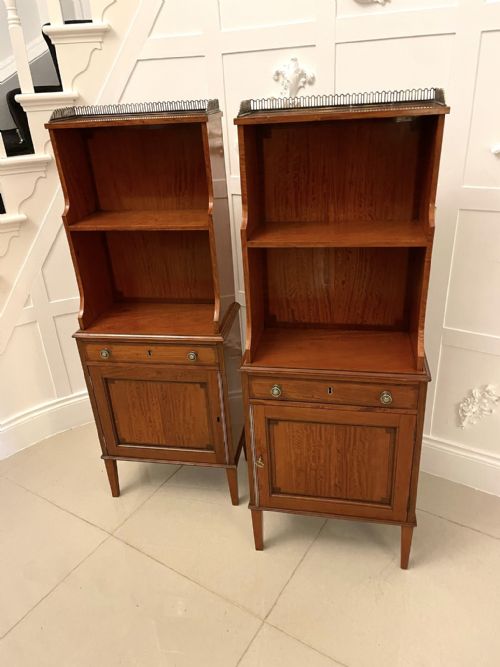
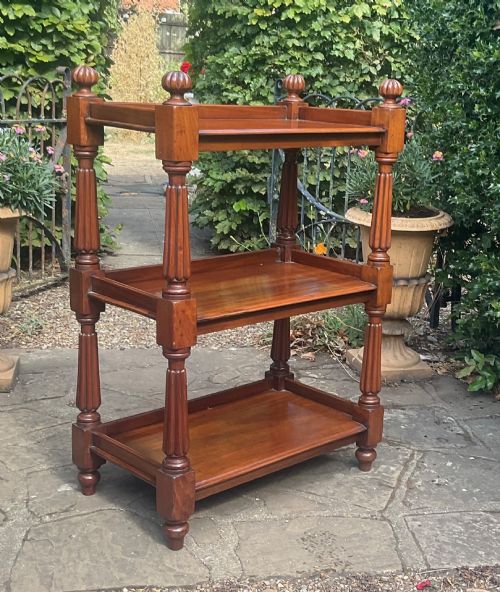
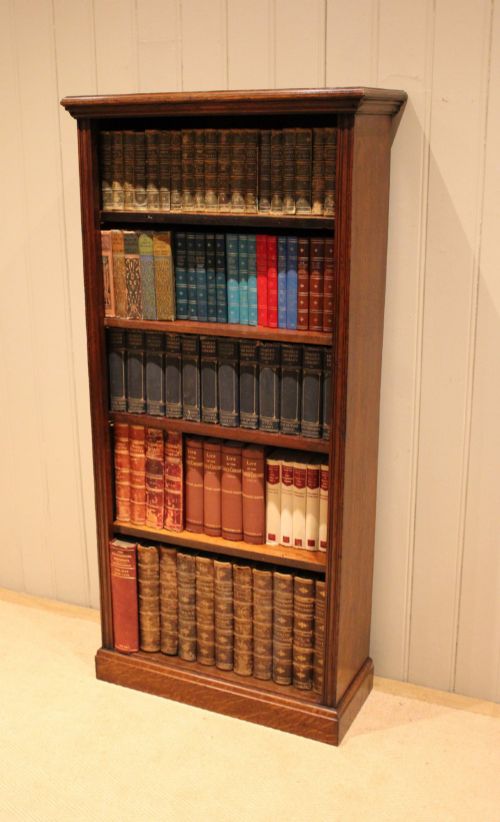
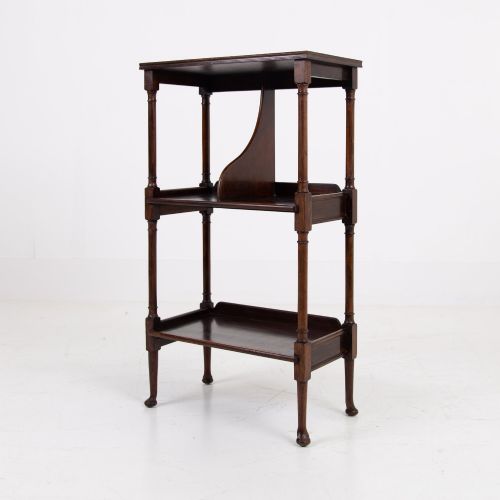
A narrow shelving unit spans various compact forms designed to hold books and display objects in restricted floor spaces. Buyers seeking a narrow shelving unit most frequently encounter open bookcases, étagères, and whatnots originating from the Victorian, Edwardian, and early twentieth-century periods.
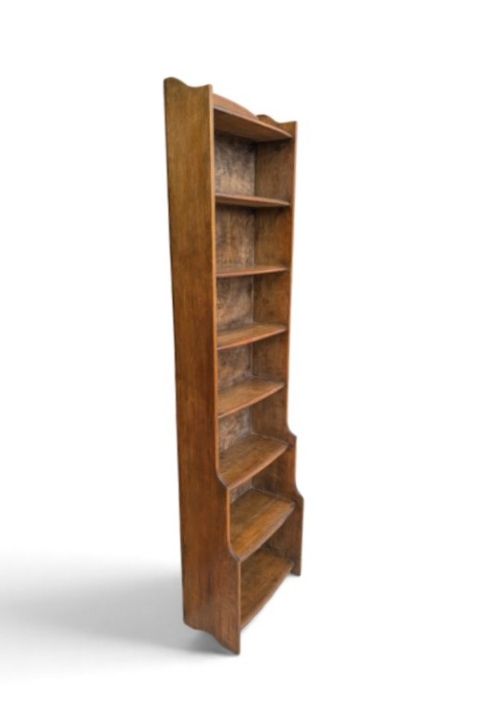
The selection ranges from simple oak open bookcases to tiered mahogany étagères and waterfall designs in burr walnut, satinwood, and yew. Makers and workshops from the Arts and Crafts movement also contributed distinctive upright shelving with decorative cut-outs and beaded edges.
Many examples date from the 1880s through the 1930s, encompassing styles such as Georgian Revival, Jacobean Revival, and Art Deco. These pieces serve primarily in studies, hallways, and alcoves where floor area is at a premium.
Materials and construction
Timbers such as oak, mahogany, and walnut form the structural core of these pieces, often enhanced by decorative veneers like burr walnut or satinwood inlay. Cabinetmakers utilised solid woods for load-bearing uprights and shelves, applying pine or secondary timbers for internal backs and drawer linings.
Joinery methods of the nineteenth and early twentieth centuries relied on tight tongue-and-groove backs, dovetail joints for drawers, and adjustable shelf brackets in taller Victorian and Edwardian bookcases. Surface finishes typically involved hand-applied wax or polish to highlight the natural grain of the oak and mahogany.
Distinctions in craftsmanship
Quality in a narrow shelving unit rests on the selection of timber and the crispness of decorative details such as inlaid banding, carved mouldings, and pierced cut-outs. Superior pieces display matched grain patterns across the shelves and uprights, alongside robust structural framing that prevents lateral sway.
Signed works from notable cabinetmakers or specific design movements command attention through refined proportions and thoughtful construction, such as integrated adjustable shelving or integrated cupboards. Lesser examples show simpler production methods with plain, utilitarian board construction and minimal decorative embellishment.
Gillows·Waring and Gillows·Wylie Lochhead of Glasgow·E.A. Taylor
The Narrow Shelving Unit Glossary
- Étagère
- A piece of furniture consisting of a set of open shelves for displaying small objects or ornaments. These typically feature slender uprights and multiple tiers.
- Whatnot
- An open set of multi-tiered shelves used for displaying ornaments, books, or bric-a-brac. This form became particularly popular during the Victorian period.
- Waterfall bookcase
- A set of open shelves where each tier steps back progressively from the one below it. The sides often follow a sloping curve reminiscent of cascading water.
- Inlay
- A decorative technique where contrasting woods or materials are inserted into recessed cavities on the surface. This method creates geometric patterns or floral motifs on mahogany and satinwood furniture.
- Beaded edge
- A narrow, rounded moulding applied to the corner or border of a shelf or panel. This detail adds subtle architectural definition to otherwise plain upright frames.
Narrow Shelving Unit: Frequently Asked Questions
How do I adjust the shelves?
Many late Victorian and Edwardian tall bookcases include internal rack systems or brass shelf studs that allow individual tiers to be moved. You simply lift each shelf slightly to clear the supporting pins and relocate them into the alternative slots.
Older or simpler rustic models often feature fixed shelves secured directly into the side panels with dowels or screws.
Can these units support heavy books?
Solid oak and mahogany versions with substantial thickness handle heavy volumes easily, particularly when constructed with fixed shelves or sturdy adjustable supports. Lighter waterfall designs and étagères with graduated shelves are better suited to paperbacks and decorative objects.
Checking the thickness of the timber and the rigidity of the upright fixings will indicate the load capacity of each tier.
How do I care for antique timber?
Maintain the finish by dusting regularly with a soft, dry cloth and applying a traditional beeswax polish sparingly twice a year. Avoid placing wooden furniture in direct sunlight or near heat sources to prevent the wood from drying out.
Consistent indoor humidity levels protect both the solid timber frames and the delicate decorative veneers from warping or cracking.