




Narrow Oak Drawers
These narrow oak drawers bring compact storage and distinct period character to tighter spaces.
Narrow Oak Drawers
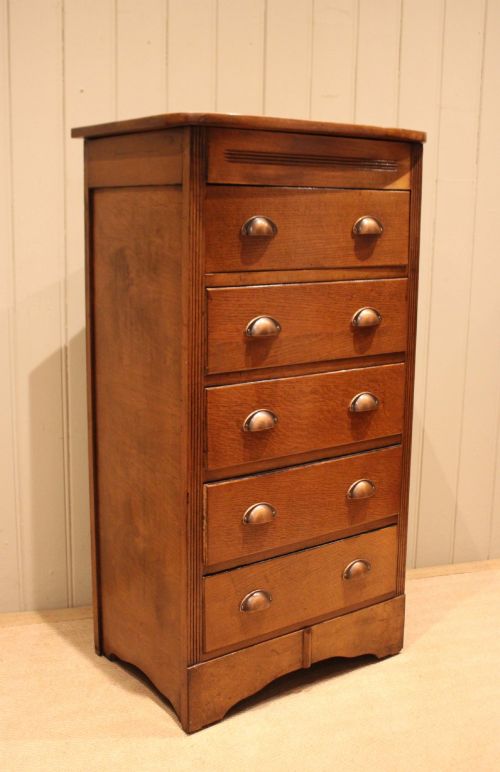
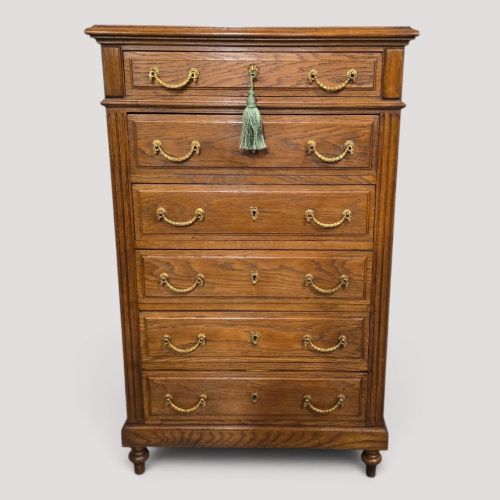
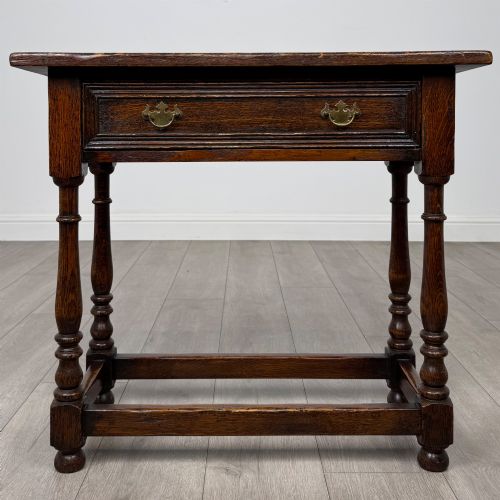
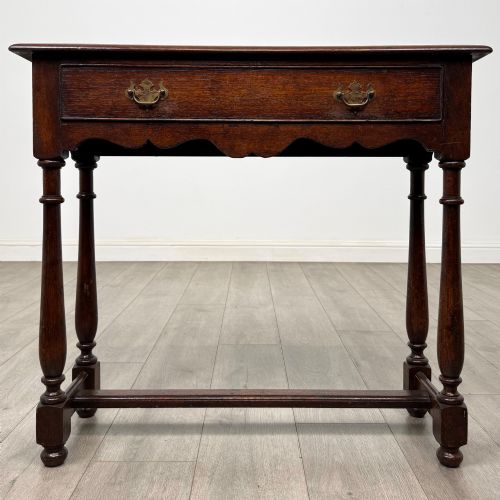
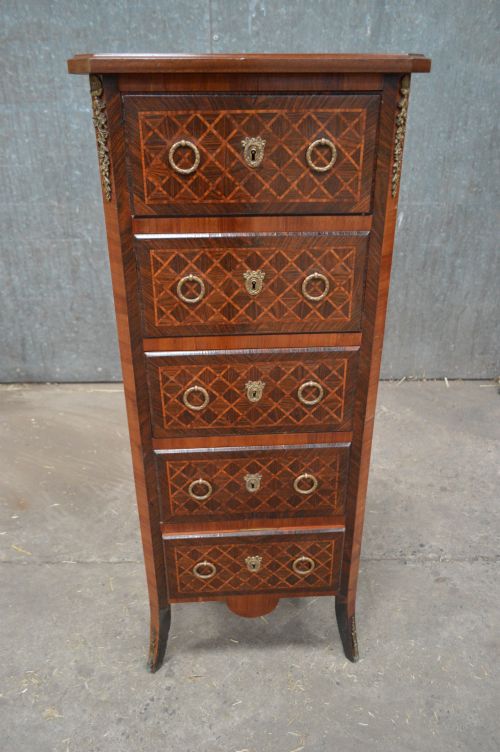
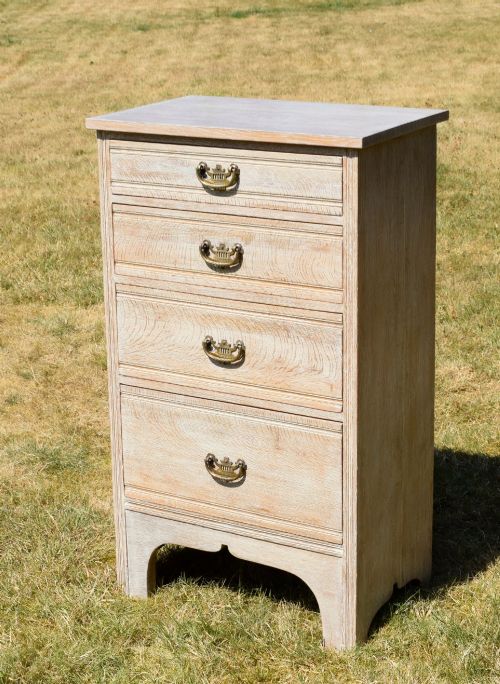
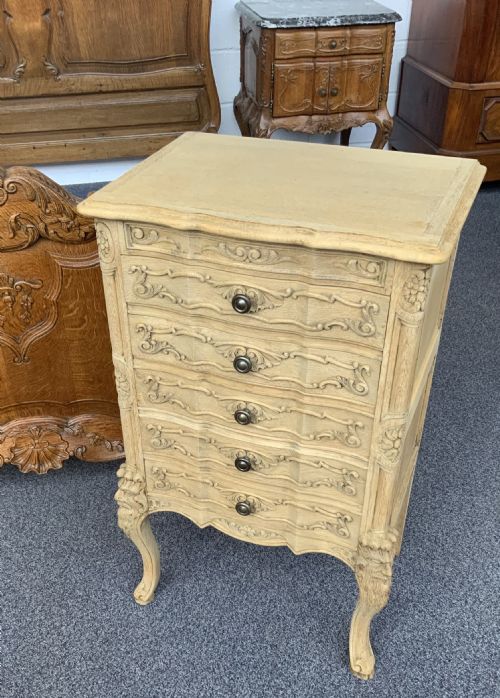
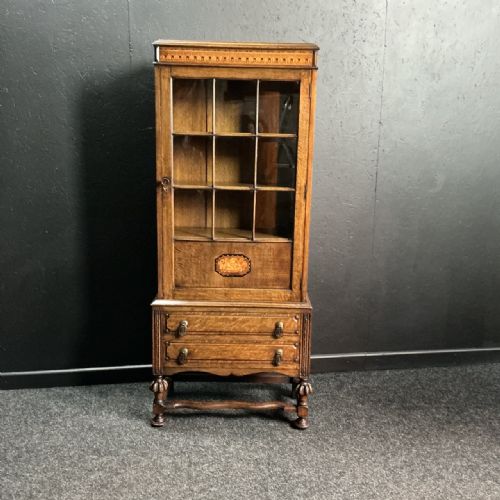
When you search for narrow oak drawers, you encounter a selection of compact storage pieces designed to fit tight footprints without sacrificing period charm. The items gathered here span from Georgian and Victorian examples to Edwardian and early twentieth century interpretations, encompassing tallboys, Wellington chests, and bedside cabinets.
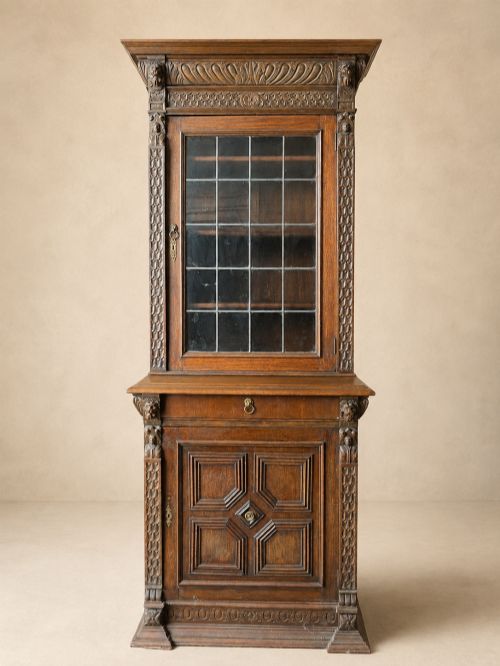
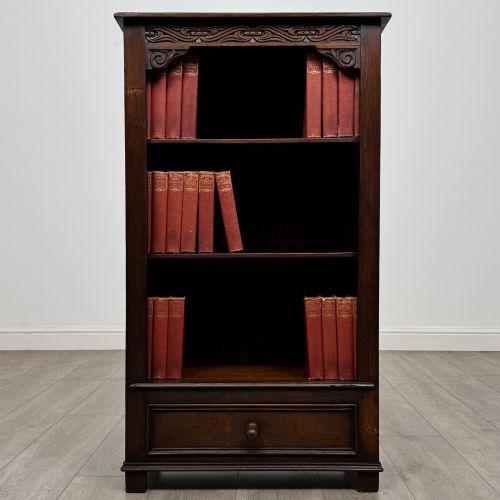
The most common formats you will meet on this page are tall chests and Wellington chests, alongside slim bedside tables and petite bookcases with drawer storage. These pieces originate from English and French workshops, utilising timber to provide vertical storage solutions for smaller rooms.
How they were made
Makers constructed these pieces primarily using solid oak timbers, occasionally incorporating secondary woods like maple, alongside brass hardware and glass elements. Carving, bleaching, liming, and parquetry techniques appear across the selection, showing how artisans finished the timber surfaces.
Joinery methods rely on traditional drawer construction and frame assemblies suited to narrow proportions. The inclusion of locking mechanisms on Wellington chests and specialised fitted interiors in bureau bookcases demonstrate precise carpentry designed for daily utility.
Several slim chests include locking bars to thwart overly curious Victorian onlookers.
What varies in quality
The distinction between standard examples and finer items rests on the selection of timber grain, such as figured pollard oak or rich golden oak, and the crispness of carved details. Superior pieces display harmonious proportions, integrated brass pulls, and well-fitted drawer runners that operate smoothly.
Execution of decorative treatments, from French parquetry to Gothic paneling or Arts and Crafts linear motifs, separates basic utilitarian furniture from exceptional cabinet work. Original hardware, keys for locking mechanisms, and intact finishes elevate the standing of any given piece.
Maple and Co
The Narrow Oak Drawers Glossary
- Wellington chest
- A tall, narrow chest of drawers secured by a hinged vertical locking flap that fastens over one side of the drawer edges. This clever design kept confidential papers secure in nineteenth century studies.
- Tallboy
- A tall chest of drawers traditionally formed by stacking one cabinet on top of another or building a single tall vertical unit. These pieces maximise vertical storage capacity in rooms with limited floor space.
- Parquetry
- A geometric mosaic of wood pieces used for decorative inlay on furniture surfaces. French cabinet makers frequently employed this technique to create patterned textures on drawer fronts.
- Limed oak
- Timber treated with a special finish that leaves a white or pale pigment in the open grains of the wood. This technique gained popularity during the Edwardian period to lighten heavy oak furniture.
Narrow Oak Drawers: Frequently Asked Questions
Where do I put narrow oak drawers?
These compact pieces suit hallways, alcoves, and bedrooms where standard furniture proves too wide. Their slender footprints provide practical storage without crowding the room.
They function well as bedside chests, compact tallboys, or small side units that hold everyday items while maintaining clear walkways.
How do I identify a Wellington chest?
A Wellington chest stands out through its tall, narrow proportions and a hinged locking pilaster on the right side. Swinging this locking bar aside releases the drawers.
Most examples feature seven drawers and originated in the nineteenth century, designed to offer secure storage for papers and personal belongings.
What periods do these pieces cover?
The selection spans from Georgian and Victorian eras through the Edwardian period and into the nineteen thirties. Each era brings distinct proportions and decorative details.
Georgian and Victorian pieces often show traditional dark timber and functional styling, whereas Edwardian and later pieces introduce limed finishes, arts and crafts influences, and art deco lines.
How do I care for antique oak?
Keep oak furniture away from direct heat sources and strong sunlight to prevent the timber from drying out or splitting. Dust regularly with a dry cloth.
Applying a traditional beeswax occasionally helps nourish the wood surface and preserves the historical finish without creating a synthetic buildup.