


Narrow Nightstands
Narrow nightstands are compact bedside pieces designed to fit tight spaces while offering practical storage by the bed.
Narrow Nightstands
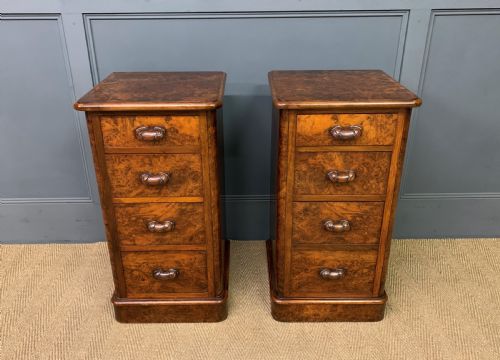
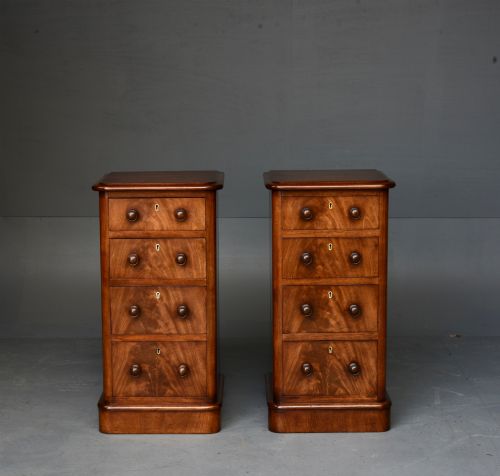
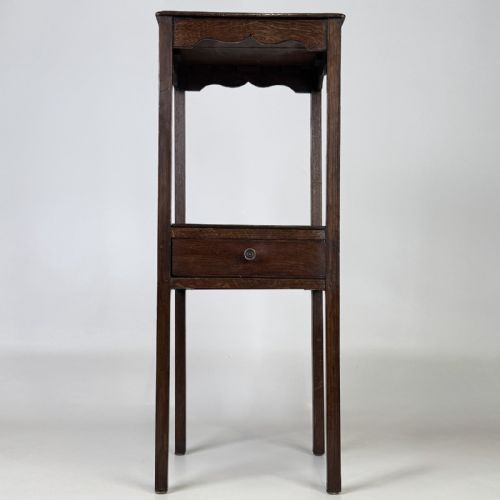
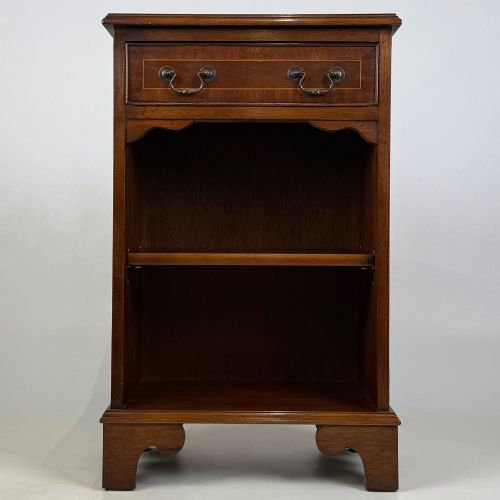
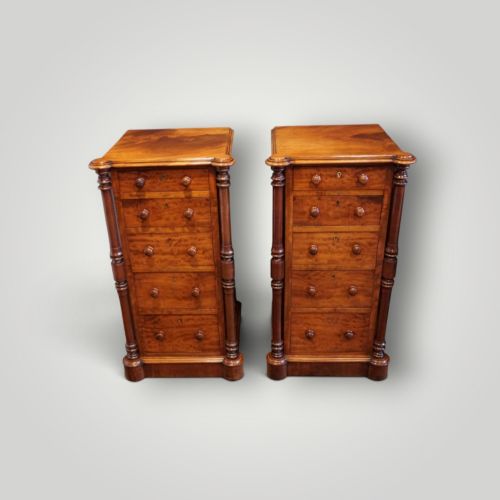
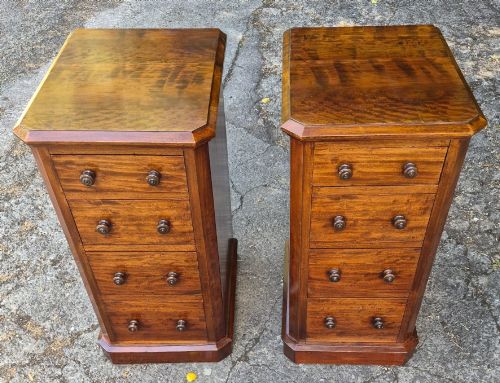
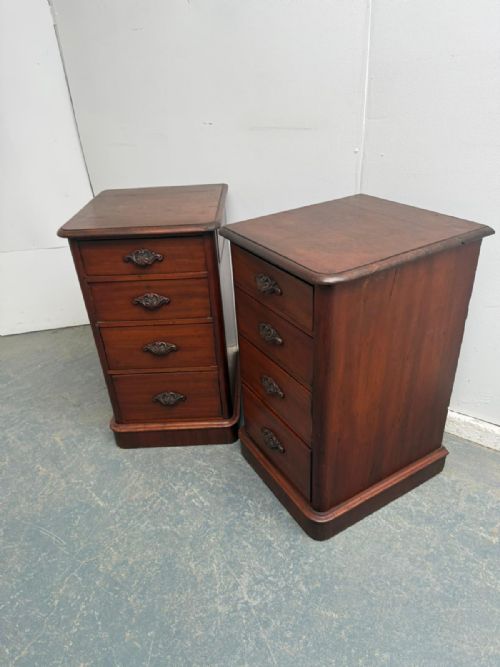
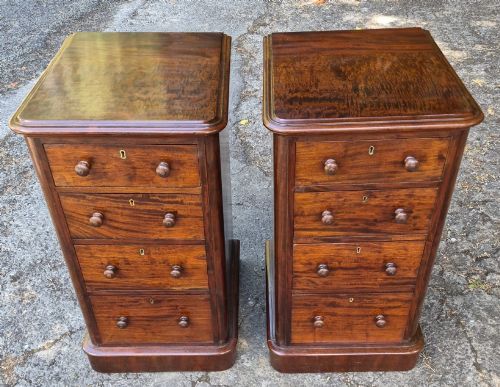
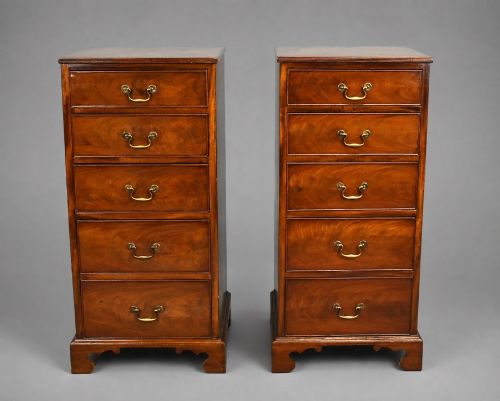
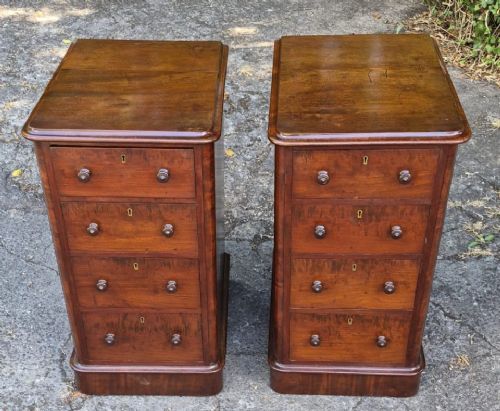
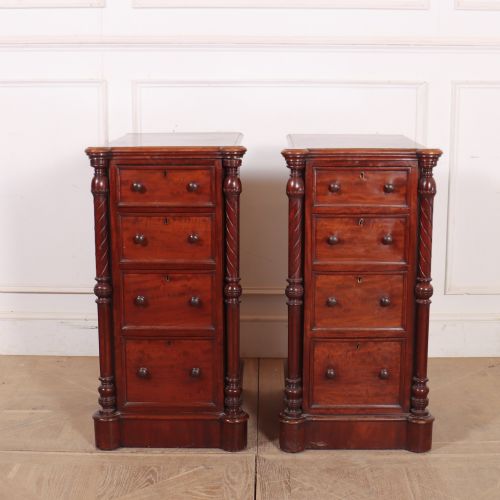
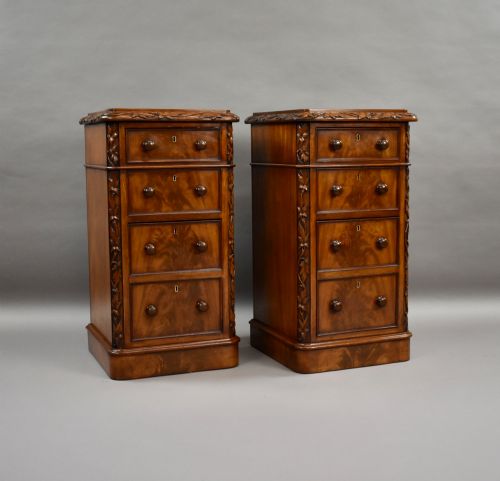
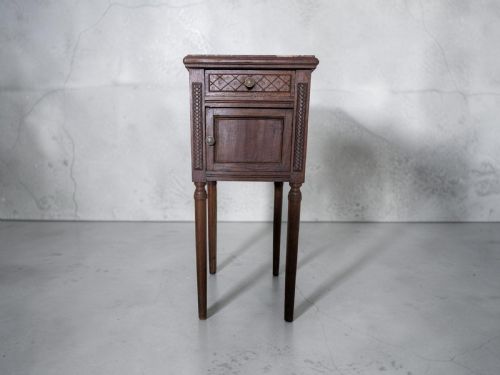
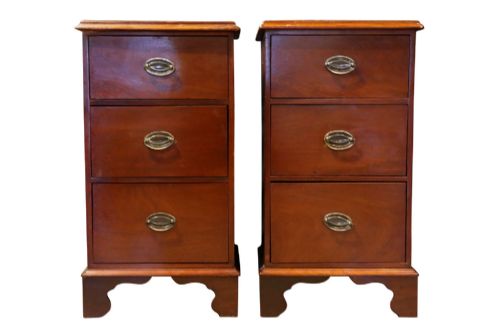
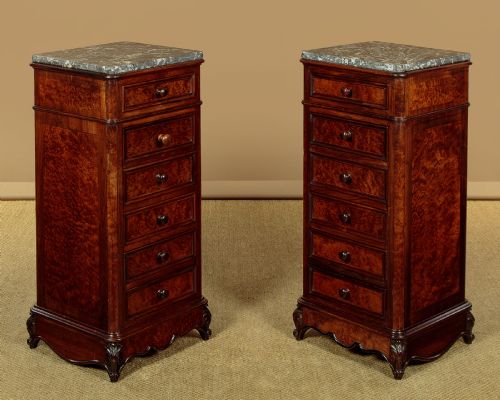
When you search for narrow nightstands, you encounter a variety of compact bedside furniture built to occupy minimal floor space next to a bed. These pieces primarily manifest as bedside chests, bedside cabinets, and small side tables originating from the Victorian, Edwardian, and Art Deco periods, alongside pieces dating through the nineteenth and early twentieth centuries.
The selection ranges from simple oak side tables and walnut lockers to tall mahogany chests of drawers with multiple tiers. Makers often utilised compact dimensions, such as widths of thirty-seven centimetres, to solve spatial constraints in historical bedrooms without sacrificing surface area or enclosed storage.
Forms span from Georgian Revival styles and English Country designs to French Provincial pieces, incorporating specific utilitarian variants like campaign bedside cabinets and tambour front stands. Buyers will find single items as well as matching pairs intended to flank a bed symmetrically.
How they were made
Makers constructed these bedside pieces using solid timbers and decorative veneers such as mahogany, walnut, oak, rosewood, teak, and satin birch. These woods were chosen for their durability and grain patterns, frequently paired with secondary woods for internal drawer construction.
Surface ornamentation involved intricate techniques including marquetry inlay, parquetry veneer, and wax finishes to highlight the natural figure of the timber. Metal elements such as brass handles, hinges, and corner brackets appeared on campaign styles and utilitarian cabinets to reinforce edges and ease handling.
Structural methods included bracket feet, panelled framing, and tailored drawer configurations ranging from single compartments to four stacked drawers or lockers. The joinery reflects the period standards of nineteenth and early twentieth-century cabinetmakers working in English and continental workshops.
Listings feature woods including mahogany, walnut, rosewood, and oak across Victorian, Edwardian, and Art Deco periods.
What varies in quality
The standard of a narrow nightstand depends heavily on the selection of timber and the precision of the cabinetmaker's joinery. Superior examples display carefully matched wood grains, such as burr walnut or figured mahogany, integrated smoothly across drawer fronts and top surfaces.
Refinement in secondary details, like crisp parquetry, delicate marquetry inlay, and well-fitted brass hardware, separates standard utilitarian tables from finer workshop productions. The integrity of the internal construction, including smooth drawer action and solid backboards, marks the distinction between ordinary utility items and exceptional surviving pieces.
Warings Liverpool·James Shoolbred
The Narrow Nightstands Glossary
- Nightstand
- A small bedside table or cabinet designed to hold lamps, books, and nighttime essentials within arm's reach of the bed.
- Marquetry
- The art of applying decorative veneer pieces in wood, brass, or other materials to form pictorial or geometric patterns on furniture surfaces. This technique elevates the visual richness of Victorian and Edwardian cabinets.
- Parquetry
- A geometric mosaic of wood pieces used for decorative floors and furniture panels, often seen on early twentieth-century tabletops. It creates a striking diagonal or checkered pattern across the timber.
- Tambour
- A flexible shutter made of narrow strips of wood glued to canvas, allowing a door to slide open around a curve. This mechanism appears on specialised nineteenth-century stands.
- Bracket foot
- A furniture foot shaped like a bracket, typically curving outward and tapering toward the base, providing stable support for chests and cabinets without heavy legs.
Narrow Nightstands: Frequently Asked Questions
What periods do narrow nightstands come from?
The pieces span the Victorian, Edwardian, and Art Deco eras, alongside broader nineteenth-century examples and early twentieth-century designs.
These periods encompass various regional English and continental workshops producing compact bedroom furniture.
Are these bedside pieces usually sold as pairs?
Many listings feature matching pairs designed to sit symmetrically on either side of a bed. Single items also appear frequently for standalone placement.
Buyers seeking balanced bedroom layouts often focus specifically on these matching configurations.
What materials were used to build them?
Cabinetmakers primarily utilised hardwoods such as mahogany, walnut, oak, and rosewood, often enhanced with exotic veneers. Brass hardware and marble tops also feature on selected designs.
These materials provided the structural strength and decorative potential required for daily bedroom use.
How do I measure for a narrow nightstand?
Check the available floor width next to your bed and compare it against specific dimensions, such as widths starting around thirty-seven centimetres. Account for clearance needed to open drawers and cabinet doors comfortably.
Height is equally important to ensure the surface aligns well with the top of your mattress.