


Narrow Display Unit
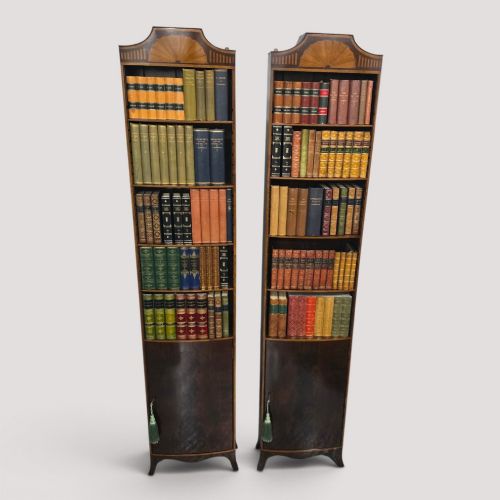
A narrow display unit provides vertical storage and display for books and cherished objects without dominating a room.
Narrow Display Unit
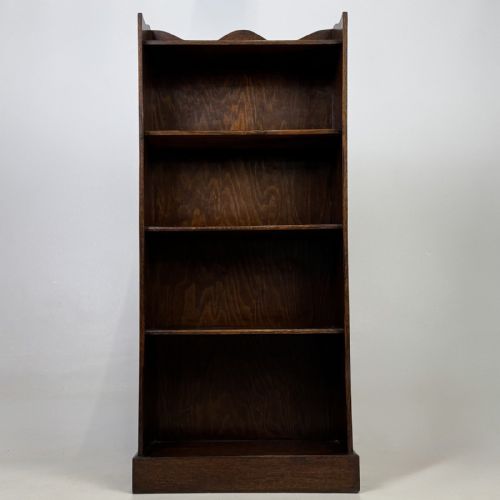
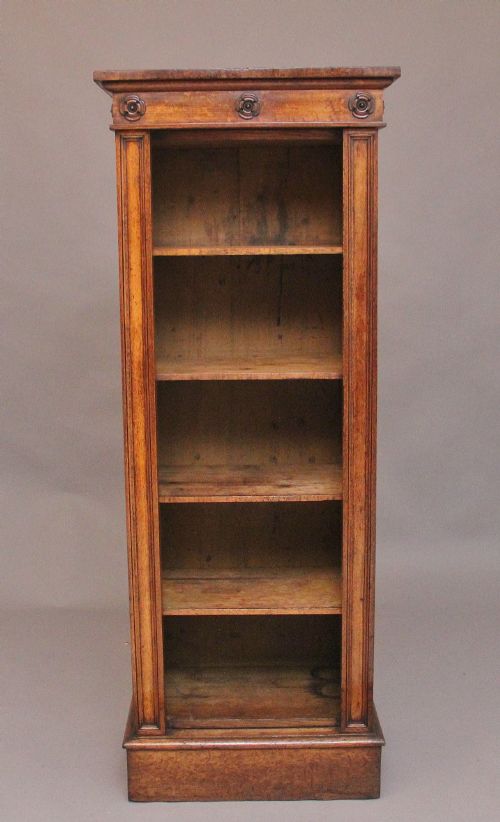
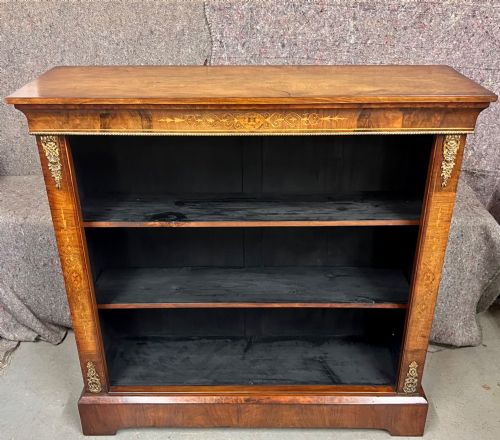
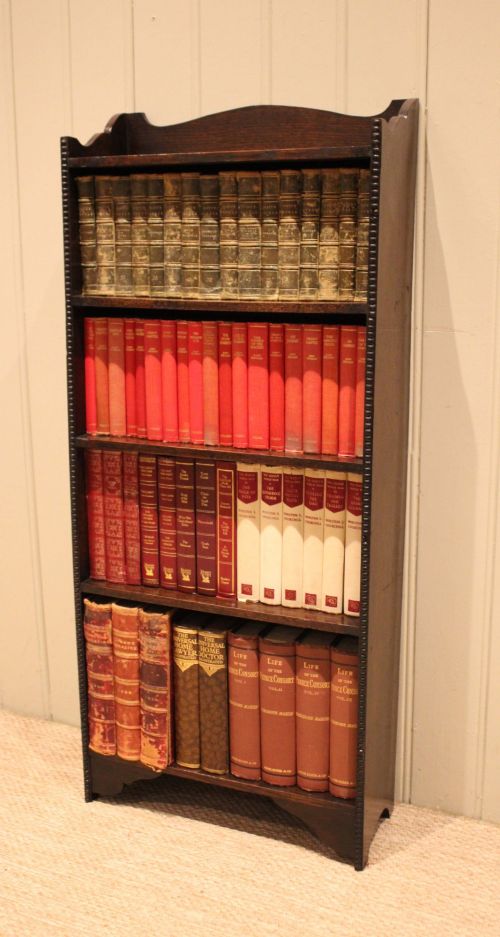
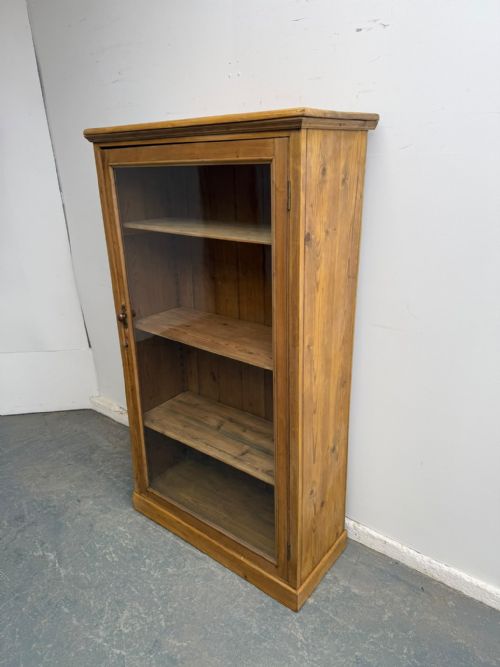
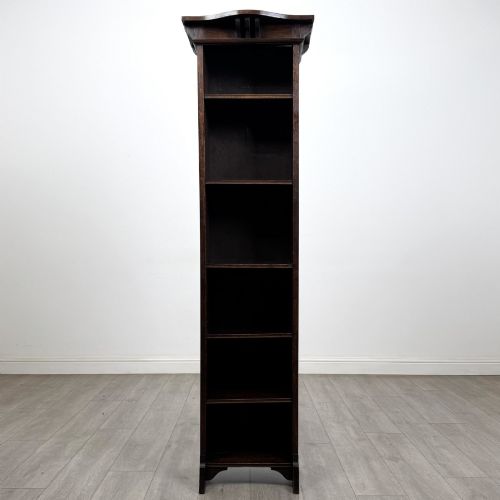
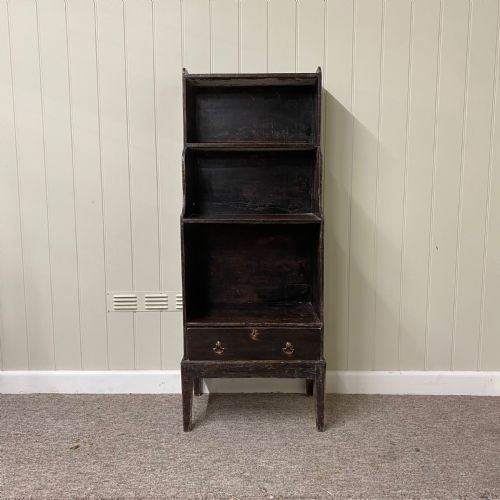
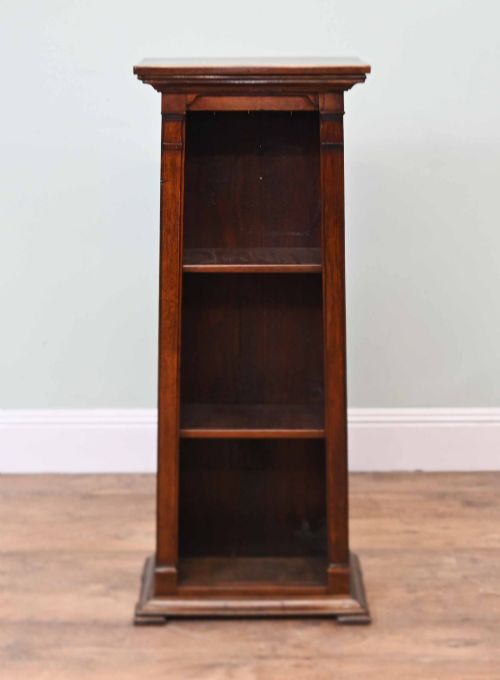
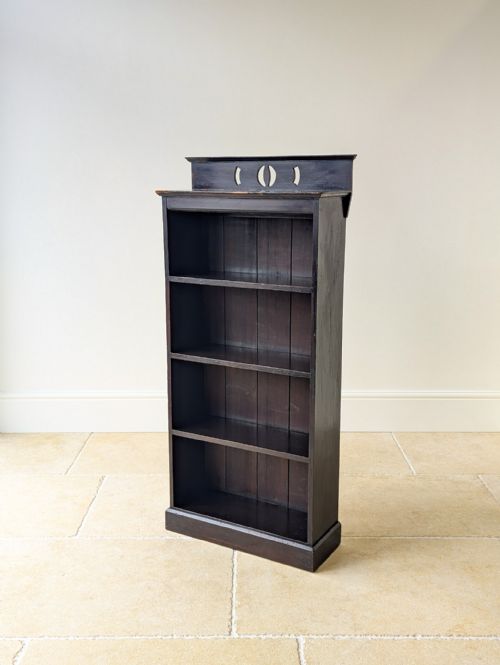
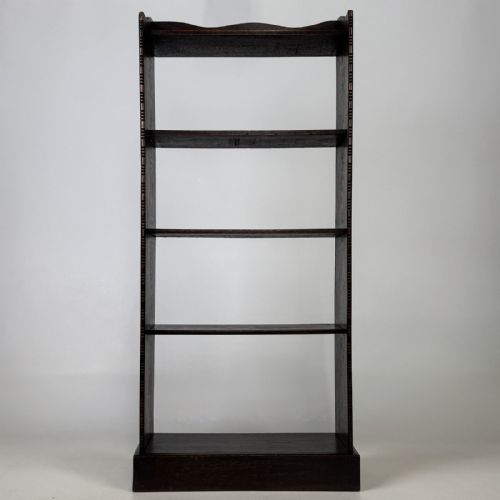
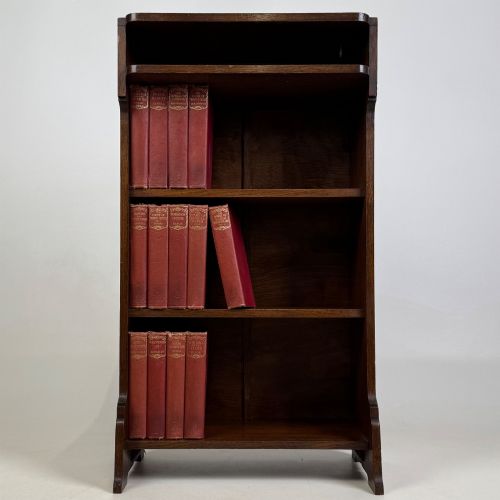
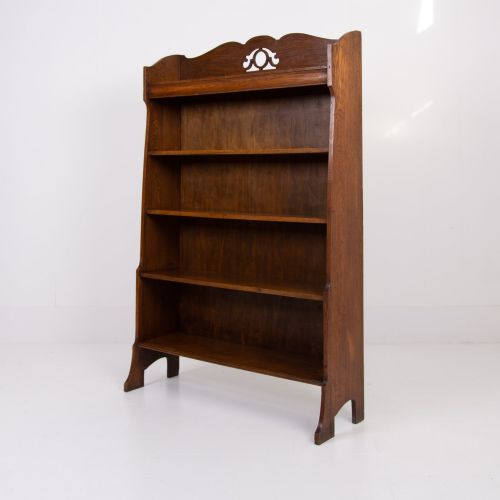
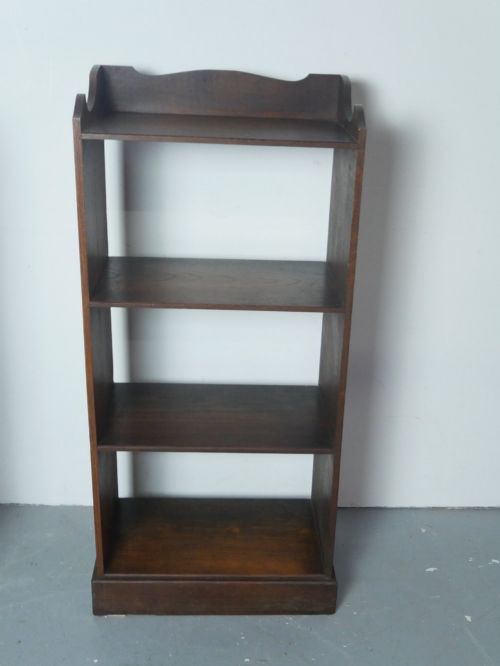
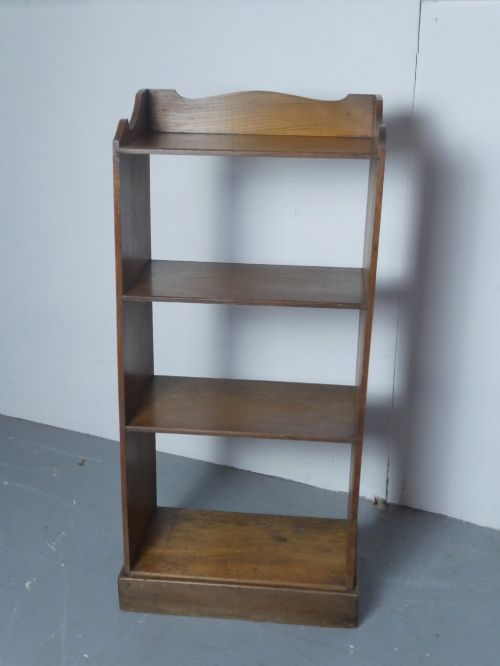
A narrow display unit primarily manifests on this page through various forms of open bookcases, etageres, whatnots, and slim cabinets originating from the Victorian, Edwardian, and early twentieth-century periods. These pieces are designed to fit into compact spaces while offering accessible shelving for books and decorative items.
The materials span oak, mahogany, rosewood, and pine, reflecting the dominant cabinet-making woods of the nineteenth and early twentieth centuries. Many examples exhibit specific stylistic influences such as Arts and Crafts, Georgian Style, and Regency Revival.
Buyers most frequently encounter compact oak and mahogany open bookcases, alongside waterfall designs and tiered etageres. Their modest proportions make them suitable for placing in alcoves or narrow hallways.
Materials and construction methods
Cabinet makers utilised solid hardwoods like oak, mahogany, and rosewood alongside softer pine, often applying paint finishes or decorative inlays to enhance the visual appeal. Brass fittings and glass elements appear on specific glazed cabinets and tiered structures.
Construction relies on traditional joinery techniques suited to slim furniture proportions, with adjustable shelving systems featuring in several nineteenth and twentieth-century bookcases. Raised galleries, dentil cornices, and decorative cut-outs provide architectural detail without increasing the overall footprint.
Narrow Display Unit Retail Price Guide 2026
Typical asking prices for narrow display unit among the pieces listed under this phrase on Sellingantiques today, from the lower quarter to the upper quarter. They describe what is for sale here now, not the wider market.
Several slim bookcases possess decorative cut-outs originally designed for extra finger grip, proving that even a narrow shelf needs character.
Assessing quality in compact furniture
Quality in a narrow display unit is determined by the selection of timber and the precision of the joinery rather than the sheer complexity of the piece. Dense grain in oak and mahogany, coupled with finely executed carved edges or inlaid details, distinguishes finer cabinet work from utilitarian storage.
The integrity of the structural frame and the smooth adjustment mechanism of shelves reflect the skill of the original maker. Well-balanced proportions and clean lines ensure the piece remains stable despite its slender dimensions.
The Narrow Display Unit Glossary
- Etagere
- A set of open shelves used for displaying small objects or ornaments. These pieces typically feature multiple tiers supported by slender columns.
- Whatnot
- A multi-tiered piece of freestanding furniture designed for books or ornaments. They gained popularity during the Victorian period for displaying collections.
- Waterfall bookcase
- A set of open shelves where each tier steps back progressively from the one below. This arrangement creates a cascading profile.
- Dentil cornice
- A decorative moulding featuring a series of small, evenly spaced rectangular blocks. It frequently appears along the upper edge of Georgian style cabinetry.
- Raised gallery
- A low decorative railing or pierced border surrounding the top shelf of a cabinet or bookcase. It prevents items from sliding off the edge.
Narrow Display Unit: Frequently Asked Questions
Where should I place a narrow display unit?
These compact pieces suit narrow hallways, tight alcoves, and smaller reception rooms where floor space is limited. Their slender footprint allows them to utilise awkward vertical areas effectively.
Position them away from direct heat sources to protect the timber and maintain the stability of the joints over time.
How do I care for antique wood shelving?
Dust the surfaces regularly with a soft, dry cloth to prevent particulate buildup on the finish. Avoid applying modern aerosol polishes that can leave a silicone residue.
Maintain a stable room humidity to prevent the solid oak, mahogany, or rosewood from expanding or contracting excessively.
Can adjustable shelves hold heavy books?
Many Victorian and Edwardian bookcases incorporate adjustable wooden shelving systems designed for standard library use. Assess the thickness of the timber board before loading it with heavy volumes.
Distribute heavier books evenly across the shelf span to maintain structural balance.