



Narrow Chiffonier
A narrow chiffonier is a compact storage piece that combines a surface for display with concealed shelving, ideal for rooms where space is tight.
Narrow Chiffonier
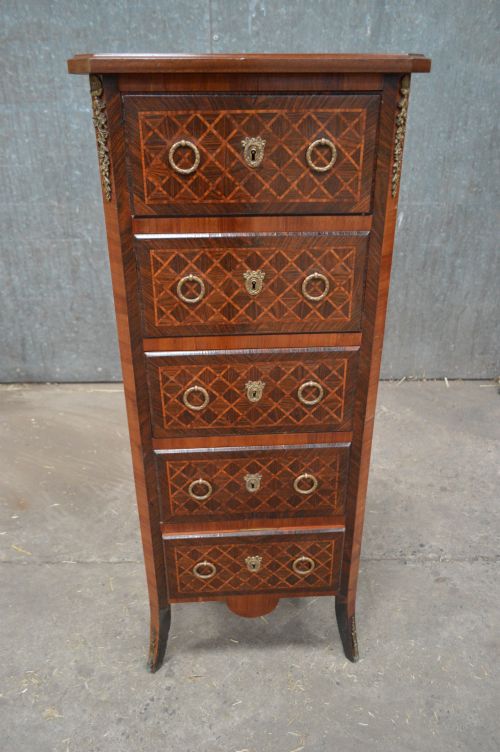
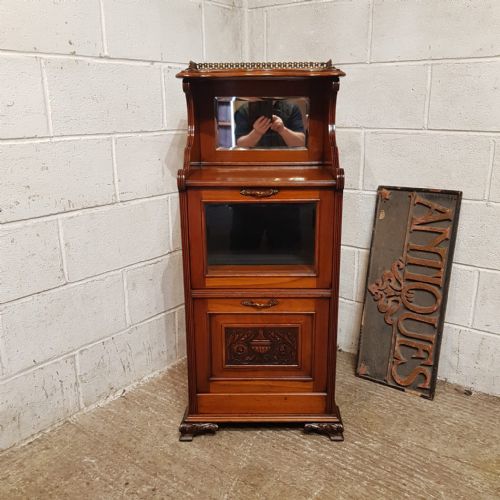
When you search for narrow chiffonier, you encounter compact side cabinets and cupboards originating across the eighteenth, nineteenth, and early twentieth centuries. These pieces typically combine small proportions with practical internal storage.
The examples met on this page span Georgian, William IV, Victorian, and Edwardian periods, appearing in forms such as side cabinets, sideboards, and cupboards.
Makers designed these items to fit smaller domestic spaces without sacrificing the utility of larger sideboards or bookcases.
How they were made
Cabinet makers utilised dense hardwoods such as mahogany, rosewood, and oak for the primary structures, often incorporating decorative veneers like kingwood and parquetry.
Metal elements including brass appear in hardware and grill doors, while glass panels feature in bookcase variants.
Narrow Chiffonier Retail Price Guide 2026
Typical asking prices for narrow chiffonier among the pieces listed under this phrase on Sellingantiques today, from the lower quarter to the upper quarter. They describe what is for sale here now, not the wider market.
What varies in quality
Superior examples demonstrate refined proportions and meticulous selection of timber grain, particularly in rosewood and mahogany surfaces.
The integration of decorative details such as brass grill work and parquetry distinguishes finer pieces from simpler utility cabinets.
The Narrow Chiffonier Glossary
- Chiffonier
- A low sideboard or cabinet, typically featuring enclosed shelving below and sometimes a raised tier above. It evolved during the eighteenth century as a versatile dining room or parlour piece.
- Parquetry
- A geometric mosaic of wood pieces used for decorative floors and cabinet surfaces. It requires precise cutting and fitting of contrasting timbers.
- George III
- The period of British design spanning from seventeen sixty to eighteen twenty, characterised by classical restraint and elegant proportions. Furniture from this era often utilises high quality mahogany.
- William IV
- The design era spanning the eighteen thirties, known for robust forms and classical revival motifs. Pieces from this time frequently employ dark, heavily grained rosewood.
Narrow Chiffonier: Frequently Asked Questions
What is a narrow chiffonier?
A narrow chiffonier is a compact storage cabinet designed for smaller rooms, combining a top surface with enclosed shelving.
These pieces typically date from the nineteenth or early twentieth centuries and serve as practical display units.
How were narrow chiffoniers used?
Historically, households utilised these cabinets in dining rooms and parlours to store tableware, linens, or books.
The top surface provided space for serving dishes or decorative objects.
Which woods are common?
Makers frequently employed dense hardwoods such as mahogany and rosewood for their durability and rich grain.
Oak and walnut also appear in pieces from different periods.
How do I identify the period?
Period identification relies on observing the stylistic details, construction techniques, and timber choices characteristic of eras like Georgian or Victorian.
Design motifs often reflect the prevailing aesthetic of the time in which the cabinet was built.