



Napoleon III Sideboard
A napoleon iii sideboard brings heavy French grandeur to a room through dark wood, intricate brass inlay and gleaming marble.
Napoleon III Sideboard
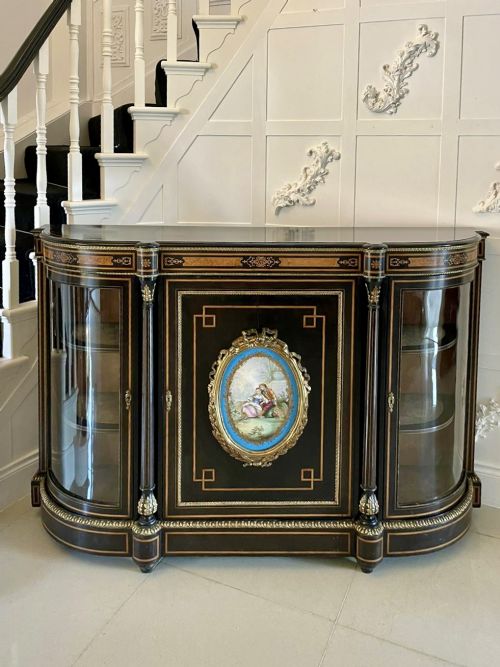
A napoleon iii sideboard encompasses low credenzas, side cabinets and pier cabinets designed during the nineteenth century under French influence. These pieces serve as grand display surfaces and storage units, often featuring serpentine fronts and glazed doors.
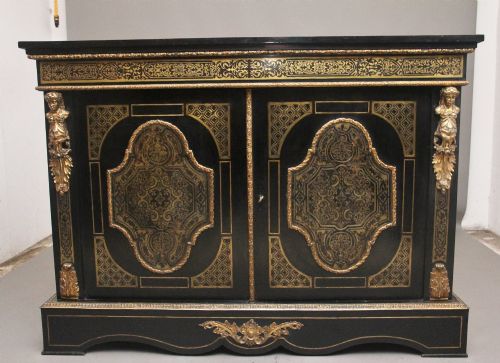
The version most commonly met on this page is an ebonised timber cabinet mounted with brass boullework and topped with marble. Such pieces reflect the revival styles of the period, drawing heavily on earlier French royal aesthetics.
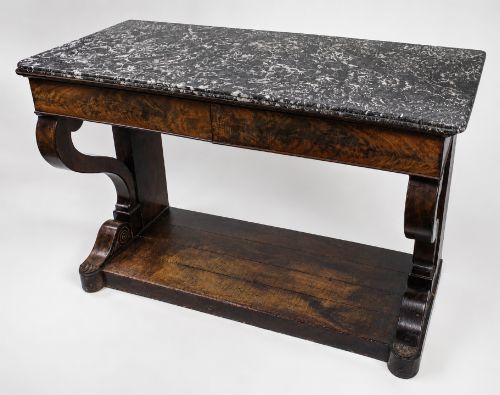
Forms range from breakfront credenzas to compact pier cabinets and chiffoniers. Each type shares a heavy emphasis on decorative surface treatment rather than simple utilitarian storage.
Materials and Technique
Makers built these cabinets using foundational timbers such as ebonised wood, kingwood, rosewood and amboyna. These woods provided a dark, rich canvas for elaborate metallic and stone decoration.
Craftsmen applied intricate brass and tortoiseshell boulle marquetry alongside floral wood marquetry and pietra dura stone inlay. Ormolu and gilt bronze mounts punctuated the designs, framing panels of Sevres porcelain and Carrara marble tops.
One diminutive piece is specifically proportioned as a child's credenza, proving that miniature grandeur existed in nineteenth century France.
What Varies in Quality
The standard of a napoleon iii sideboard rests upon the crispness of its gilt bronze and ormolu mounts and the precision of the brass inlay. Finer examples display meticulous hand-chasing in the metalwork and seamless integration of porcelain plaques.
Subtle variations in timber selection and the complexity of the marquetry distinguish standard workshop production from exhibition pieces. The weight and quality of the marble top also indicate the original investment in the furniture.
Paul Sormani
The Napoleon III Sideboard Glossary
- Boulle
- A form of marquetry using brass and tortoiseshell inlaid in intricate patterns, named after a royal cabinet maker. It defines the rich surface texture of many nineteenth century French cabinets.
- Ormolu
- Gilded bronze used for decorative mounts and furniture trim. It provides bright metallic contrast against ebonised and dark woods.
- Pietra dura
- Inlay work using cut and fitted polished coloured stones to create pictorial designs. This technique appears on elite nineteenth century cabinet panels.
- Credenza
- A sideboard or display cabinet often featuring glass doors and decorative mounts. It functions as both storage and a display surface for porcelain and silver.
- Serpentine
- A curved line bending inward and outward, typical of advanced cabinet fronts. This contour requires skilled carpentry and adds fluid motion to heavy furniture.
Napoleon III Sideboard: Frequently Asked Questions
What is a napoleon iii sideboard?
A napoleon iii sideboard is a nineteenth century French cabinet designed for display and storage, typically constructed from dark wood with metal mounts.
These pieces reflect historic revival styles popular during the French Second Empire, combining rich materials with elaborate ornamentation.
Where were these cabinets placed?
Owners placed these sideboards in principal entertaining rooms such as salons and dining parlours. They functioned as focal points for displaying fine porcelain and decorative objects.
The marble tops provided durable surfaces that withstood the placement of heavy bronze lamps and vases.
How do I identify a boulle finish?
Boulle work consists of detailed brass and tortoiseshell cut into scrolling patterns and pressed into the wood surface. The metal catches the light while the dark shell provides a deep background.
This technique requires immense patience and skill from the cabinet maker.
Are marble tops original?
Marble tops on these cabinets were fitted during initial construction to provide a luxurious and functional surface. Varieties like Carrara and coloured marble complement the dark ebonised carcases.
They sit directly upon the timber frame, often following the serpentine curves of the cabinet top.
How do I style a napoleon iii cabinet?
These cabinets pair well with minimalist modern interiors as statement pieces or within traditional rooms among complementary French furniture. Their dark polished wood grounds a room visually.
Lighting should highlight the metallic mounts and polished stone surfaces without competing with the ornate marquetry.