
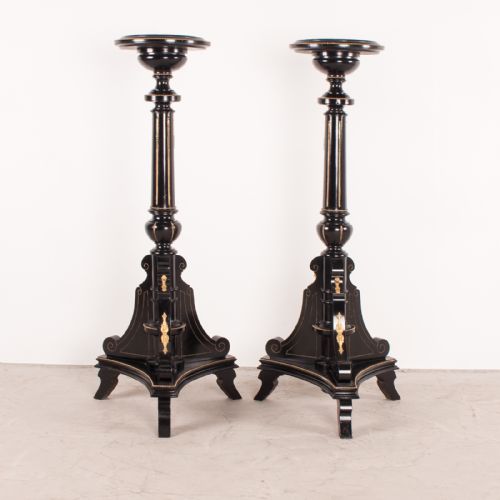


Napoleon III Pedestal
These pieces for a napoleon iii pedestal offer dramatic nineteenth-century French display surfaces that bring striking architectural presence to any room.
Napoleon III Pedestal
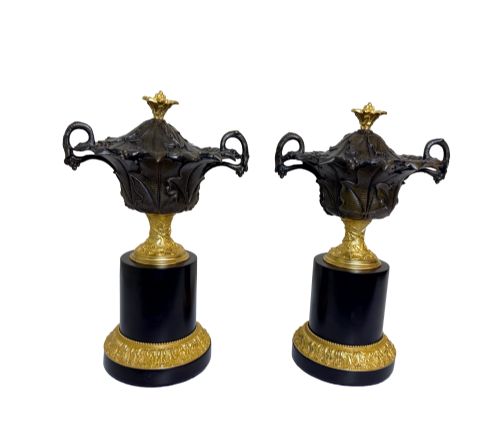
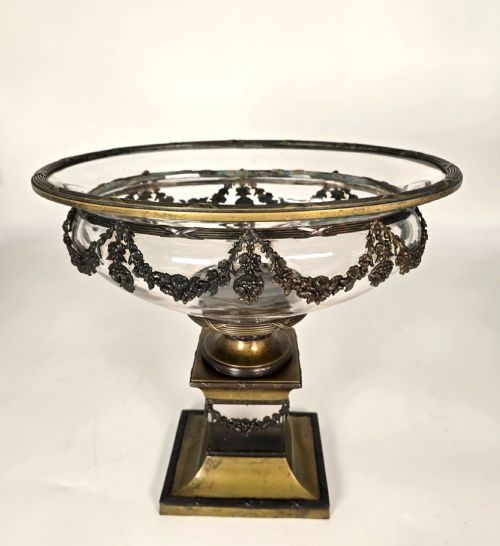
When you search for a napoleon iii pedestal, you are looking at nineteenth-century French display furniture and stands created during the Second Empire and revival periods. The selections here include striking torcheres, marble stands, and pedestals accompanying monumental clocks, designed to elevate sculptural or decorative objects.
Most examples you will encounter date from the middle to late nineteenth century, reflecting eclectic revivals such as Louis XVI and Rococo styles. These supports function primarily to showcase decorative arts rather than serve as writing surfaces or dining tables.
Materials and construction
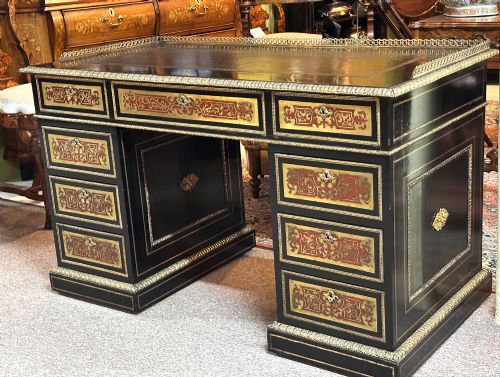
These works rely on dense ebonised wood or walnut foundations richly mounted with cast ormolu and gilt bronze accents. Surfaces frequently incorporate inset marble tops, brass inlay, and tortoiseshell details executed in elaborate Boulle work techniques.
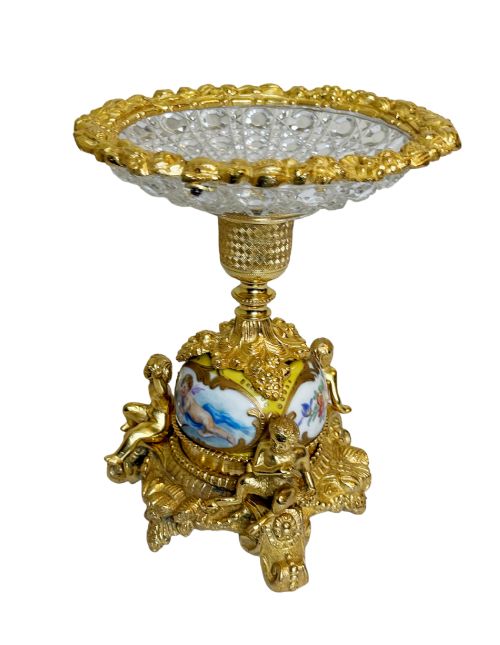
The construction combines cabinetmaking joinery with precision metal casting, mounting heavy bronze mounts directly onto polished stone and darkened timber. Artisans utilised contrasting finishes, pairing dark ebonised woods with bright gilt metalwork to create maximalist visual impact.
Revival styles on this page span Rococo, Louis XVI, and Neoclassical vocabularies.
Assessing quality
Quality rests in the crispness of the gilt bronze chasing and the weight of the marble or onyx utilised for the tops. Superior examples display refined hand-chiselling on metal mounts and seamless integration between timber frames and cast elements.
Lower tiers show repetitive machine casting and simpler veneering without the intricate Boulle brass inlay or hand-finished surface details seen on finer workshop productions.
Zwiener Jansen Sucesseur
The Napoleon III Pedestal Glossary
- Ormolu
- Gilded bronze mounts applied to furniture and decorative objects for ornamentation. This technique involved applying a mercury and gold amalgam to cast bronze before heating.
- Boulle work
- A style of marquetry utilising brass and tortoiseshell inlaid in intricate patterns. Named after the master cabinetmaker André-Charles Boulle, it defines grand nineteenth-century French furniture.
- Torchere
- A tall stand or ornamental candlestick designed to hold a light source or display a decorative object at height. In nineteenth-century interiors, these served purely decorative display functions.
- Ebonised
- Wood treated with a dark stain or finish to imitate ebony. This dark ground highlights the brightness of applied ormolu mounts and marble elements.
Napoleon III Pedestal: Frequently Asked Questions
How were these stands used?
These pieces served as elevated platforms for display rather than functional working furniture. Owners placed bronze sculptures, porcelain urns, clocks, or torcheres atop them to catch the eye in reception rooms.
Their heavy construction and decorative presence meant they remained static focal points within nineteenth-century room schemes.
How do I care for ebonised wood?
Ebonised surfaces require gentle dusting with a soft, dry cloth to prevent micro-abrasions on the dark finish. Avoid harsh chemical polishes and keep pieces away from direct sunlight and moisture.
Care must also be taken around gilt bronze mounts, ensuring cleaning products do not come into contact with the sensitive metal surfaces.
How can I tell the period?
Dating relies on examining the combination of materials, construction methods, and stylistic revivals present in the piece. Second Empire works from the mid-to-late nineteenth century often mix Louis XVI revival forms with heavy ebonised timbers and cast ormolu.
Signatures or workshop stamps on bronze mounts or timber frames can occasionally provide more precise attribution.