

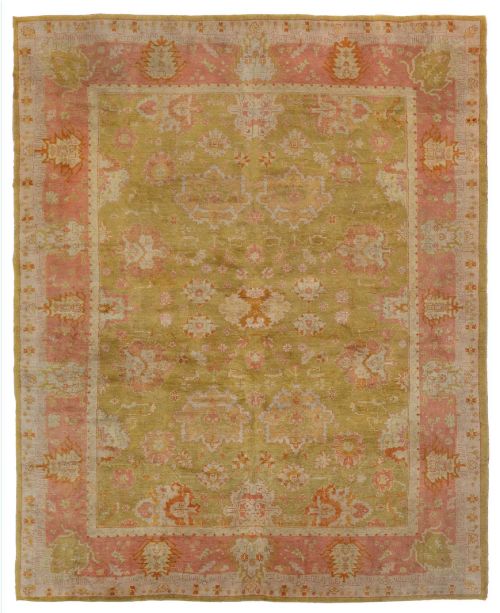
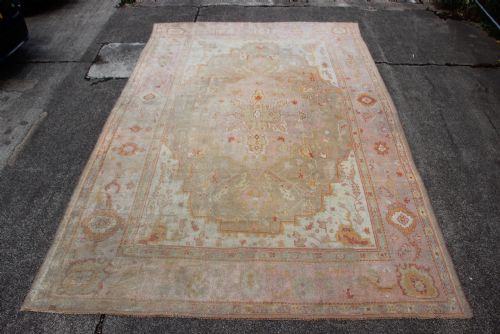


Muted Oushak Carpet
A muted oushak carpet brings understated warmth and historic pattern to a room through faded palettes and generous Anatolian scale.
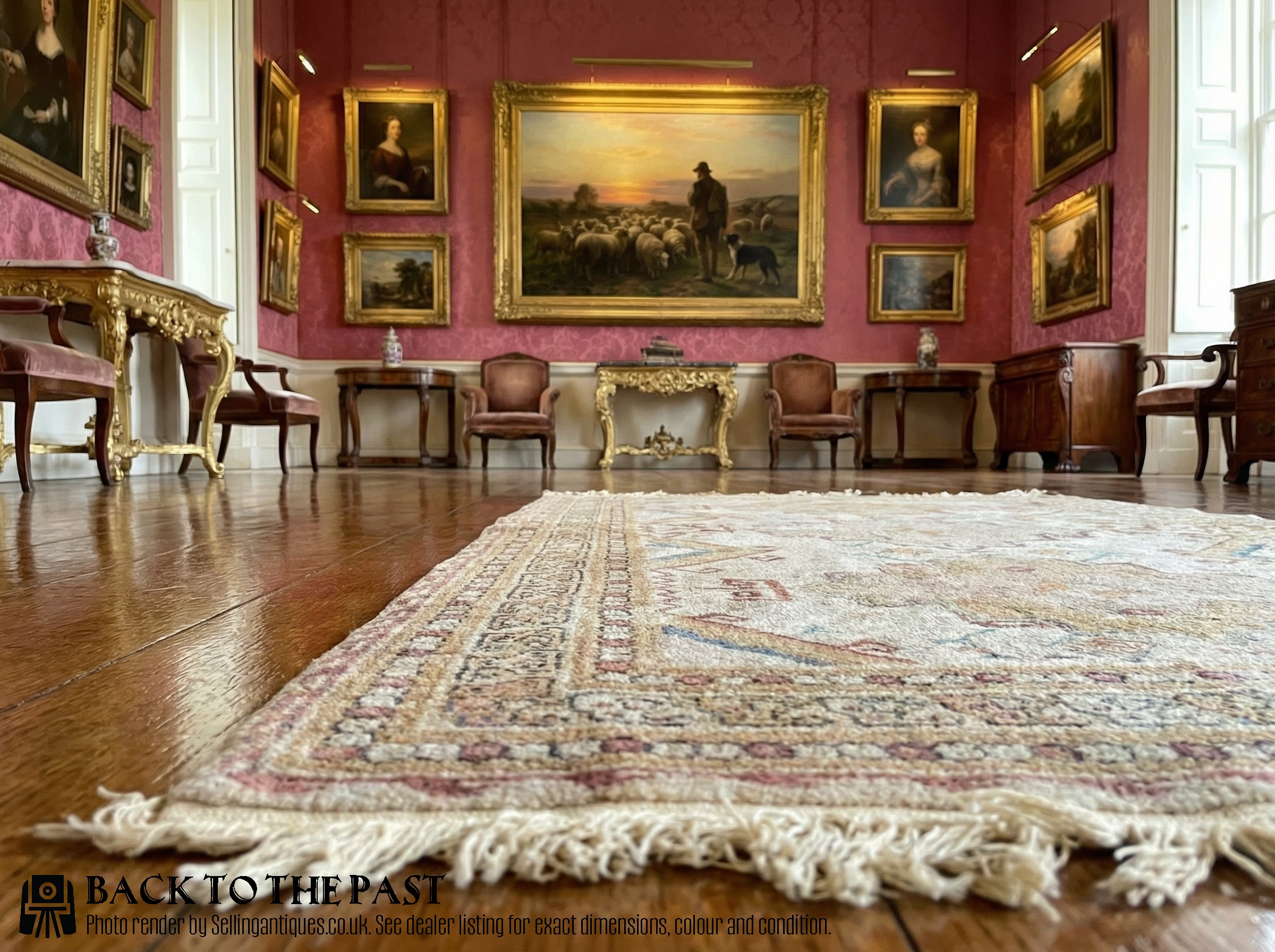
Muted Oushak Carpet
A muted oushak carpet represents a distinct category of floor covering originating from the historic weaving town of Ushak in western Anatolia. When buyers search for a muted oushak carpet, they encounter substantial room-sized rugs and large area formats designed with restrained pastel colours, soft pinks, and beige tones.
The pieces listed here span the late nineteenth century through to the early twentieth century, specifically covering the decades from eighteen eighty to nineteen twenty. These floor coverings bridge traditional Ottoman design motifs with softer, faded aesthetics that suit contemporary and classic interiors alike.
Most examples take the form of large carpets or expansive area rugs rather than small scatter formats. They combine generous proportions with subdued colourways that anchor a space without overwhelming the surrounding furniture and architecture.
How they were made
Traditional construction relies on hand-knotted wool foundation and pile, frequently incorporating angora wool to impart a softer texture and a subtle sheen across the surface. Artisans tied the pile by hand onto sturdy cotton warps andwefts, creating a textile flexible enough for heavy floor use yet supple in the hand.
The characteristic muted palette stems from vegetable dyes that mellowed gracefully over decades of light and wear. Weavers drew upon Ottoman and traditional Anatolian design repertoires, executing large-scale floral and geometric medallions with open fields.
Muted Oushak Carpet Retail Price Guide 2026
Typical asking prices for muted oushak carpet among the pieces listed under this phrase on Sellingantiques today, from the lower quarter to the upper quarter. They describe what is for sale here now, not the wider market.
Footsteps from past centuries echo softly through the faded pile of these enduring wool rugs.
What varies in quality
Quality in these textiles depends upon the finesse of the hand-knotting and the integrity of the wool. Finer knot density allows complex floral and geometric motifs to retain their definition even as the pile softens with age.
The balance of the faded colour palette separates standard workshop output from exceptional examples. A harmonious transition of soft pinks, pale neutrals, and gentle pastels indicates superior dye chemistry and expert handling of the wool during washing.
The Muted Oushak Carpet Glossary
- Oushak
- A traditional style of carpet originating from the town of Ushak in western Turkey, known for large-scale floral designs and subdued palettes.
- Angora wool
- A soft fibre derived from angora goats, utilised in select carpets to provide an unusually soft handle and subtle lustre.
- Hand knotted
- A construction technique where individual yarn lengths are tied manually to the foundation warp threads, ensuring structural durability.
- Ottoman
- A historical design tradition reflecting the artistic motifs and court aesthetics of the Ottoman Empire, frequently featuring large central medallions.
Muted Oushak Carpet: Frequently Asked Questions
What is a muted oushak carpet?
A muted oushak carpet is a hand-knotted floor covering from western Anatolia, dating from the late nineteenth or early twentieth century. These pieces feature soft pastel colours and traditional Ottoman motifs.
They were originally woven in large formats to suit grand rooms, and today they serve as foundational decor elements that bring history and gentle colour to modern floors.
How do I date an antique oushak?
Dating relies on examining the specific dye shades, wool texture, and stylistic markers recorded in pieces from eras such as eighteen eighty to nineteen twenty. Faded vegetable dyes and structural wear patterns provide strong chronological clues.
Comparing the knotting technique and the specific shade of angora wool helps distinguish late nineteenth-century examples from early twentieth-century production.
Where were these carpets made?
These carpets were produced in and around the historic town of Ushak in western Turkey, a renowned centre of carpet weaving since the Ottoman period. Local workshops combined traditional Anatolian techniques with designs intended for export.
The regional materials, particularly local wool and specific dye traditions, gave these rugs their characteristic handle and appearance.
How should I live with an antique carpet?
Living with these textiles involves placing them in low-to-medium traffic areas and using a quality underlay to cushion the historic wool and cotton foundation. Regular gentle vacuuming without a beater bar keeps the pile free from abrasive grit.
Protecting the carpet from direct, harsh sunlight preserves the subtle pastel tones and soft pinks characteristic of the faded aesthetic.