

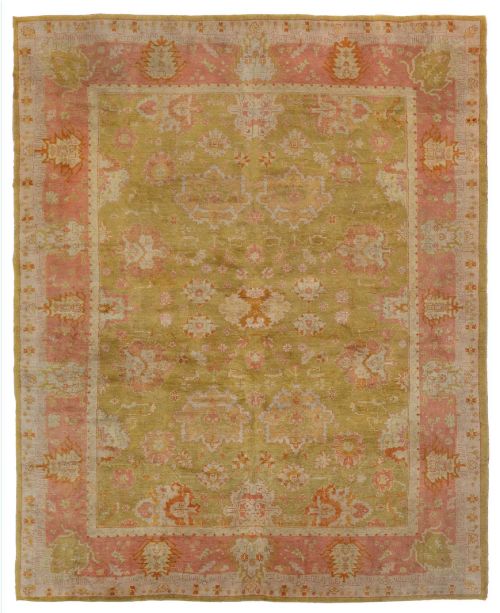
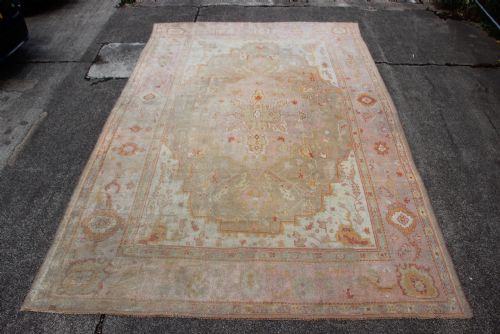


Muted Oriental Rug
A muted oriental rug offers a restrained palette of soft pinks, faded tones and gentle pastels that anchor a room without demanding attention.
Muted Oriental Rug
A muted oriental rug brings together floor coverings originating from Turkey and Persia, dating from the nineteenth and early twentieth centuries. These woven works include large carpets, area rugs and narrow runners intended for hallways or specific interior layouts.
Visitors to this selection will most frequently encounter Ushak and Ziegler carpets alongside Persian Bidjar, Hamadan and Sivas examples. These pieces have mellowed over decades, turning bright initial dyes into softer pastel hues and pale tones.
The styles range from grand Ottoman prayer rugs inscribed in script to classical Persian workshop designs. Each item carries the distinct weaving traditions of its regional origin, translated into a more subdued decorative format.
Materials and construction
The construction of these floor coverings relies primarily on natural wool and cotton foundations, with occasional use of angora wool adding a distinct texture. Weavers knotted these fibres by hand onto sturdy warps and wefts to create durable textiles.
Natural dye sources interact with age and light to produce the characteristic faded palette seen across these items. The physical density of the weave varies by region, from the coarser tribal knots of Hamadan to the finer execution found in Ziegler and Ushak production.
Muted Oriental Rug Retail Price Guide 2026
Typical asking prices for muted oriental rug among the pieces listed under this phrase on Sellingantiques today, from the lower quarter to the upper quarter. They describe what is for sale here now, not the wider market.
Some nineteenth-century Turkish prayer rugs carry actual inscriptions in Ottoman script woven directly into the pile.
Markers of distinction
Quality in these textiles depends heavily on the fineness of the knotting and the integrity of the foundation. A tighter weave allows for sharper pattern definition and better long-term durability under foot traffic.
The aesthetic balance of the faded palette and the survival of the original borders dictate the visual success of the piece. Well-balanced proportions and harmonious wear separate standard room coverings from exceptional examples.
The Muted Oriental Rug Glossary
- Ushak
- A style of carpet originating from the town of Usak in western Turkey, known for large-scale floral designs and subdued colours.
- Ziegler
- A nineteenth-century commercial design style produced in Persia for the Western market, featuring spacious patterns and muted tones.
- Bidjar
- A durable Persian carpet type woven tightly with a stiff foundation, often associated with the town of Bijar.
- Prayer rug
- A small textile featuring a mihrab design, traditionally used for daily Islamic prayers.
- Runner
- A long, narrow carpet format specifically designed for corridors, hallways or staircases.
Muted Oriental Rug: Frequently Asked Questions
How do I clean an antique rug?
Professional specialist cleaning is essential for nineteenth-century textiles to prevent dye migration and fibre damage. Regular gentle vacuuming without a beater bar removes surface grit.
Avoid household detergents and washing methods that introduce excess moisture into the wool and cotton foundation.
Can I place these rugs in bright rooms?
Placing these textiles in direct sunlight will cause further fading over time. Rotating the piece periodically helps ensure even exposure to ambient light.
Using window filters or UV-protective glass preserves the remaining soft pastels and pale tones.
Are these carpets suitable for heavy foot traffic?
Wool and cotton construction provides natural resilience, making many of these pieces durable enough for daily use. Placing a quality underlay beneath the carpet cushions the fibres and prevents slipping.
Delicate or very fine examples benefit from placement in lower-traffic areas such as bedrooms.
How do I identify a Turkish versus Persian rug?
Turkish examples such as Ushak or Sivas often display large-scale geometric or open floral motifs in softer wools. Persian pieces like Bidjar and Hamadan typically feature denser, more intricate knotting and distinct regional medallion layouts.
Examining the structural weave on the reverse side reveals specific knot types and material origins.