

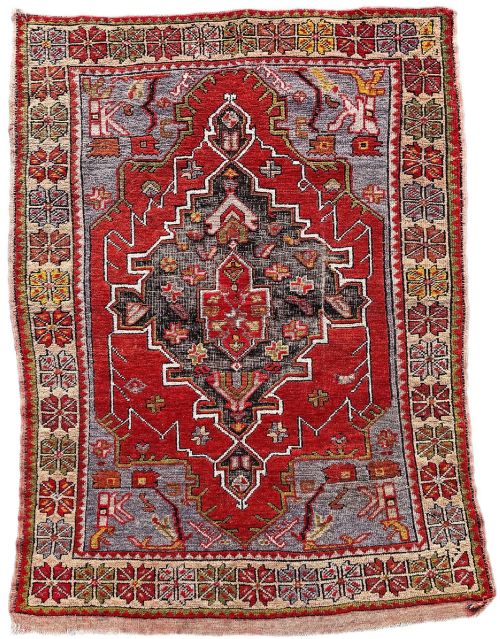


Grey Rug
A grey antique rug brings tactile depth and muted tones to a room, drawing on traditions from Anatolia, Central Asia and beyond.
Grey Rug
A grey antique rug encompasses woven floor coverings and textiles produced across various regions and decades, incorporating wool, cotton, silk, and velvet.
Buyers browsing for a grey antique rug encounter pieces spanning the Victorian era through the early twentieth century, including styles such as Ottoman, Anatolian tribal, Central Asian tribal, and Arts and Crafts.
The selection ranges from large carpets and area rugs to smaller prayer rugs, textile wall art, and even upholstered chairs featuring kilim fragments.
How they were made
These textiles rely principally on hand-woven construction using wool, cotton, and silk fibres, sometimes combined with wooden or brass elements in related furniture pieces.
Weavers employed traditional knotting and weaving techniques particular to their regions, such as Central Asian tribal methods, Anatolian workshops, or Irish Donegal production.
Grey Rug Retail Price Guide 2026
Typical asking prices for grey rug among the pieces listed under this phrase on Sellingantiques today, from the lower quarter to the upper quarter. They describe what is for sale here now, not the wider market.
One unexpected item repurposes traditional flat-woven textile into the upholstery of a Victorian armchair.
What varies in quality
The standard of a piece depends on the fineness of the weave, the integrity of the natural materials, and the sophistication of the design execution.
Origin and period also influence the standing of an item, with specific tribal workshops and named regional styles holding distinct artisan heritage.
The Grey Rug Glossary
- Ushak
- A style of carpet originating from the town of Uşak in Turkey, known for large-scale floral and geometric motifs. These pieces often feature muted or soft colour palettes.
- Kilim
- A flat-woven carpet or rug produced in countries of the former Ottoman Empire, Persia, and Central Asia. They are made by tightly interweaving warp and weft strands without a pile.
- Kelleh
- A long, rectangular format of oriental carpet traditionally used in Middle Eastern domestic architecture. These formats suit narrow spaces and hallways.
- Prayer rug
- A small rug used by Muslims to kneel upon during daily prayers, typically featuring a mihrab design that indicates the direction of Mecca.
Grey Rug: Frequently Asked Questions
How do I clean an antique rug?
Maintenance requires gentle vacuuming without a beater bar to protect fragile fibres. Professional specialist cleaning remains essential for deep restoration.
Water exposure should stay strictly limited to prevent dye running and structural weakening in older wool or silk foundations.
Where were these rugs made?
Origins span diverse regions including Anatolia, Central Asia, Turkey, Uzbekistan, and Nepal. Each area utilises distinct regional dyeing and weaving traditions.
Local materials and cultural motifs dictate the specific aesthetic characteristics found in pieces from different locations.
Can I use an antique rug on the floor?
Many examples function well on floors, provided they experience moderate foot traffic and sit on a quality underlay. Placing a breathable pad underneath prevents slipping and reduces wear.
Fragile silk pieces or delicate textile wall art benefit more from display away from direct foot traffic.
How do I date an older rug?
Dating relies on examining the materials, dye types, structural construction, and stylistic motifs. Natural vegetable dyes and hand-spun wool typically point to earlier nineteenth-century production.
Comparative analysis with documented examples helps narrow down the period of manufacture.