


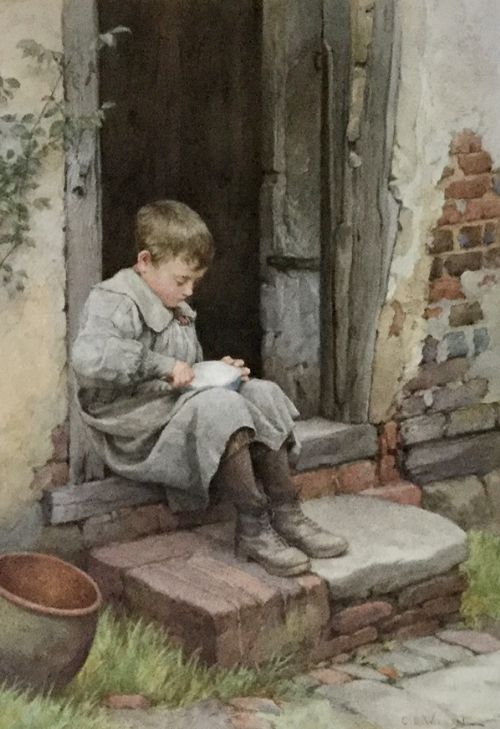


Muted Earth Watercolour Painting
These muted earth watercolour painting examples capture subdued rural landscapes and coastal scenes from the nineteenth and twentieth centuries.
Muted Earth Watercolour Painting
A muted earth watercolour painting presents subdued natural tones across landscapes, coastal views, and pastoral scenes. These original works span periods from the Victorian era through the mid-twentieth century.
Buyers encounter subjects ranging from Wensleydale and the Yorkshire coast to County Wicklow hills and Norfolk cliffs. The selection emphasises traditional British landscape and pastoral styles executed by named artists.
Most examples originate from the late nineteenth century, the Edwardian period, and the 1920s to 1940s. These watercolours record rural architecture, fenland life, and open countryside through soft colour palettes.
How They Were Made
Artists applied watercolour pigment onto paper, card mounts, or board supports. These water-based pigments create translucent washes that define skies, vegetation, and architectural details.
Many works combine delicate brushwork with visible pigment granulation to render natural textures in landscapes and coastal views. Card mounts and backing boards provide structural support for the paper sheets.
Muted Earth Watercolour Painting Retail Price Guide 2026
Typical asking prices for muted earth watercolour painting among the pieces listed under this phrase on Sellingantiques today, from the lower quarter to the upper quarter. They describe what is for sale here now, not the wider market.
Listings feature paper, card mount, and board supports across Victorian and twentieth-century periods.
What Varies in Quality
The sophistication of tonal balance separates standard topographical sketches from accomplished compositions. Masterly control of watercolour washes creates atmospheric depth and convincing light within the earth palette.
Condition of the pigment and paper surface influences the visual impact of each work. Strong provenance and clear artist signatures contribute to the standing of individual paintings within twentieth-century British art.
Fred Lawson·Louie Stanley Maurice Prince·Sidney James Beer·Kate E Booth·Henry Charles Fox·Thomas James Lloyd·Stephen John Batchelder·Edward Killingworth Johnson·Thomas Swift Hutton·Frederick William Jackson·Charles Edward Wilson·Alfred Leyman
The Muted Earth Watercolour Painting Glossary
- Watercolour
- A paint consisting of pigment suspended in a water-soluble vehicle. It is applied to paper or board to create translucent washes.
- Pigment
- The finely ground natural or synthetic material that imparts colour to the paint. Earth pigments yield natural browns, ochres, and muted greens.
- Card mount
- A protective paperboard border placed around the watercolour painting. It separates the artwork from the glazing.
- Board
- A rigid paper-based sheet used as an alternative support to paper. It provides a stable flat surface for watercolour application.
- British Impressionism
- A painting style focusing on light and everyday subjects using loose brushwork. It emerged in the late nineteenth and early twentieth centuries.
Muted Earth Watercolour Painting: Frequently Asked Questions
What periods do these watercolours cover?
The works span from the nineteenth century through the Victorian and Edwardian eras into the 1920s, 1930s, 1940s, and 1960s. This timeline encompasses Victorian British landscape and mid-century realism.
Artists working across these decades documented rural scenes using characteristic muted palettes and traditional watercolour techniques.
Where were these landscape scenes painted?
Locations include Yorkshire, Suffolk, North Wales, Devon, and County Wicklow in Ireland. Artists often painted specific rural landmarks such as castles, village streets, and coastal cliffs.
These settings reflect a strong interest in British pastoral and coastal topography during the nineteenth and twentieth centuries.
How should I frame a watercolour?
Watercolours require protection behind glass to prevent atmospheric damage to the paper and pigments. A suitable card mount keeps the painted surface from touching the glazing.
Displaying works away from direct sunlight preserves the subtle tones characteristic of earth pigment palettes.
Are these watercolours signed by artists?
Several listed works feature signatures or attributions to named painters such as Fred Lawson and Alfred Leyman. Signatures help establish authorship and connect individual pieces to established stylistic periods.
Unsigned works rely on stylistic comparison and period materials for attribution.