



Multicoloured Tribal Carpet
A multicoloured tribal carpet brings together bold village artistry, rich dyes, and nomadic heritage into a single floor covering.
Multicoloured Tribal Carpet
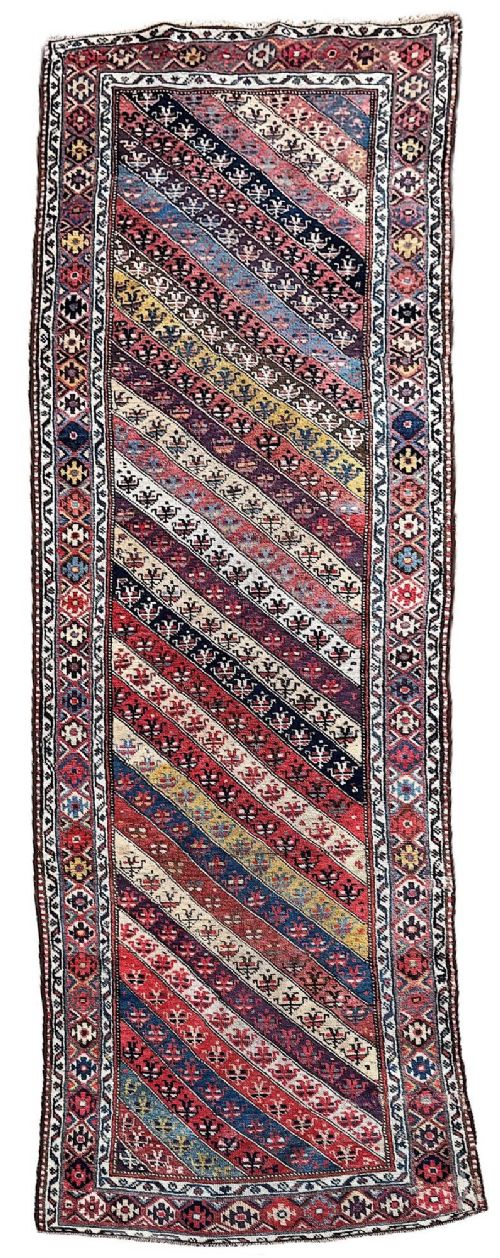
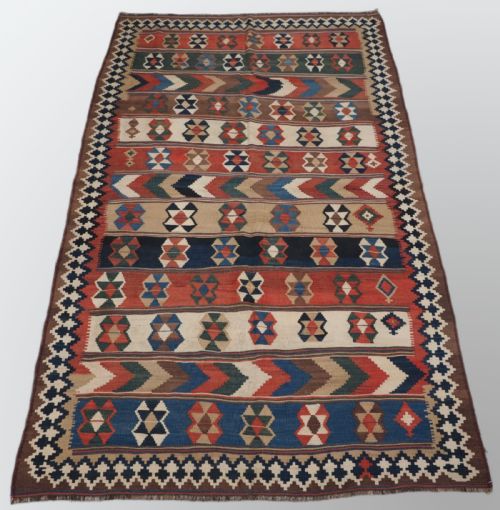
A multicoloured tribal carpet encompasses diverse woven forms from Caucasian, Persian, Anatolian, Moroccan, and Central Asian traditions. The selection spans the late nineteenth century through to the early decades of the twentieth century, with formats ranging from small prayer kilims and room-sized carpets to long hallway runners and wall hangings.
Most examples you encounter here are village or nomad productions, including works from regions such as Shirvan, Karabagh, Konya, and Qashqai. These pieces rely on regional motifs and distinct geometric or pictorial layouts passed down through generations of weavers.
Materials and construction
The foundation of these textiles typically relies on spun wool or cotton, providing structural stability for both piled knots and flat-woven kilim surfaces. Hand-spun wool absorbs natural dyestuffs deeply, yielding the variegated tones characteristic of older nomadic work.
Certain regional types incorporate specialised techniques such as double-part joining, slit-weave tapestry methods, or intricate supplementary weft wrapping. Silk also appears in select pieces, adding a distinct textural contrast to standard wool constructions.
Multicoloured Tribal Carpet Retail Price Guide 2026
Typical asking prices for multicoloured tribal carpet among the pieces listed under this phrase on Sellingantiques today, from the lower quarter to the upper quarter. They describe what is for sale here now, not the wider market.
Some nineteenth-century nomads wove their carpets in two separate longitudinal halves just to fit the domestic loom, stitching them together down the middle.
Assessing the grade
Quality rests upon the integrity of the wool, the precision of the tribal iconography, and the complexity of the dye palette. Finer examples display saturated, harmonious colour transitions and tightly packed structures that maintain their geometry under foot.
The distinction between ordinary and superior weaving often lies in the individuality of the design execution and the depth of the dye work. Untouched village specimens with crisp drawing command greater appreciation than heavily altered or uniformly commercial productions.
The Multicoloured Tribal Carpet Glossary
- Kilim
- A flat-woven carpet or rug produced without a pile. These textiles rely on tightly interlocked weft threads to create sharp geometric patterns.
- Boteh
- A swirling, almond-shaped motif representing a floral shoot or cypress tree. It appears frequently in Caucasian and Persian regional weaving.
- Kazak
- A designated style of rug originating from the Caucasus region. They are known for bold primary colours, large geometric guls, and sturdy wool.
- Gul
- A medallion or repeating octagonal motif used extensively in tribal carpets. Each distinct tribal group often utilised its own variation of these emblem shapes.
- Runner
- A long, narrow carpet format designed specifically for hallways, corridors, or staircases. They typically repeat central medallion or boteh motifs along their length.
Multicoloured Tribal Carpet: Frequently Asked Questions
How do I clean a tribal carpet?
Maintenance requires gentle vacuuming without the rotating brush bar to protect the wool pile and flat-weave edges. Professional textile cleaners who understand vegetable dyes should handle any deep washing.
Water exposure can cause certain older dyes to bleed if not properly stabilized. Keeping these carpets away from direct, harsh sunlight prevents premature fading of the saturated natural colours.
Are these carpets suitable for heavy foot traffic?
Traditional village and nomad weaves use resilient hand-spun wool that withstands normal household movement. Placing a suitable underlay beneath the textile prevents slipping and cushions the weave against hard flooring.
Runners and room-sized carpets perform well in corridors and living spaces when given proper support. Lighter wall-hanging formats are best kept off the floor entirely to preserve their structural integrity.
How do I distinguish Caucasian from Anatolian rugs?
Caucasian pieces typically feature crisper geometric structures, stark primary palettes, and distinct medallion symbols like the Memling gul. Their wool often feels denser and possesses a slight crispness.
Anatolian or Turkish examples frequently incorporate softer village wools, prayer niches, or varied kilim slit-weave techniques. Examining the specific border arrangements and minor guard stripes usually clarifies the regional origin.
What does a flat-weave mean?
A flat-weave lacks the raised pile of knotted carpets, constructed instead by tightly interweaving warp and weft threads together. This creates a thinner, reversible textile that lies completely flat on the floor.
These pieces are often lighter to handle and serve well as decorative summer coverings or wall displays. The absence of pile allows the geometric design to appear exceptionally sharp and graphic.