

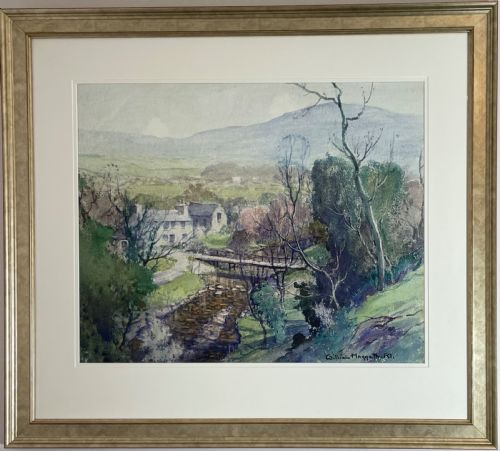


Mountain Watercolour Art
Mountain watercolour art captures peaks, valleys, and lakes through delicate pigments on paper, offering a direct view into historic landscapes.
Mountain Watercolour Art
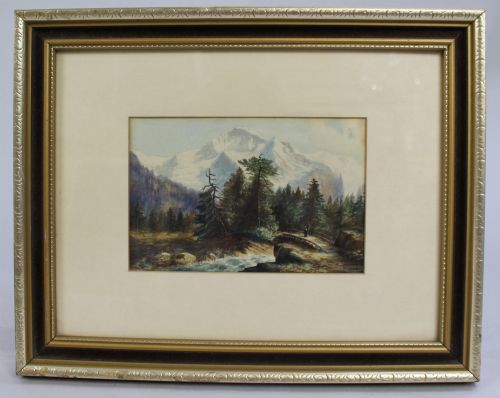
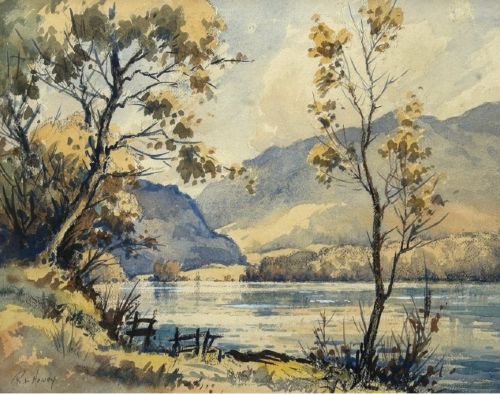
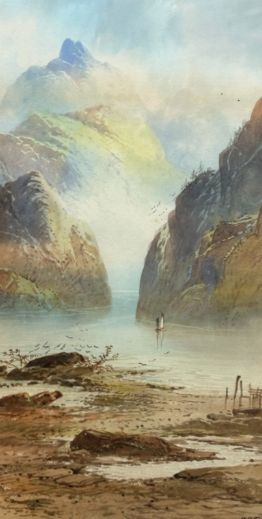
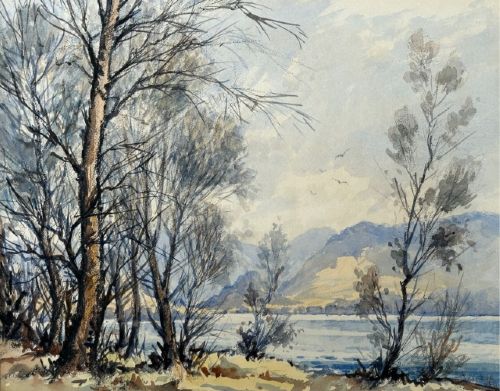
Mountain watercolour art comprises original works depicting elevated terrain, crags, and sweeping vistas across various historic periods. When exploring mountain watercolour art, buyers frequently encounter British, continental, and Asian regional landscapes framed under glass.
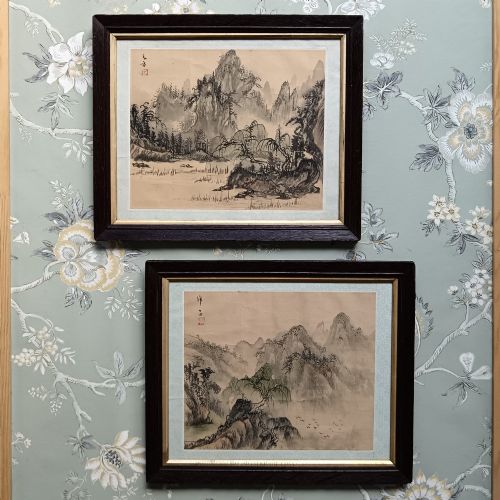
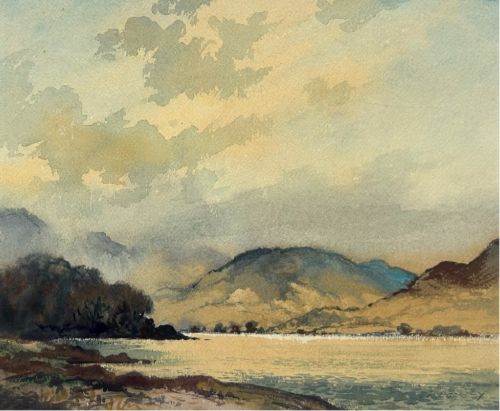
The pieces range from Georgian and Victorian topographical sketches to mid-century British school impressions and Chinese Shan Shui silk paintings. Works span specific locations like the English Lake District, Scottish highlands, Welsh valleys, and Swiss alpine passes.
Artists record these upland scenes through direct observation, capturing changing weather, mountain streams, and remote farmhouses. These paintings serve as windows into historic topography and nineteenth or twentieth-century artistic responses to high terrain.
Materials and Technique
Mountain watercolour art relies primarily on watercolour pigment and gouache applied to paper, occasionally utilising silk as a ground. Painters use fluid washes for skies and mists alongside finer brushwork to define rocky crags and distant ridges.
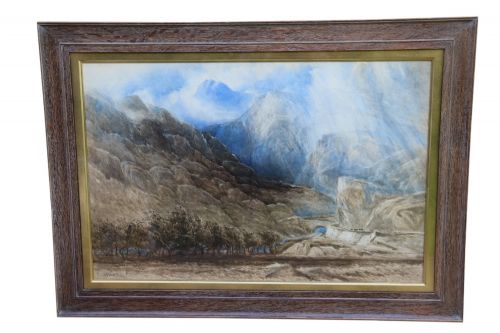
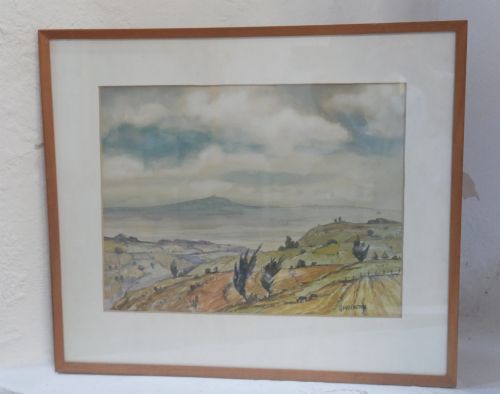
Completed paintings are typically mounted behind glass within wooden frames, frequently finished with gilt highlights to complement the composition. This framing protects the delicate water-soluble pigments from moisture and atmospheric degradation over the decades.
Mountain Watercolour Art Retail Price Guide 2026
Typical asking prices for mountain watercolour art among the pieces listed under this phrase on Sellingantiques today, from the lower quarter to the upper quarter. They describe what is for sale here now, not the wider market.
Materials recorded across the archive include paper, watercolour pigment, gouache, silk, glass, wood, and gilt.
Evaluating Quality
Quality in mountain watercolour art rests upon the sureness of the brushwork and the artist's ability to convey the scale and atmosphere of high terrain. Superior examples demonstrate confident handling of light, shadow, and atmospheric perspective in rendering distant peaks.
The preservation of the paper and the vibrancy of the original pigment heavily influence the standing of a piece. Original frames and clear artist attribution, signatures, or studio stamps further elevate the archival significance of the work.
William Henry Earp·Robert Leslie Howey·William Joseph Boyes·Henry Martin Pope·William Hoggatt·John Syer·Edward Horace Thompson·YA MING·Stanley Orchart·Thomas Lound·James H Hulse·Hirst Walker·AJ Thornton·NOEL HARRY LEAVER·Cornelius Pearson·SAMUEL TOWERS·Milton Drinkwater·Alfred Graham·Willie Stephenson·Orlando Greenwood
The Mountain Watercolour Art Glossary
- Gouache
- An opaque watercolour paint containing pigment mixed with a binding agent and white filler. This medium allows artists to introduce solid highlights and dense opaque areas into a landscape.
- Silk Painting
- Artwork created directly on a woven silk fabric ground. This technique appears in traditional Chinese Shan Shui compositions.
- Wash
- A thin, fluid layer of diluted watercolour pigment applied across paper. Painters utilise this technique to establish expansive skies and atmospheric mountain mists.
Mountain Watercolour Art: Frequently Asked Questions
How do I date a mountain watercolour?
Dating relies on stylistic clues, paper characteristics, framing methods, and artist signatures where available. Many works carry period inscriptions or dates alongside the artist's signature.
Context also comes from historic titles noting specific tours or expedition locations popular during the nineteenth and twentieth centuries.
Are these paintings originals?
The works listed are original hand-painted art created directly by the artist using watercolour pigments, ink, or gouache on paper or silk. Each piece is a singular creation rather than a modern reproduction or print.
Signatures, artist studio stamps, and visible brush textures confirm the unique hand-executed nature of the art.
How should I frame and display them?
Watercolour art requires protection behind glass to shield the delicate pigments from dust, smoke, and physical damage. Acid-free mounts prevent chemical discolouration of the historic paper over time.
Display the pieces away from direct sunlight to prevent the fading of natural watercolour pigments and gouache.
What subjects appear in these landscapes?
The compositions focus primarily on upland terrain, including Scottish lochs, Welsh valleys, Cumbrian lakes, and Swiss alpine passes. Figures such as fishermen, farm workers, or travellers frequently add a sense of scale to the vast mountain scenery.
Scenes also extend to continental farmhouses, Spanish views, and traditional Asian mountain motifs.