
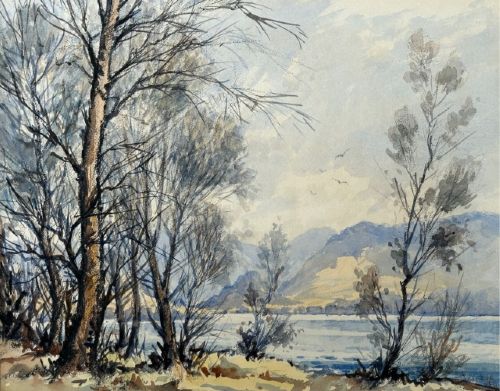


Mountain Lake Scene Painting
These mountain lake scene painting works capture dramatic alpine and lakeside views in oil, watercolour and gouache across nineteenth-century and mid-century periods.
Mountain Lake Scene Painting
A mountain lake scene painting portrays dramatic bodies of water framed by elevated terrain, drawing from nineteenth-century landscape traditions and romanticism. These works capture expansive horizons, tranquil waters and towering peaks through varied regional perspectives from British, Italian and Austrian schools.
The pieces appearing on this page range from intimate watercolours to large framed oil paintings executed on canvas or paper. Buyers frequently encounter nineteenth-century canvases alongside Victorian and Edwardian examples depicting Scottish highlands, the Lake District and alpine vistas.
Works span different scales, from square framed compositions to massive landscape portraits. The selection incorporates both signed pieces by listed artists and atmospheric unsigned regional studies.
Materials and technique
Artists utilise oil paint and watercolour applied to canvas, wood and paper to build these landscape compositions. Oil on canvas works often employ heavy gesso and giltwood frames to define the outer edge of the view.
Techniques range from detailed brushwork showing cattle and figures by the shore to looser impressionistic applications of pigment. Gouache appears on paper to achieve specific opaque colour depths in water and sky elements.
Mediums documented in the inventory include oil paint, watercolour, gouache and ink applied to framed wall art.
Assessing quality and execution
Quality rests in the handling of atmospheric light upon water and the convincing rendering of distant mountain ridges. Stronger examples demonstrate confident draftsmanship in geological forms and naturalistic placement of incidental elements like boats, geese or cattle.
The integration of the painting with its period frame contributes significantly to the integrity of the piece. Original giltwood and gesso surrounds that complement the canvas enhance the overall presence of the artwork.
Robert Leslie Howey·Frank Hider·Giulio Cecchini·Benjamin Williams Leader·Sidney Richard Percy·Milton Drinkwater
The Mountain Lake Scene Painting Glossary
- Gouache
- An opaque water-based paint medium that dries to a matte finish. It allows artists to apply bright highlights over darker washes.
- Gesso
- A plaster-like preparation mixture used to coat wood or canvas before painting, or moulded to form decorative relief on frames. Giltwood frames frequently feature gesso mouldings beneath their gold leaf.
- Romanticism
- An artistic movement emphasising inspiration, subjectivity and the primacy of the individual. Landscapes from this tradition often present nature as vast, untamed and emotionally resonant.
- Impressionism
- A style involving thin brush strokes and an emphasis on accurate depiction of light in its changing qualities. Mid-century British examples show this looser approach to water and atmosphere.
Mountain Lake Scene Painting: Frequently Asked Questions
What subjects appear in these paintings?
These works depict natural landscapes featuring bodies of water bordered by mountains, hills or distant peaks. Common additions include cattle, figures in boats, geese and stormy skies.
Scenes range from specific locations in the Lake District and Scottish highlands to Austrian and Italian alpine settings.
How do I identify the period?
Period attribution relies on stylistic cues, framing materials and the medium used. Nineteenth-century and Victorian works often employ darker oil palettes and heavy giltwood frames.
Later pieces from Edwardian or mid-century periods introduce brighter tones and distinct paper or canvas supports.
Where should I hang one?
These landscape works suit traditional drawing rooms, studies or hallways with adequate wall space for framed canvases. Large horizontal formats require substantial wall expanses to balance their visual weight.
Keep pieces away from direct sunlight and excessive moisture to protect oil paint and paper watercolours.
Are all pieces signed by the artist?
The inventory includes both fully attributed works by named painters and unsigned regional studies. Signatures may appear clearly in corners or remain indistinct on older canvases.
Unsigned examples are judged purely on technical execution, period materials and compositional strength.