
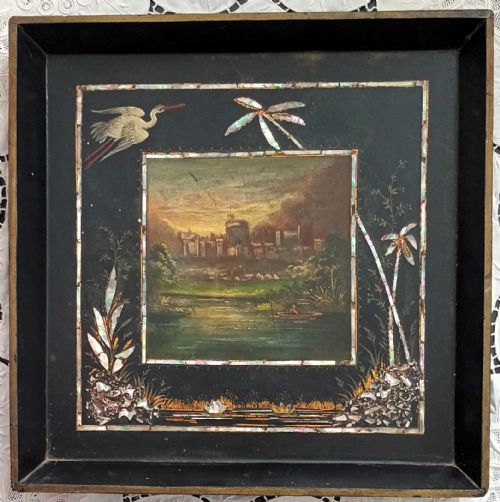
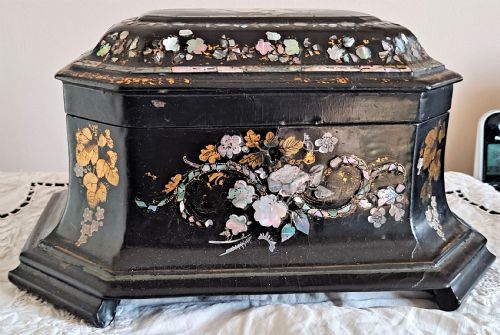


Mother of Pearl Papier Mache
When you handle mother of pearl papier mache, you touch a Victorian obsession with lustrous shell inlay set into dark, lacquer-slicked surfaces.
Mother of Pearl Papier Mache
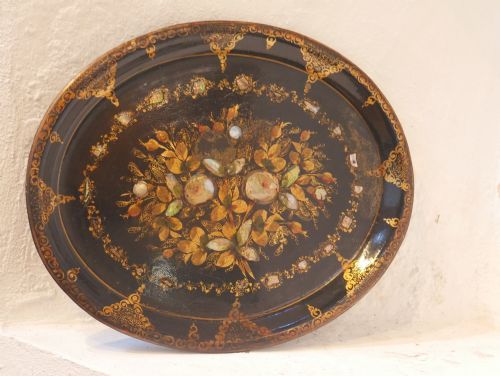
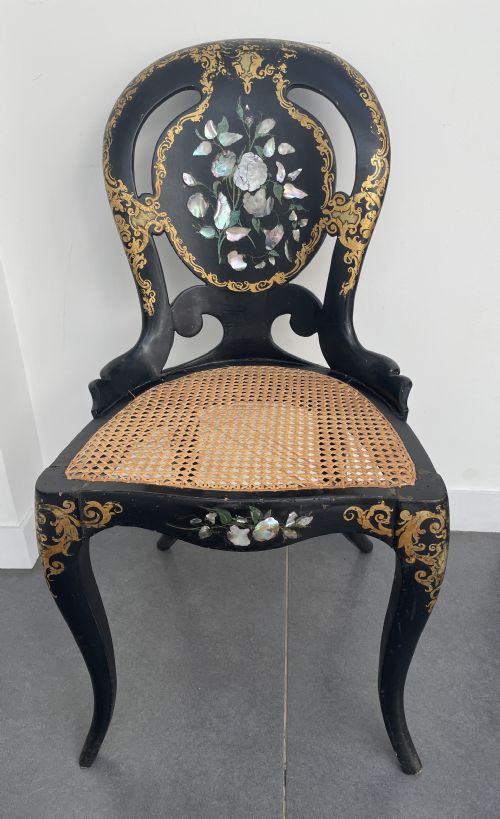
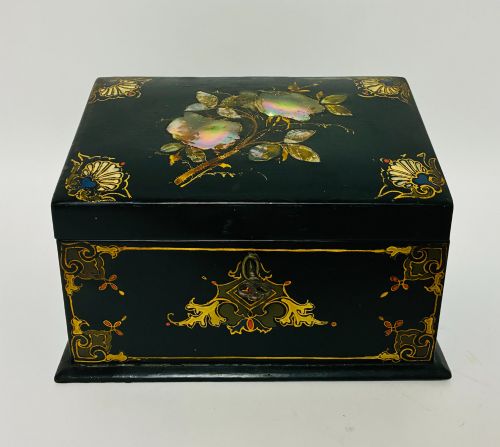
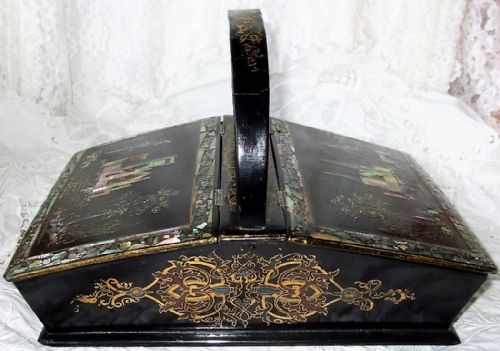
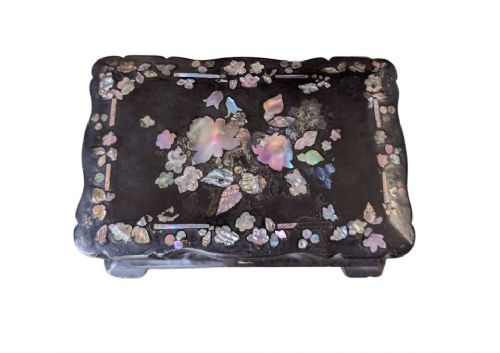
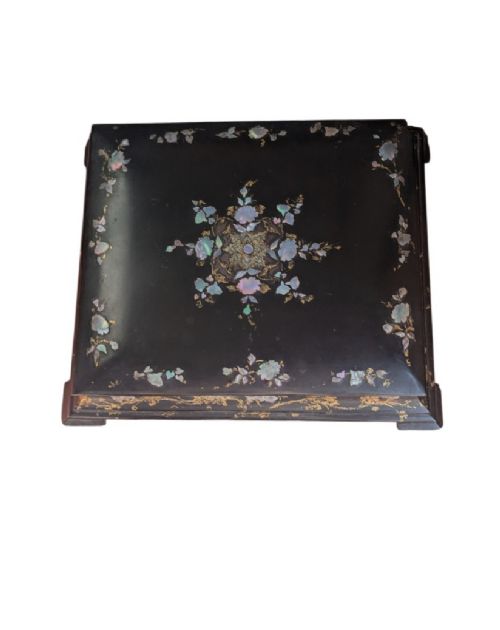
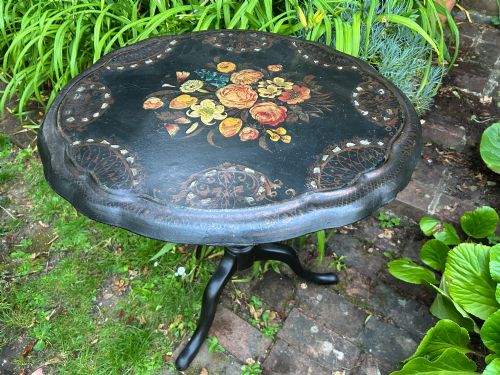
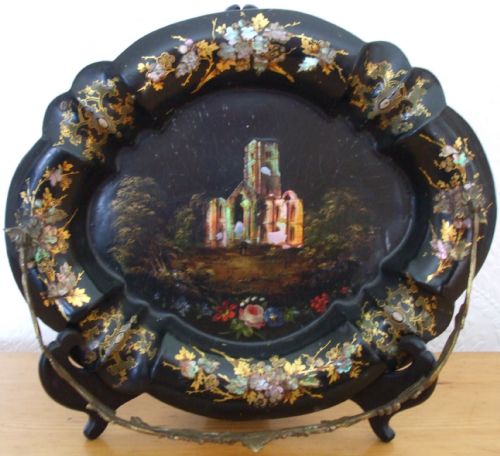
Mother of pearl papier mache pieces encompass a range of functional and decorative household objects produced predominantly during the nineteenth century. Buyers searching this phrase commonly encounter small personal items such as tea caddies, snuff boxes, and jewellery cabinets alongside larger furnishings including tilt-top tables, side chairs, and serving trays.
The aesthetic bridges Georgian roots and Victorian abundance, often drawing on Chinoiserie motifs or Gothic Revival styles. These objects served as social markers in Victorian drawing rooms, combining utility with visual drama through reflective surfaces.
How they were made
The foundation relies on layers of paper pulp, glue, and resin pressed into heavy iron moulds, then baked until rigid. This composite body receives a deep coating of black lacquer, which is polished to a smooth finish.
Craftsmen inset thin slices of iridescent mother-of-pearl shell into the wet or partially dried layers before adding painted details in gold leaf and pigments. Additional materials like wood, brass, and abalone frequently reinforce structural joints or decorate interior compartments.
Listings feature items spanning the Georgian period through the late nineteenth century, predominantly utilising lacquer, wood, and brass alongside mother-of-pearl.
What varies in quality
Quality rests on the depth of the lacquer and the precision of the pearl inlay. Superior examples display meticulously shaped shell fragments flush with the surface, rather than thick pieces standing proud of the backing.
Hand-painted detailing and gilding distinguish workshop standards, where fine brushwork elevates the design beyond simple stenciling. Structural integrity in load-bearing items like chairs and tables also separates utilitarian manufacture from luxury production.
Jennens and Bettridge·J Bromwich Dudley
The Mother of Pearl Papier Mache Glossary
- Papier-mâché
- A composite material formed from paper pulp or layered paper sheets mixed with adhesive binder, dried and pressed to form rigid objects. This medium allowed makers to shape complex curves impossible in standard timber work.
- Mother-of-pearl
- The iridescent inner layer of mollusc shells utilised for decorative inlay. Artisans cut this material into delicate geometric or floral shapes that catch the light against dark lacquer.
- Chinoiserie
- A European artistic style reflecting Chinese aesthetic traditions through painted landscapes, figures, and pavilions. This style frequently decorates the borders of trays and cabinets.
- Tilt-top table
- A small occasional table featuring a mechanism that allows the circular or oval top to pivot vertically when not in use. These tables saved valuable space in nineteenth-century interiors.
- Ebonisation
- A wood-finishing process that darkens light timber to resemble genuine ebony. This treatment often frames the papier-mâché panels on tables and chairs.
Mother of Pearl Papier Mache: Frequently Asked Questions
What are mother of pearl papier mache objects?
These items are nineteenth-century household goods and furniture constructed from layered paper composite, finished with dark lacquer and iridescent shell inlay.
They combine durability with decorative surface design for domestic display and daily use.
How were tea caddies used?
Tea caddies stored expensive loose leaf tea under lock and key in the Victorian parlour.
Their compartmentalised interiors kept different blends separate while protecting the leaves from moisture.
How do I care for lacquer surfaces?
Keep these items away from direct sunlight and excessive humidity to prevent the lacquer from cracking.
Dust gently with a dry, soft cloth and avoid chemical polishes or water.
How can I identify Victorian pieces?
Victorian examples display characteristic floral mother-of-pearl inlay, gilt detailing, and heavy papier-mâché carcass construction.
Many incorporate styles ranging from Chinoiserie motifs to Gothic revival forms popular during the mid-nineteenth century.