



Mother of Pearl Inlaid Chair
A mother of pearl inlaid chair brings intricate geometric patterns and shimmering nacre shell into a room as both practical seating and decorative art.
Mother of Pearl Inlaid Chair
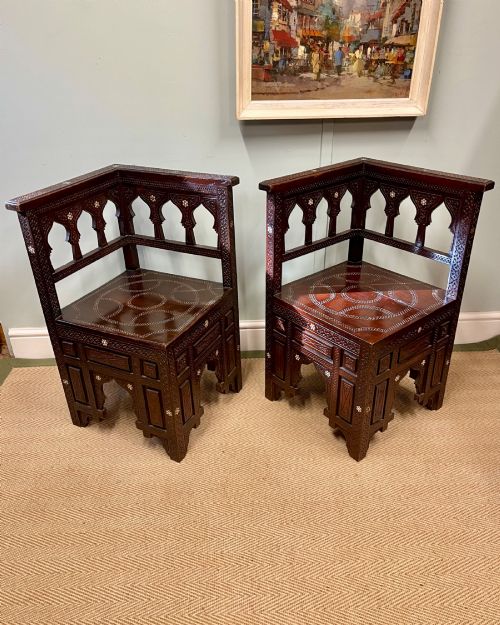
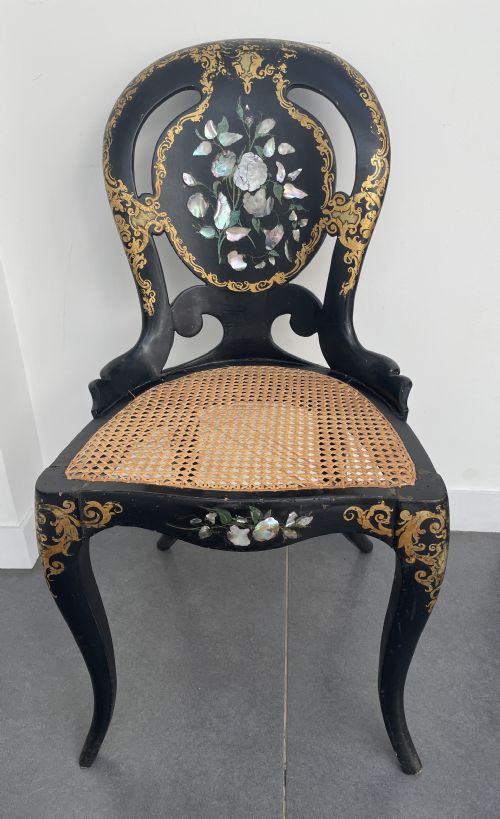
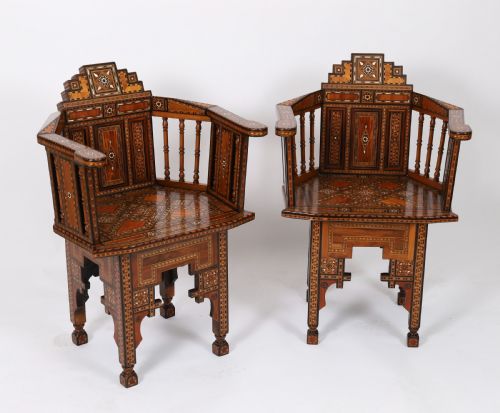
When you search for a mother of pearl inlaid chair, you encounter a diverse group of seating furniture hailing from distinct regional traditions, most notably Syrian and Levantine workshops alongside Victorian British and Chinese equivalents. The examples appearing on this page span the nineteenth and early twentieth centuries, encompassing Victorian, Moorish Revival, and Qing Dynasty styles.
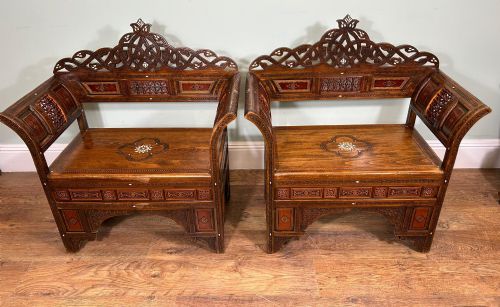
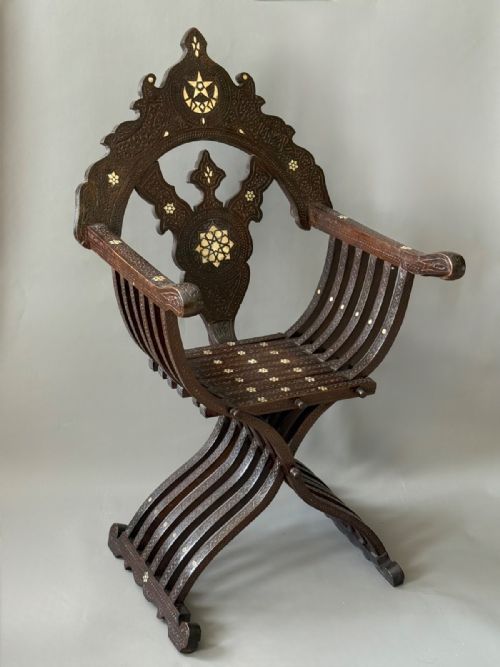
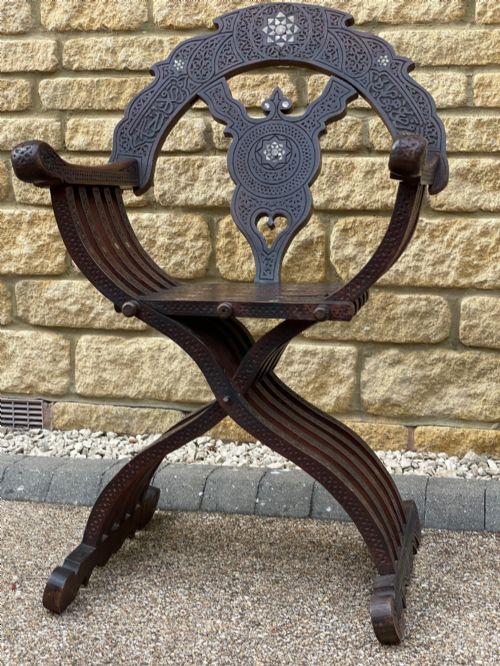
The physical forms vary considerably to suit different domestic uses, ranging from formal armchairs and side chairs to corner chairs, X-frame Savonarola chairs, and complete seating suites or settees. You are likely to meet pieces constructed as low bedroom chairs, occasional chairs, or rigid hardwood benches alongside folding Islamic and Middle Eastern designs.
Moorish and Syrian pieces often incorporate intricate parquetry, Mashrabiya panels, and turned woodwork, whilst Victorian items frequently utilise ebonised papier-mâché or walnut bodies. Chinese iterations typically employ dense hardwoods combined with marble inserts and delicate shell work, creating a global aesthetic united by luminous inlay.
Materials and construction techniques
Makers built the structural frames of these seats using varied woods including walnut, fruitwood, ebony, cane, and general hardwoods, alongside lacquered papier-mâché for specific Victorian models. Artisans selected these dense or moulded bases to provide stable foundations capable of supporting intricate surface decoration without warping.
The signature ornamentation relies on mother of pearl, nacre-shell, and bone, meticulously cut into geometric polygons, floral motifs, or scrolling tendrils. Craftsmen pressed these shimmering fragments into precise recesses carved into the wood or papier-mâché, securing them with traditional adhesives and smoothing the finished mosaic flush with the surrounding surface.
Mother of Pearl Inlaid Chair Retail Price Guide 2026
Typical asking prices for mother of pearl inlaid chair among the pieces listed under this phrase on Sellingantiques today, from the lower quarter to the upper quarter. They describe what is for sale here now, not the wider market.
The listings show pieces spanning the Victorian era through the early twentieth century, incorporating walnut, papier-mâché, and hardwood.
Evaluating craftsmanship and execution
The distinction between standard execution and superior work lies in the density and precision of the mosaic inlay, where tight geometric tessellation requires immense skill from the artisan. Finer pieces display minimal filler material around the shell fragments and maintain perfectly flush transitions between the nacre and the timber base.
Structural integrity also separates the categories, as delicate elements like turned spindles, Mashrabiya panels, and applied parquetry demand robust joinery to survive decades of use. Superior chairs retain their original structural rigidity without excessive loosening in the joints or widespread loss of the fragile shell inserts.
Liberty and Co·Jennens and Bettridge
The Mother of Pearl Inlaid Chair Glossary
- Mother-of-pearl
- The iridescent internal layer of mollusc shells utilised for decorative inlay. This material reflects light with distinctive pearlescent tones.
- Mashrabiya
- An architectural wooden screen formed of fitted turned elements arranged in intricate geometric patterns. These panels frequently appear on the backs and sides of Middle Eastern seating.
- Parquetry
- A geometric mosaic of wood pieces used for decorative surface enrichment. It frequently frames the shell inlay on Levantine and Syrian armchairs.
- Papier-mâché
- A composite material consisting of paper pulp reinforced with glue or resin, moulded and lacquered. Victorian makers used this substance as a smooth dark base for mother-of-pearl decoration.
- Savonarola chair
- A folding chair of X-frame construction composed of multiple curved wooden slats. This Renaissance form was adopted by later Levantine and Italian makers incorporating shell inlay.
Mother of Pearl Inlaid Chair: Frequently Asked Questions
How were these chairs used historically?
These seats served varied domestic functions, ranging from occasional chairs in Victorian drawing rooms to reception seating in Syrian and Levantine homes. Many designs were intended to display wealth and artistic taste rather than heavy daily use.
Lighter bedroom chairs and folding forms offered portability, whilst substantial armchairs and benches provided fixed, impressive seating for reception spaces and parlours.
How do I distinguish Syrian from Victorian pieces?
Syrian and Levantine pieces typically feature dense geometric parquetry, turned spindles, and Mashrabiya woodwork executed in walnut or fruitwood. The mother of pearl forms intricate, overarching mosaic patterns across the entire frame.
Victorian equivalents frequently utilise ebonised papier-mâché or dark wood surfaces, applying shell inlay sparingly to depict floral sprays, birds, or simple borders on the backrests and seats.
How should I care for a mother of pearl inlaid chair?
Keep these chairs away from direct sunlight and fluctuating humidity to prevent the wood from drying out and the delicate shell fragments from loosening. Dust gently with a dry, soft cloth without applying harsh commercial polishes.
Avoid placing heavy weights on delicate forms like folding chairs or papier-mâché bedroom seats, as their historical construction is unsuited to rugged modern usage.
What does X-frame construction mean?
An X-frame structure consists of curved wooden members crossing to form an X shape when viewed from the side, supporting a seat and a folding or rigid backrest. This design allows the chair to collapse or remain as a sturdy curule seat.
Makers embellished these frames with continuous mother of pearl inlay along the edges and slats, merging structural utility with decorative splendour.