



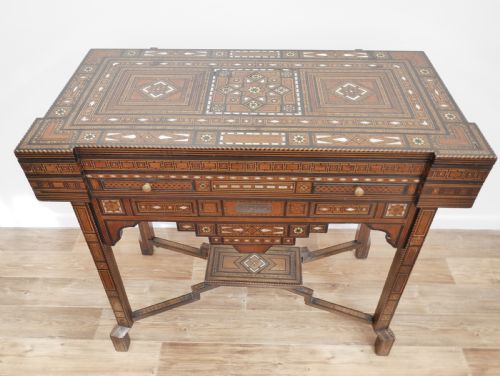


Mosaic Wood Inlay
These pieces of mosaic wood inlay combine meticulous joinery and tiny timber tesserae to form intricate geometric and pictorial patterns.
Mosaic Wood Inlay
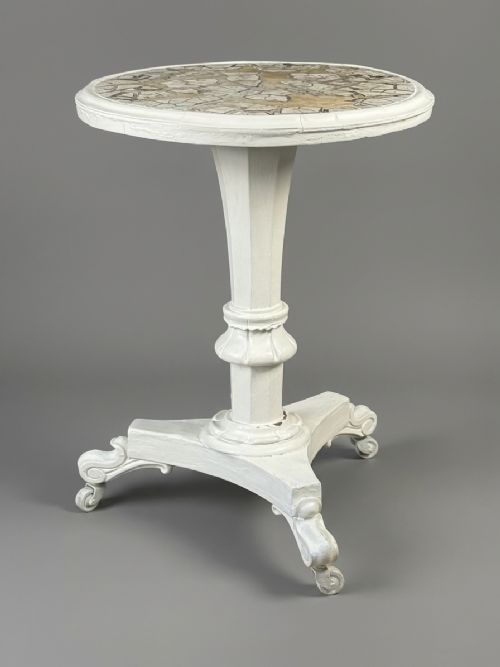
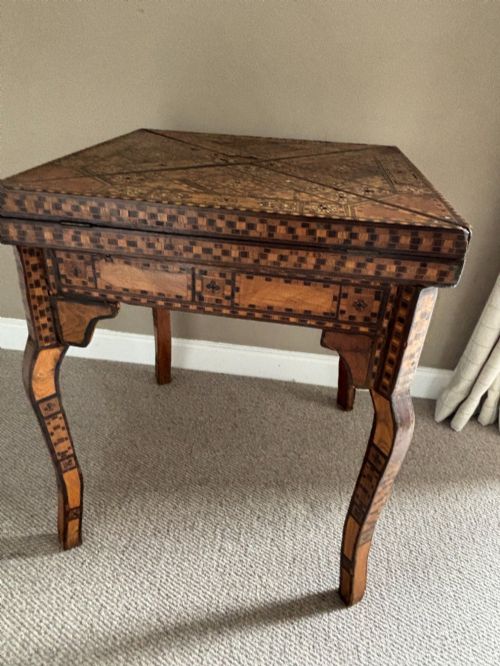
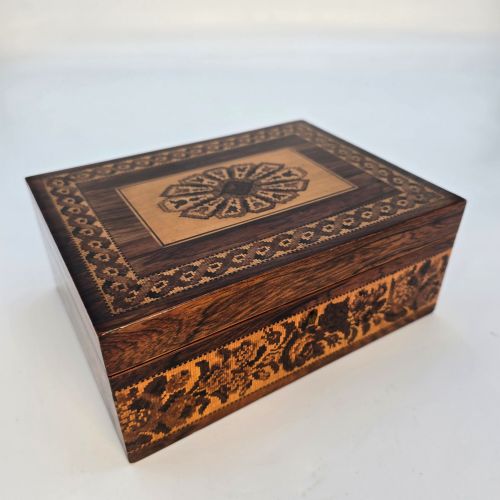
When you search for mosaic wood inlay, you encounter works spanning the nineteenth century up to the nineteen-thirties, dominated by Tunbridge ware boxes, games tables, and small caskets. The typical items on this page range from Victorian glove boxes and tea caddies to Anglo-Indian stationery boxes and Damascene tables.
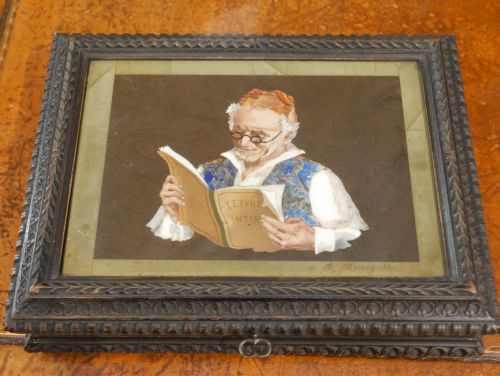
The British examples lean heavily toward Tunbridge ware, employing thousands of minuscule wood blocks to create microscopic pictorial motifs. Other regional traditions represented here include Persian Khatamkari work, North African tables, and Italian Florentine revival pieces incorporating pietra dura mounts.
Forms are generally practical yet decorative, taking the shape of cribbage boxes, book-slides, sewing baskets, and occasional tables designed for display. Walnut, rosewood, and ebonised timber serve as common foundations for these elaborate surface mosaics.
How They Were Made
Craftsmen built these patterns by grouping fine strips of naturally coloured woods such as boxwood, holly, fruitwood, and walnut into specific geometric bundles. They glued these assemblies together and then sliced cross-sections to produce dozens of identical mosaic tiles.
Workers applied these micro-mosaic segments directly onto wooden carcases of rosewood or walnut alongside bone and mother-of-pearl accents. Specialised makers like Edmund Nye and Henry Hollamby refined this slicing and fitting process to achieve seamless geometric surfaces on miniature boxes and tea caddies.
Mosaic Wood Inlay Retail Price Guide 2026
Typical asking prices for mosaic wood inlay among the pieces listed under this phrase on Sellingantiques today, from the lower quarter to the upper quarter. They describe what is for sale here now, not the wider market.
Victorian makers occasionally hid secret compartments inside these tiny mosaic boxes for clandestine love letters and calling cards.
What Varies in Quality
The fineness of the mosaic tesserae dictates the upper tier of execution, where individual blocks measure mere fractions of a millimetre across. Superior examples maintain absolute regularity in their geometric repeats without visible gaps or coarse filler between the timber segments.
Material selection further distinguishes the work, as makers utilised diverse woods alongside bone and mother-of-pearl to secure natural contrast rather than relying on paint or stain. The integration of complex pictorial panels, such as butterflies or architectural views, marks out the most ambitious pieces from simpler banded wares.
Edmund Nye·Henry Hollamby
The Mosaic Wood Inlay Glossary
- Tunbridge Ware
- A distinct form of British mosaic woodwork originating from Kent, characterised by the use of thousands of tiny wood cubes to form pictorial or geometric designs. It reached its height during the Victorian period through workshops such as those of Edmund Nye and Henry Hollamby.
- Pietra Dura
- An inlay technique utilising precisely cut and fitted polished coloured stones to create decorative pictures or geometric motifs. It appears on nineteenth-century tables and boxes alongside wood and marble elements.
- Khatamkari
- A Persian form of marquetry and mosaic work involving delicate geometric partitioning of wood, bone, and metal wire. Pieces featuring this technique display intricate star and polygon arrangements.
- Sadeli Work
- A traditional Anglo-Indian mosaic craft utilising geometric micro-mosaics constructed from horn, bone, and various woods. It typically adorns small boxes and caskets with intricate borders.
- Marquetry
- The art of applying thin veneers of wood to a structural carcase to form decorative patterns or pictorial scenes. Unlike mosaic work built from solid assembled blocks, marquetry relies on cut sheet veneers.
Mosaic Wood Inlay: Frequently Asked Questions
What is mosaic wood inlay?
Mosaic wood inlay involves assembling tiny pieces of natural timber, bone, or mother-of-pearl to create detailed geometric or pictorial surfaces.
Artisans arrange these elements into predetermined patterns before slicing them into thin tiles for application onto boxes and tables.
How do I care for these wooden boxes?
Keep these items away from direct sunlight and fluctuating humidity to protect the delicate timber tesserae and traditional glues.
Dust gently with a dry, soft cloth and avoid applying modern polishes or cleaning agents to the antique surfaces.
Where was Tunbridge ware made?
Tunbridge ware originated in and around the spa town of Tunbridge Wells in Kent during the eighteenth and nineteenth centuries.
Local manufacturers specialised in microscopic wood mosaics depicting local landmarks, butterflies, and geometric tessellations.
What is the difference between marquetry and mosaic inlay?
Marquetry uses thin veneer sheets cut and fitted together like a puzzle to cover a flat wooden surface.
Mosaic inlay builds designs from small blocks or rods assembled first and sliced across to generate repeating patterned tiles.