

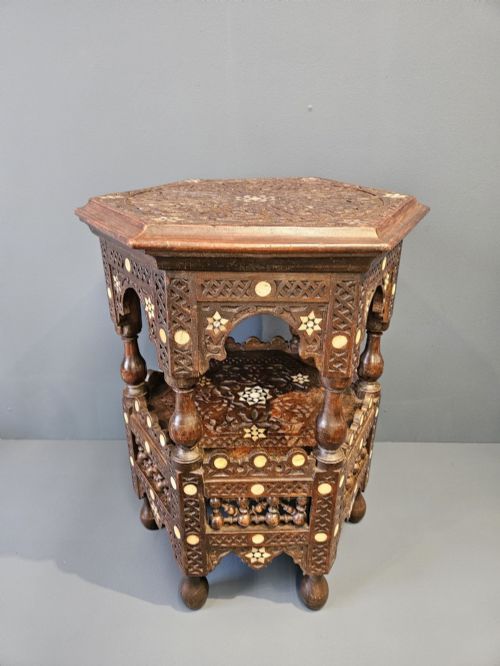


Moorish Style Furniture
Moorish style furniture brings intricate inlaid surfaces and geometric forms into British interiors, offering rich textures and historic character.
Moorish Style Furniture
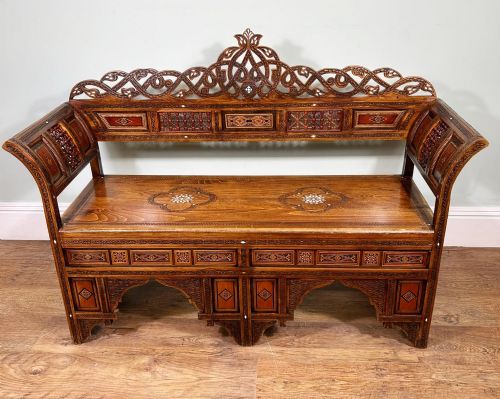
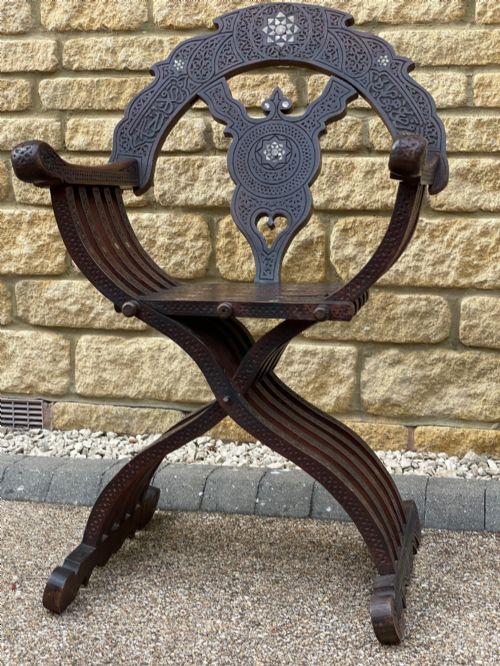
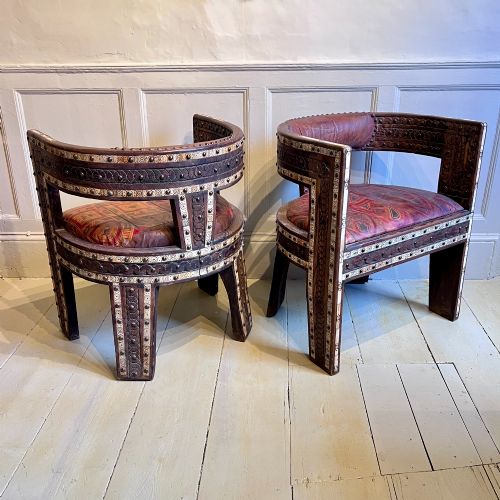
When you search for moorish style furniture, you encounter seating, tables, and storage pieces dating from the Victorian era into the twentieth century. These objects include side tables, occasional tables, armchairs, settees, and cabinets that reflect diverse regional traditions.
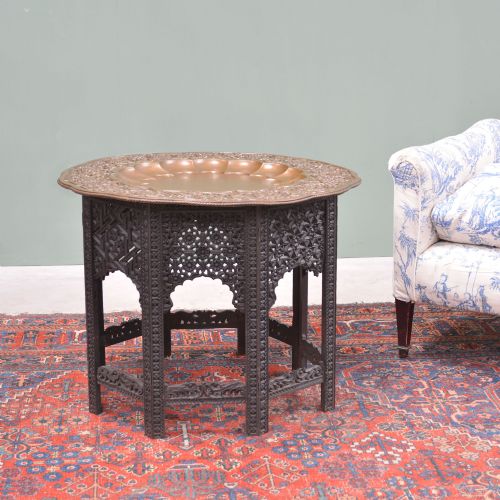
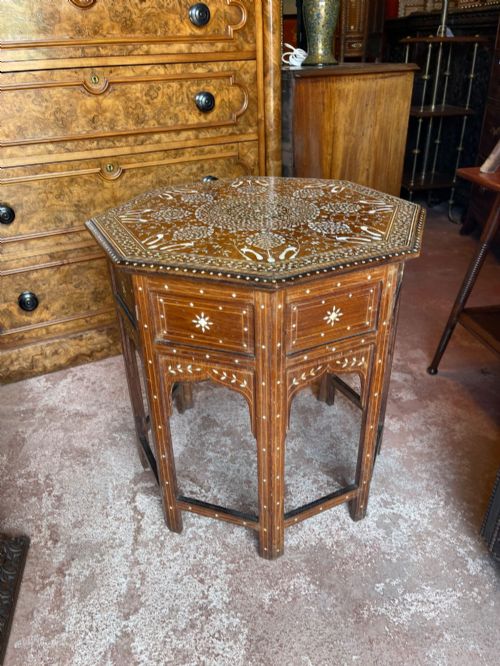
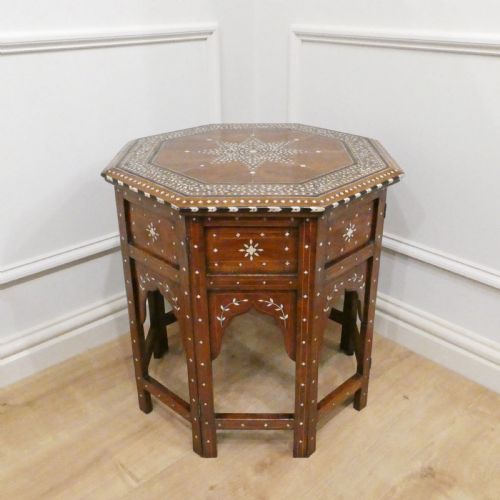
Octagonal occasional tables and inlaid chairs form the core of what appears on this page. Makers produced these pieces utilising complex geometric designs, often drawing on Syrian, Egyptian, and North African influences.
Larger items such as settees, window seats, and overmantel mirrors appear alongside smaller lamp tables and folding chairs. Each piece demonstrates the crossover between British retail taste and eastern craftsmanship during the nineteenth and twentieth centuries.
Materials and construction techniques
Hardwoods form the structural core of these pieces, with walnut, mahogany, and ebonised wood providing a dark, stable base for intricate ornamentation. Artisans shaped these timbers into frames for chairs, cabinets, and tables.
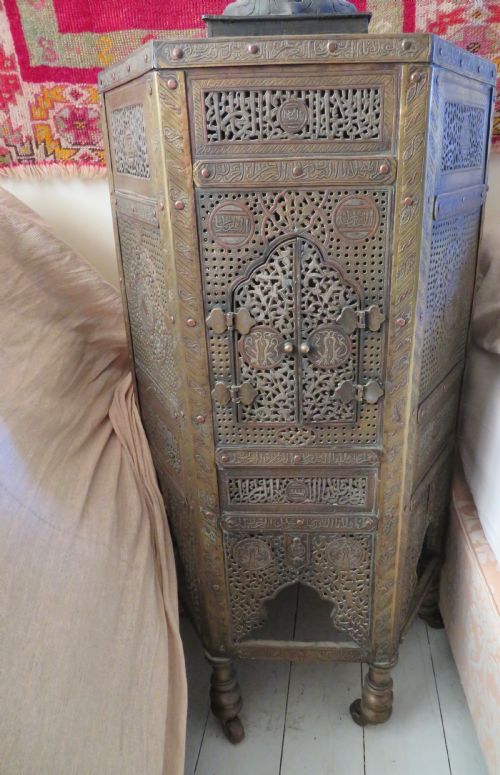
Surface decoration relies heavily on bone and mother-of-pearl inlay arranged in geometric patterns. Metal elements such as brass, white-metal, and copper wire inlay further enrich the wood and bone surfaces.
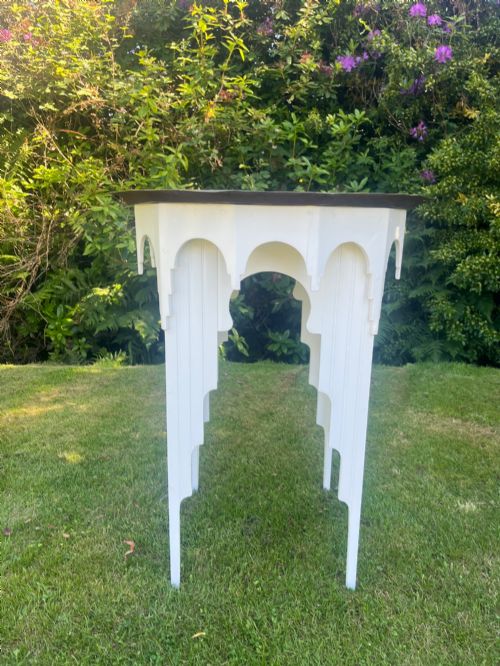
Openwork carving and pierced wooden screens define the structural details on tables and seating. Leather panels and painted finishes also appear on specific chairs and window seats from the period.
Listings include 19th Century, Victorian, and early 20th Century periods alongside materials like bone, mother-of-pearl, and brass.
Quality variations in craftsmanship
The precision and completeness of the bone and mother-of-pearl inlay separate finer examples from standard production. Tightly fitted geometric tessellation indicates superior workshop skill.
The integrity of the carved openwork and the choice of dense hardwood substrate influence the durability and visual depth of each table or chair. Untidy joints or missing inlay elements reduce the refinement of the piece.
Liberty & Co·Shapland & Petter·Carlo Bugatti
The Moorish Style Furniture Glossary
- Hoshiarpur
- A style of woodwork originating from India involving dense inlay of bone or brass into shesham or other hardwoods. Such tables frequently feature intricate floral and geometric patterns.
- Kursi
- A low hexagonal table or stool associated with Middle Eastern metalwork and woodwork traditions. These pieces often incorporate brass and copper inlay.
- Moorish Revival
- An architectural and decorative style popular in the nineteenth century that reinterpreted Islamic design motifs. Furniture in this taste utilised horseshoe arches, geometric lattices, and extensive inlay.
- Ebonised
- Wood treated to resemble ebony through staining or painting. This finish provides a stark contrast against light bone and mother-of-pearl inlay.
- Overmantel
- A large mirror or decorative frame designed to sit above a fireplace mantelpiece. Examples in this category exhibit carved Moorish geometric woodwork.
Moorish Style Furniture: Frequently Asked Questions
What defines moorish style furniture?
These pieces combine dense geometric inlays of bone and mother-of-pearl with dark hardwoods and pierced woodwork. They reflect nineteenth and early twentieth-century European interest in Islamic and North African design.
Items range from octagonal tables and folding chairs to cabinets and window seats, often produced by British firms or imported directly from regions like Syria and Egypt.
How do I identify a Hoshiarpur table?
Hoshiarpur tables are characterised by their dense, all-over inlay of bone or brass set into a hardwood body. They frequently take an octagonal or tray-top form.
Originating from the Punjab region of India, these tables reached Britain in significant numbers during the late nineteenth century through retailers like Liberty & Co.
Where were these pieces used originally?
In British homes of the late Victorian and Edwardian periods, these items furnished smoking rooms, drawing rooms, and hallways. Their exotic materials and dark woods suited eclectic interior schemes.
Today, they function well as occasional tables, corner cabinets, or statement seating in contemporary living spaces.
How should I care for inlaid wood?
Keep inlaid furniture away from direct sunlight and sudden temperature shifts to protect the wood and prevent the bone or mother-of-pearl elements from loosening. Dust gently with a dry, soft cloth.
Avoid using liquid polishes or modern chemical cleaners, which can seep into the openwork carving and damage the adhesive beneath the inlay.