

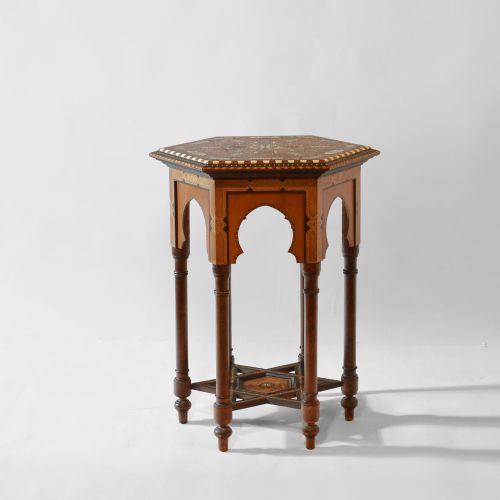


Moorish Inlaid Table
A moorish inlaid table brings geometric intricacy and rich materials into a room, offering surface space with an unmistakable sense of distant trade routes.
Moorish Inlaid Table
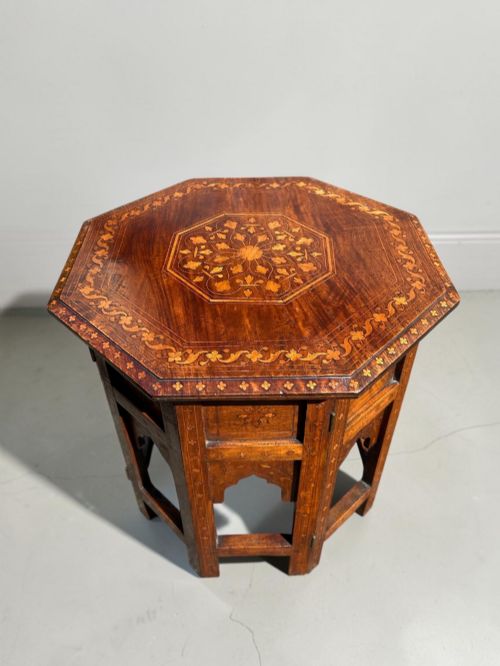
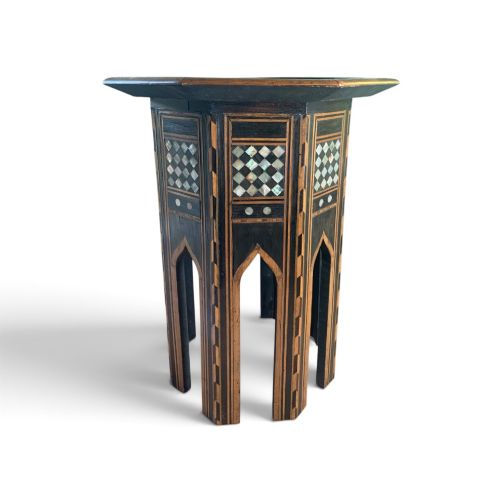
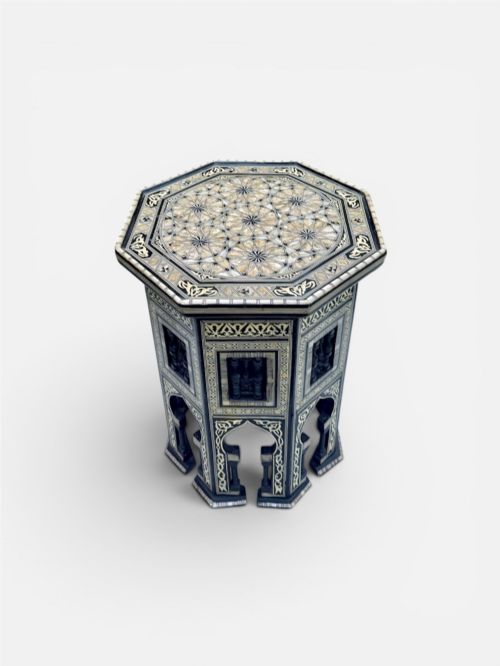
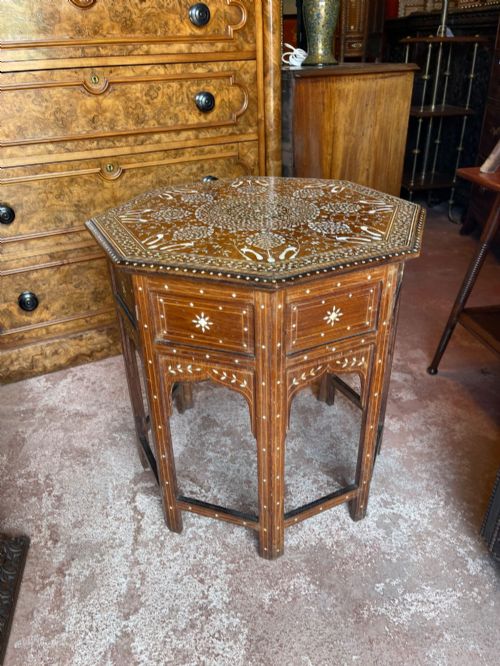
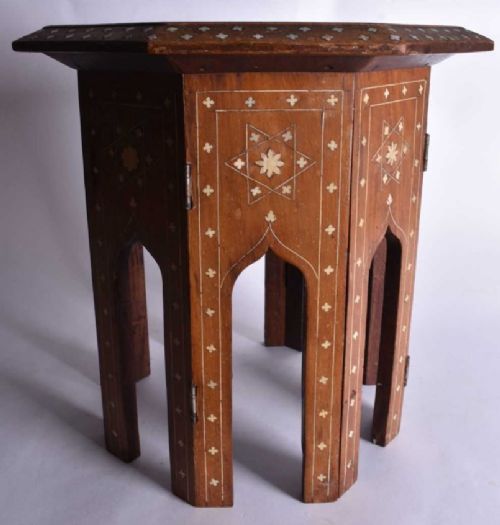
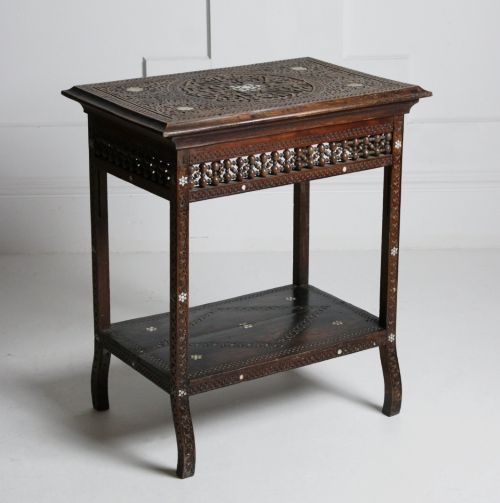
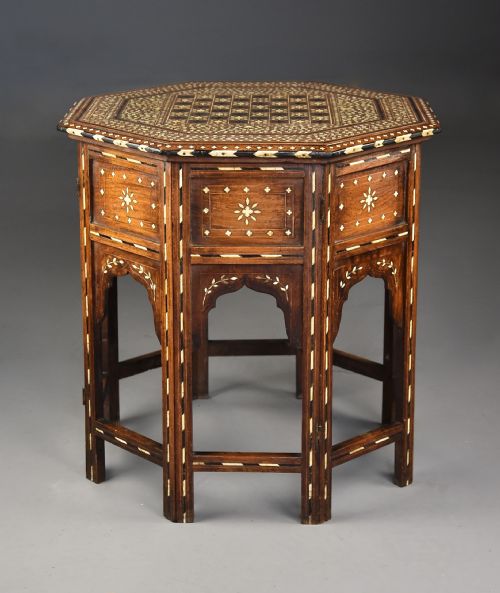
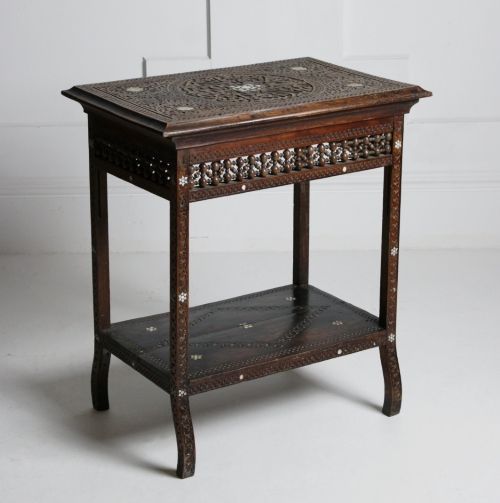
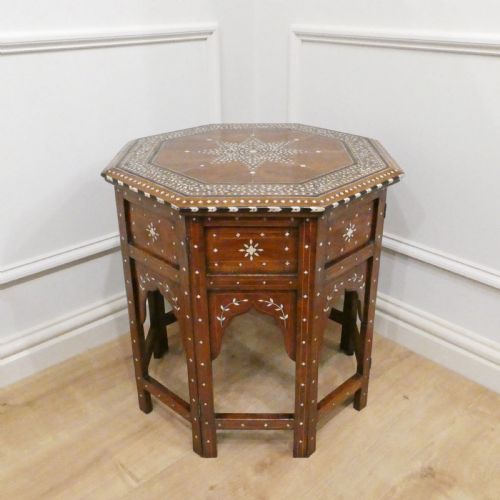
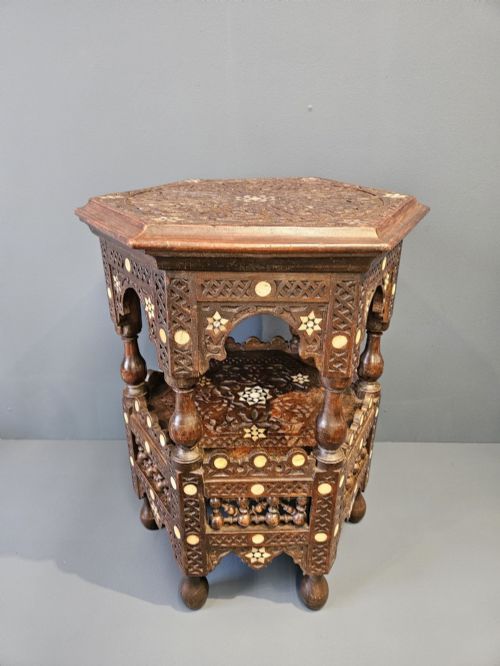
A moorish inlaid table combines complex geometric woodwork with contrasting detail, appearing in forms such as side tables, occasional tables, and folding tables. You are most likely to encounter hexagonal and octagonal shapes designed for domestic use.
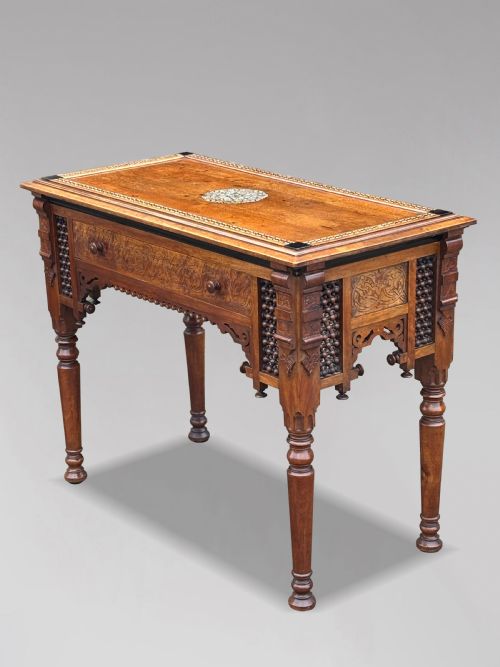
The aesthetic spans distinct regional workshops and revival movements, connecting pieces made in Damascus, Hoshiarpur, and Cairo with British interpretations by firms like Liberty and Co. These surfaces served as lamps tables, coffee pieces, and games tables in nineteenth and twentieth century interiors.
How They Were Made
Craftsmen built these tables using hardwoods, walnut, teak, and ebonised wood as a structural base for elaborate surface decoration. They channelled traditional woodworking methods to form intricate folding stands and rigid frames.
Artisans pressed bone and shimmering mother-of-pearl into precise recesses carved directly into the timber, often accompanied by wire inlay in brass, copper, or white-metal. This meticulous mosaic work required patience and specialised hand tools to achieve flush, patterned surfaces.
Several folding tables hide secret compartments beneath their star-patterned tops for safekeeping.
What Varies in Quality
Quality rests upon the density and precision of the geometric tessellation across the top and sides. Superior examples display tightly fitted bone and mother-of-pearl segments with minimal filler, whereas lesser pieces show wider gaps and simplified patterns.
The integrity of the carved openwork and the choice of dense timber set exceptional tables apart from standard production. Maker attribution, particularly to known houses or documented workshops, elevates the stature of an individual piece.
Liberty and Co·Carlo Bugatti
The Moorish Inlaid Table Glossary
- Hoshiarpur
- A region in northern India celebrated for intricate woodwork involving dense bone and wire inlay. Pieces originating here typically feature floral or geometric motifs set into teak or sandalwood.
- Damascus
- A Syrian centre for metal and pearl inlay work on domestic furniture. Tables from this tradition often employ complex polygonal designs using mother-of-pearl.
- Cairoware
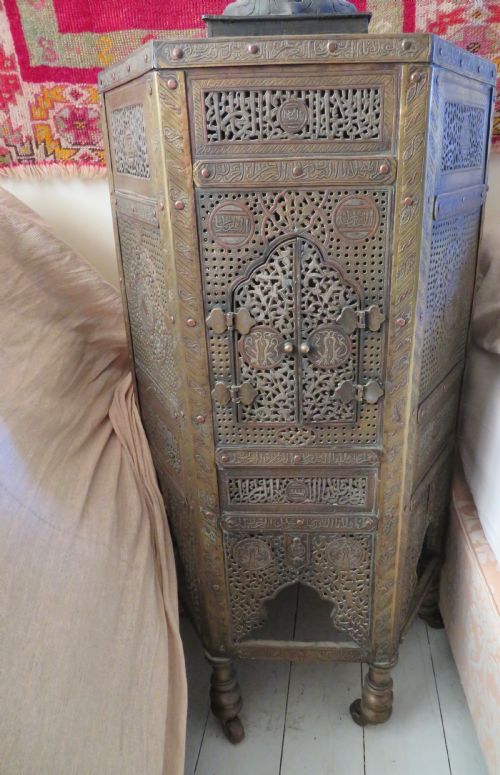
- Metal-inlaid brass and copper decorative items produced in Egypt. These objects display silver and copper wire hammered into etched brass surfaces.
- Mamluk Revival
- A design movement drawing upon medieval Islamic art of Egypt and Syria. It values geometric strapwork and star motifs.
- Octagonal
- Having eight sides. This polygon shape is standard for folding occasional and lamp tables.
Moorish Inlaid Table: Frequently Asked Questions
How do I care for the mother-of-pearl inlay?
Keep the wood nourished with a light wax and avoid excess moisture that can loosen delicate shell pieces.
Dust gently with a soft dry cloth to protect the intricate surface channels from damage.
Are folding stands original to these tables?
Many octagonal tables feature clever lattice folding stands designed for easy storage and transport.
These collapsible bases were integral to the portable nature of Syrian and Indian occasional furniture.
How can I distinguish Syrian from Indian work?
Syrian pieces frequently emphasise large expanses of mother-of-pearl and star patterns set into walnut or hardwood.
Indian Hoshiarpur work relies more heavily on finely etched bone panels combined with dense foliate carving.
Where should I place a moorish table at home?
Position them as accent pieces beside seating where the detailed top can be appreciated.
Avoid direct sunlight to prevent the timbers and natural inlay materials from drying out over time.