



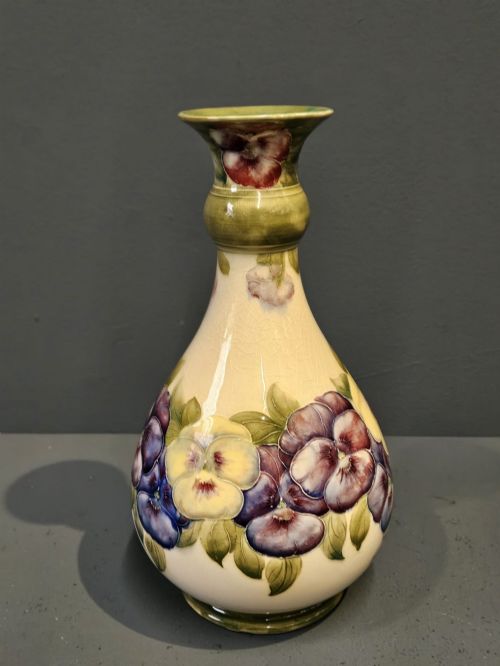


Moorcroft Floral Pottery
These moorcroft floral pottery pieces bring rich tube-lined botanical patterns into the room, offering a tangible connection to early twentieth-century ceramic design.
Moorcroft Floral Pottery
When you search for moorcroft floral pottery, you encounter a distinct tradition of British studio ceramics spanning from the late nineteenth century into the 1930s. The selection on this page centres primarily on earthenware vases, chargers, and tea services decorated with floral motifs.
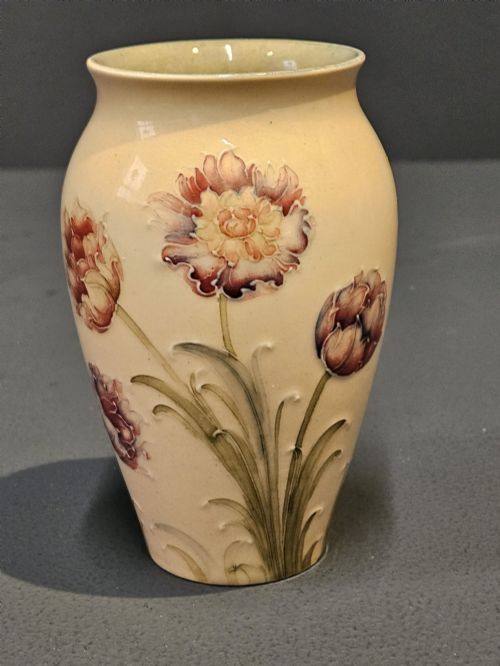
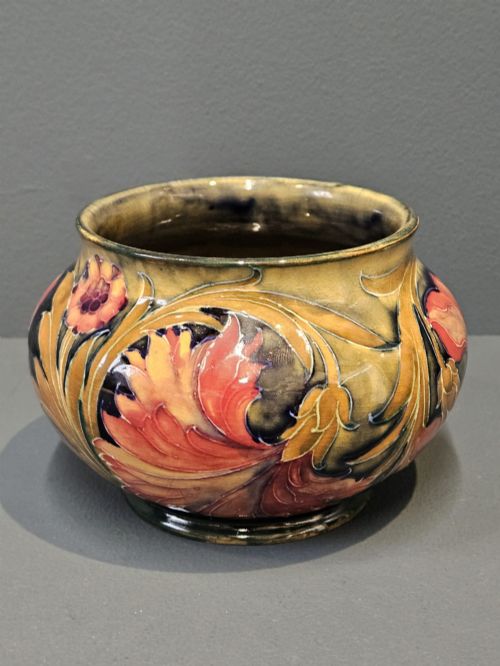
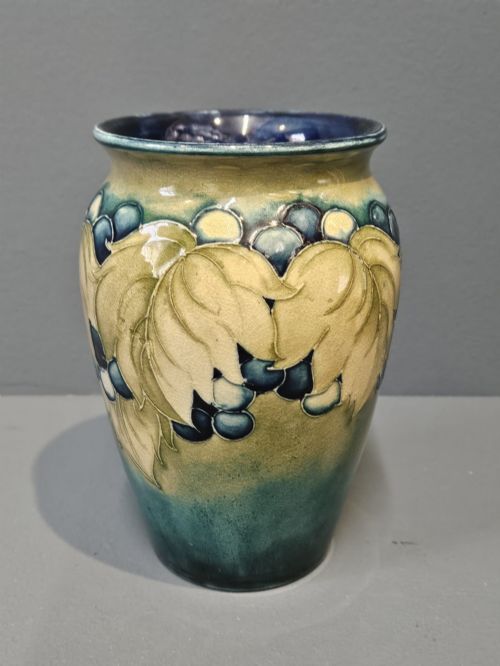
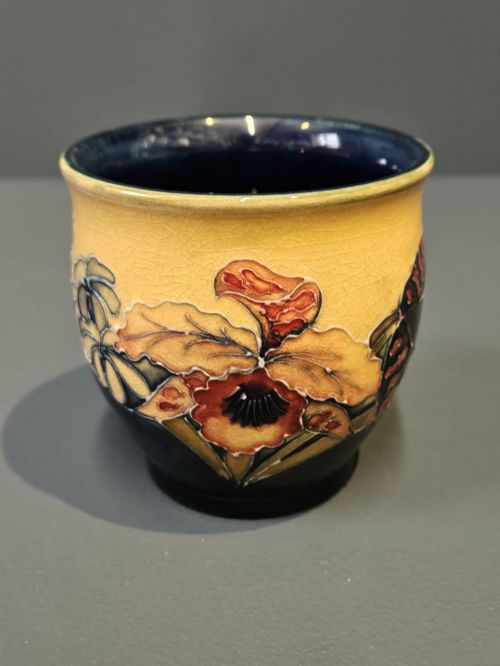
You are most likely to meet pieces decorated with recognisable botanical designs such as anemone, pansy, poppy, orchid, and leaf and berries. These items originate from periods including the Art Nouveau, Art Deco, and Arts and Crafts eras, displaying the characteristic stylistic shifts of those decades.
The forms range from squat vases to large decorative vessels and chargers, often utilising glazed earthenware as the primary ceramic body. Makers and designers from these earlier periods established the standard forms that collectors still seek today.
How they were made
The physical construction relies on earthenware shaped into vases, chargers, and tea services, finished with applied glazes that accentuate the surface relief. Many examples incorporate intricate tube-lining techniques to outline the botanical motifs before the application of coloured glazes.
Specialist decorative finishes appear across the pieces, including celadon glazes and gold leaf highlights applied to ceramic bodies. These methods demand precise control during firing to achieve the characteristic depth of colour and surface texture found in early twentieth-century production.
Moorcroft Floral Pottery Retail Price Guide 2026
Typical asking prices for moorcroft floral pottery among the pieces listed under this phrase on Sellingantiques today, from the lower quarter to the upper quarter. They describe what is for sale here now, not the wider market.
Some early vases hide unexpected yellow tops beneath their floral crowns.
What varies in quality
Quality in these ceramics rests on the crispness of the tube-lined design and the depth achieved in the glaze application. Pieces that display confident hand-painted colour blending and well-defined floral contours stand apart from simpler production output.
The ambition of the form and the complexity of the botanical pattern dictate the standing of an individual piece within the range. Early production examples often demonstrate superior execution in both the ceramic potting and the final glaze finish.
William Moorcroft·Macintyre
The Moorcroft Floral Pottery Glossary
- Tube-lining
- A decorative technique where liquid clay is piped onto the unglazed ceramic body to form raised outlines for subsequent colouring. This method creates the characteristic tactile relief seen on floral designs.
- Earthenware
- A porous pottery body fired at lower temperatures, requiring an impermeable glaze to hold liquids. It forms the base material for the majority of these decorated vessels.
- Celadon
- A pale green jade-like glaze applied to ceramics, prized for its subtle tonal variation. It provides a quiet background for botanical motifs.
- Art Nouveau
- An international design style prominent from the late nineteenth century until the First World War, characterised by organic plant-like lines. Many early floral vases reflect this aesthetic.
Moorcroft Floral Pottery: Frequently Asked Questions
What is moorcroft floral pottery?
These items are British ceramic pieces featuring hand-applied tube-lined botanical designs such as poppies, pansies, and orchids. They encompass earthenware vases, chargers, and tea services produced from the late nineteenth century through the 1930s.
The works bridge utilitarian objects and decorative art, capturing the shifts from Arts and Crafts to Art Nouveau and Art Deco styles. Collectors value them for their distinct surface textures and rich colour palettes.
How do I date these pieces?
Dating relies on identifying the design period, style characteristics, and any associated factory marks or signatures present on the ceramic base. Pieces range from late nineteenth-century productions to items from the 1900s, 1910s, 1920s, and 1930s.
Stylistic cues such as flowing organic lines indicate earlier Art Nouveau influences, while geometric tendencies point toward the later Art Deco era. Comparing the specific floral motif and glaze type helps narrow the manufacturing decade.
How were these ceramics used?
Many of these vessels functioned as decorative vases designed to display cut flowers in domestic interiors, while chargers served as wall-hanging or table centrepieces. Tea services were created for formal social dining.
Over time, these functional objects transitioned into purely decorative display pieces collected for their artistic merit and historical association with early twentieth-century studio pottery movements.
How should I care for glazed earthenware?
Glazed earthenware requires gentle handling to protect the ceramic body and the applied surface glazes from impact damage. Dusting with a soft, dry cloth is sufficient for routine maintenance.
Avoid immersing antique ceramic pieces in water for extended periods, especially if the glaze shows fine crazing. Keeping them away from direct sunlight protects the stability of the coloured finishes.