
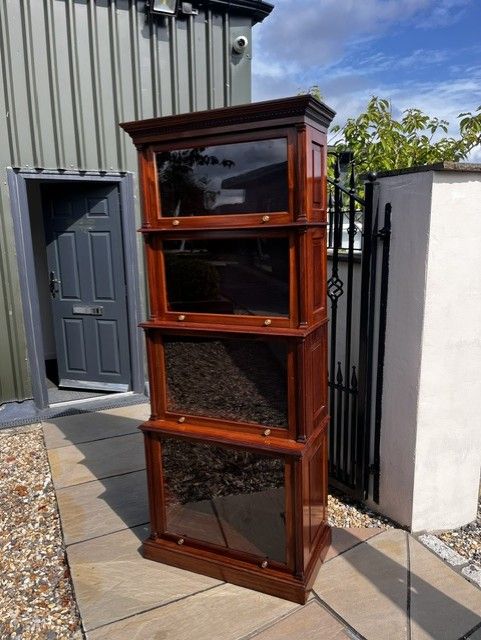
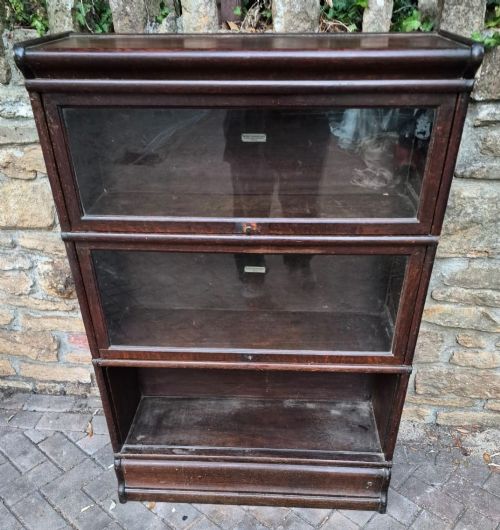
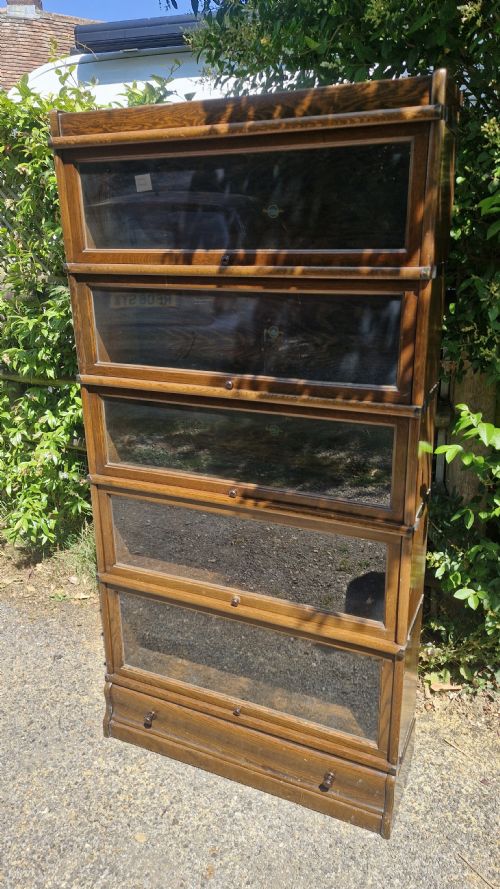


Modular Library Cabinet
A modular library cabinet organises growing collections through stacking sections that adapt to tall volumes and tight spaces.
Modular Library Cabinet
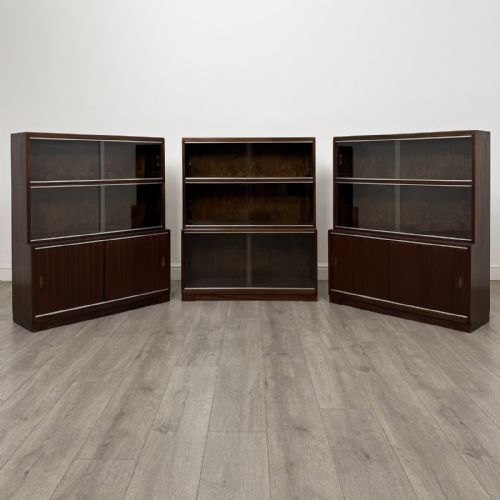
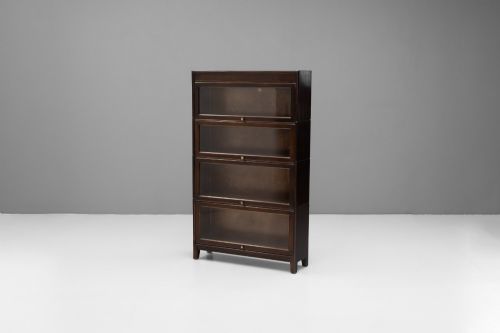
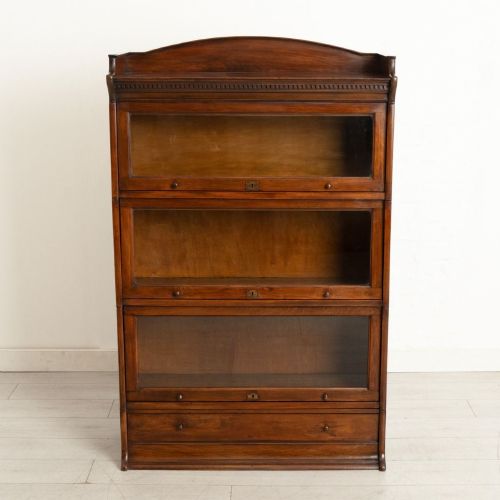
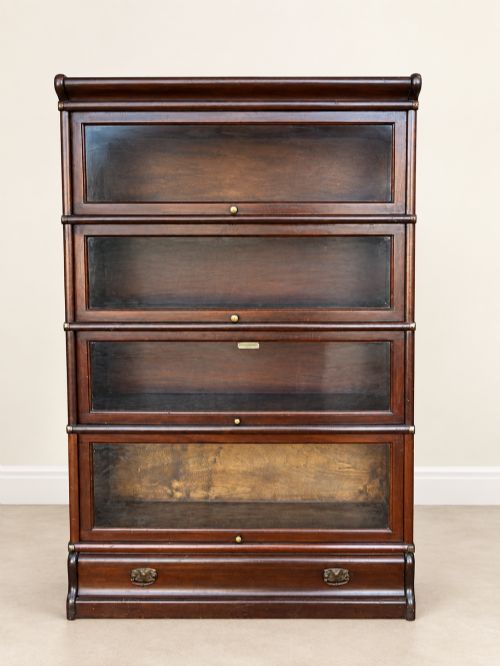
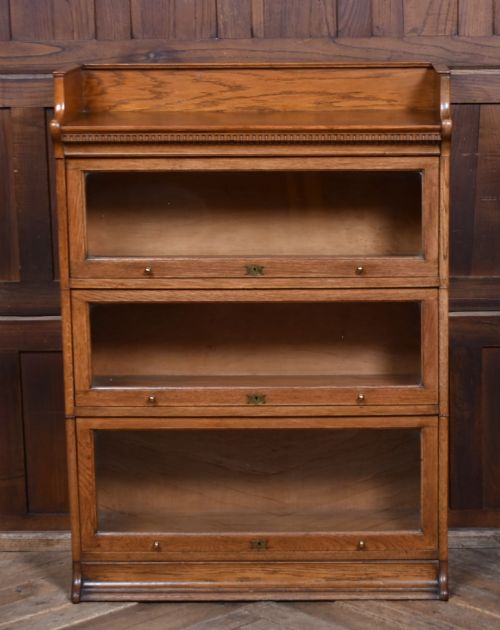
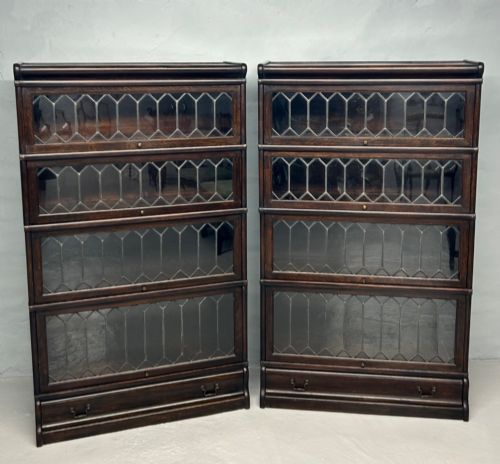
A modular library cabinet provides adaptable storage through independent tiers that stack to form a unified bookcase. Buyers examining this page encounter sectional office and library bookcases primarily from the Edwardian period, 1900, 1910, 1920, and 1930.
The format includes stacking barrister bookcases, filing cabinets, and library card filing sets with glazed or sliding doors. Oak and mahogany serve as the main timbers across these sectional forms.
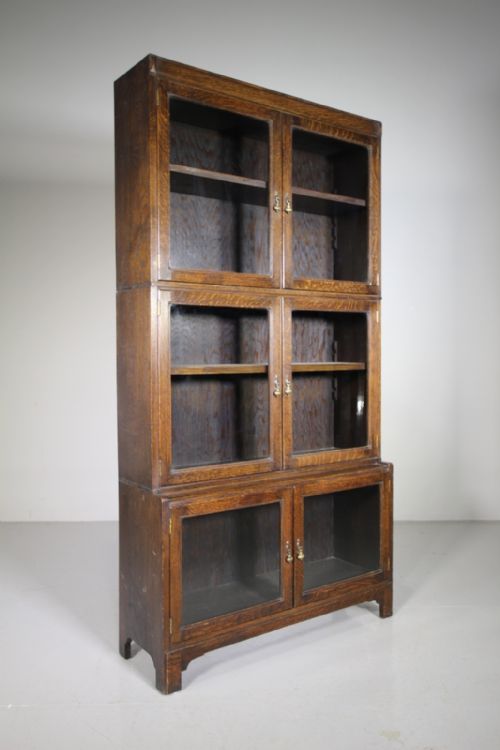
Makers such as Globe Wernicke, Lebus, Minty, Gunn, and Heal's dominate the surviving examples on this page. Pieces range from single-tier sections to tall multi-tier setups incorporating leaded glass or brass hardware.
Materials and Construction
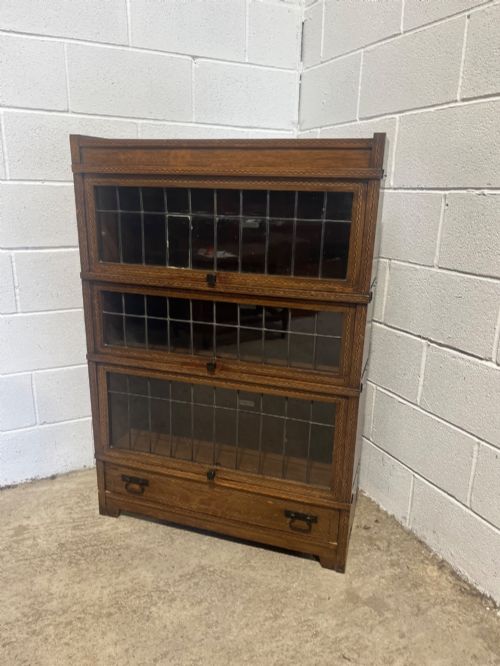
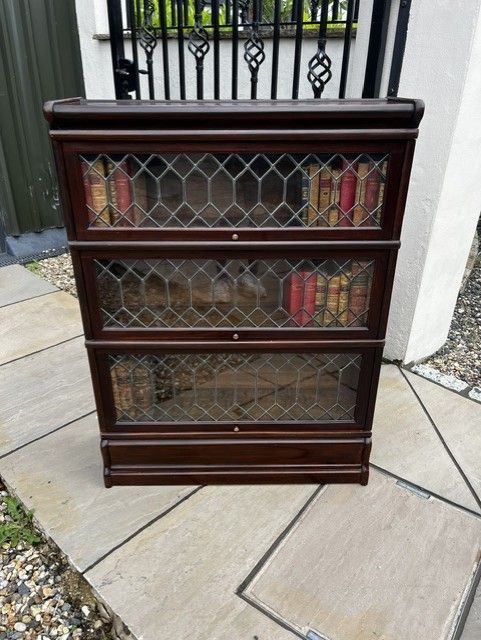
Construction relies heavily on solid oak and mahogany timbers, paired with glass for viewing stacked volumes and brass for handles and mechanisms. Some units incorporate lead to segment the glass panels within the doors.
The stacking design utilises modular sections that fit together securely without permanent fixings, allowing individual tiers to be added or rearranged. Sliding and lifting glass door mechanisms protect the books while permitting smooth access to each shelf.
The listings span the nineteenth century through the Art Deco period, featuring oak and mahogany alongside brass, lead, and glass components.
Assessing Quality
The smoothness of the door action and the uniformity of the original finish determine the standing of each piece. Maker attribution, such as signed Globe Wernicke or Heal's units, further distinguishes the build standard.
Globe Wernicke·Gunn Furniture·Lebus·Minty·Heal's·AMYL
The Modular Library Cabinet Glossary
- Sectional bookcase
- A bookcase built from multiple independent tiers that stack vertically to form a single tall cabinet. Each tier contains its own shelf and door.
- Barrister bookcase
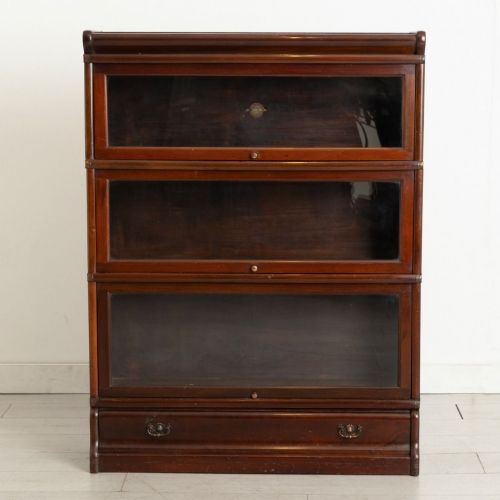
- A specific type of stacking bookcase designed with glazed doors that lift and slide inward above the books. This format protects legal texts and library volumes from dust.
- Stacking bookcase
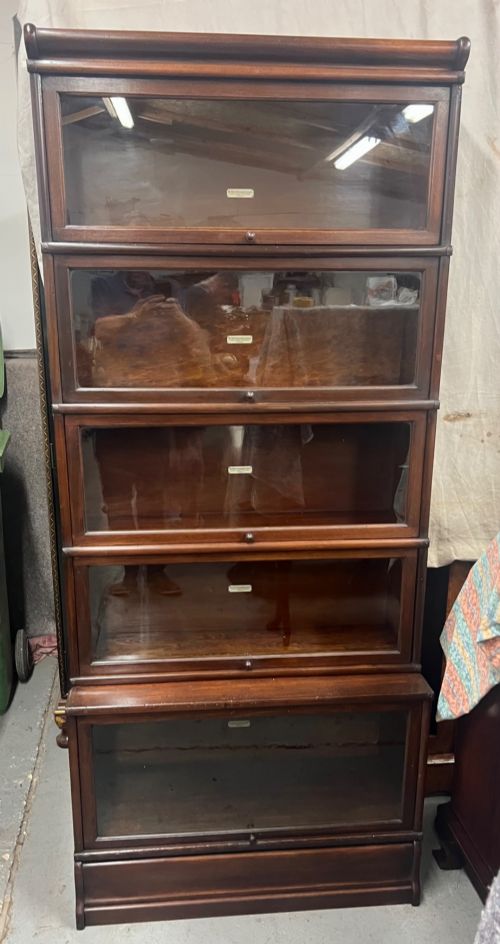
- An alternative term for a modular cabinet whose horizontal sections rest one upon another. These units can be disassembled for transport or reconfigured with additional tiers.
- Lead glazing
- Window construction where small panes of glass are held together by strips of lead cames. This technique appears on specialised doors within the selection.
Modular Library Cabinet: Frequently Asked Questions
What is a modular library cabinet?
A modular library cabinet is a sectional storage unit composed of separate stacking tiers that combine into a tall bookcase. Each tier functions independently with its own shelf and door.
These pieces allow owners to expand their shelving capacity vertically by adding matching sections as collections grow.
How do barrister bookcase doors work?
Barrister bookcase doors use a pivoting metal arm mechanism that allows the glazed panel to lift upward and slide back into the cabinet above the books. This design keeps the door out of the way while browsing.
The mechanism requires smooth alignment of the brass pins and runners to operate without binding against the wooden frame.
Can stacking bookcases be separated?
Stacking bookcases separate into individual horizontal tiers, a top cornice, and a bottom base plinth. The sections rest on one another using simple interlocking joints rather than permanent fixings.
This modular construction makes the heavy oak and mahogany cabinets much easier to transport and rearrange in different rooms.
What timbers were used for these cabinets?
Makers constructed these cabinets primarily in oak and mahogany, utilising both solid timbers and veneers over secondary woods. Golden oak and dark mahogany dominate the surviving examples from the early twentieth century.
Brass hardware and leaded glass details frequently complement the wooden frames across different maker styles.