






Modernist Silver Jewellery
Modernist silver jewellery brings together clean geometric lines and striking stones, offering wearable art from the twentieth century.
Modernist Silver Jewellery
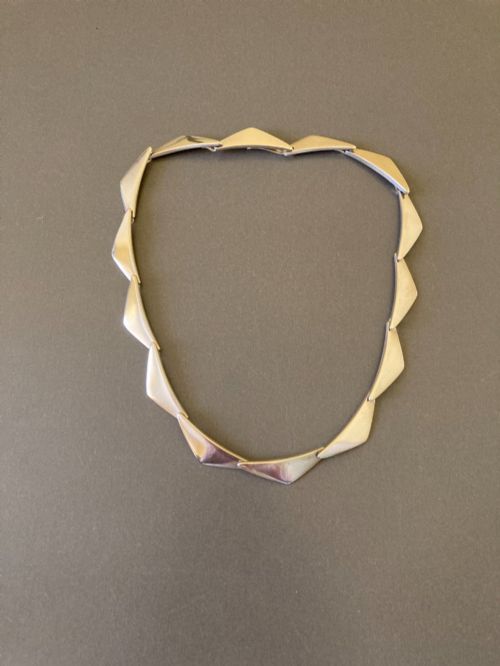
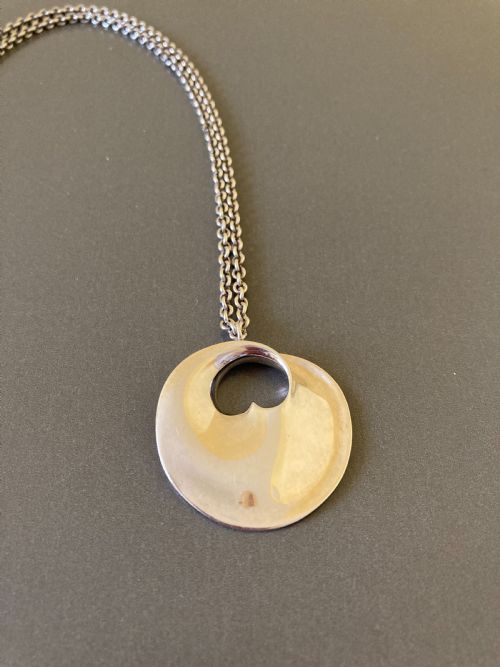
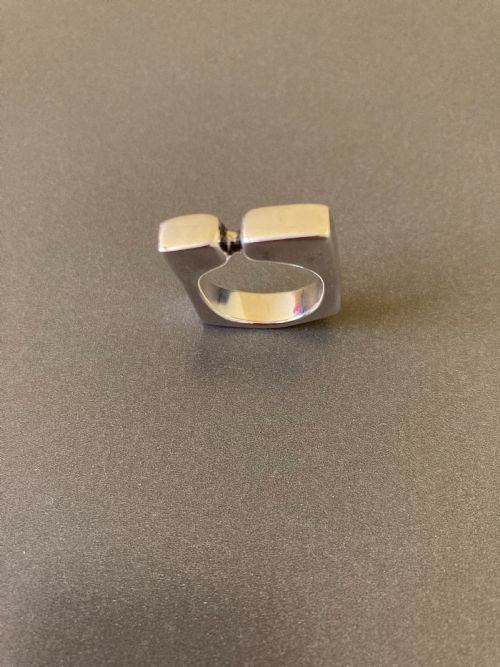
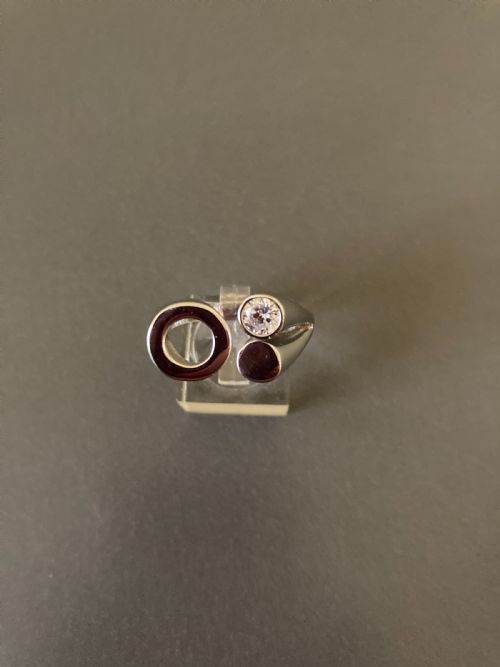
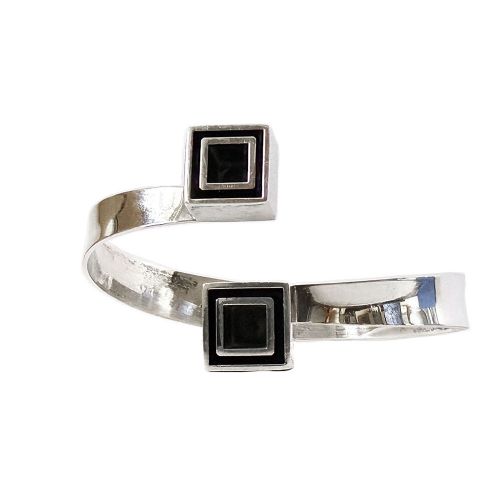
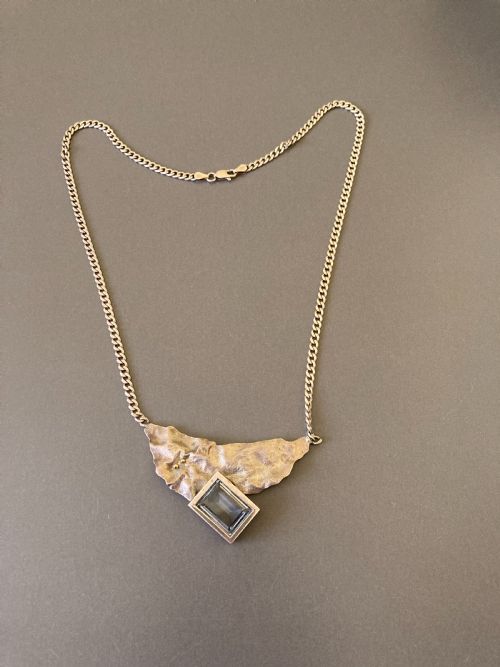
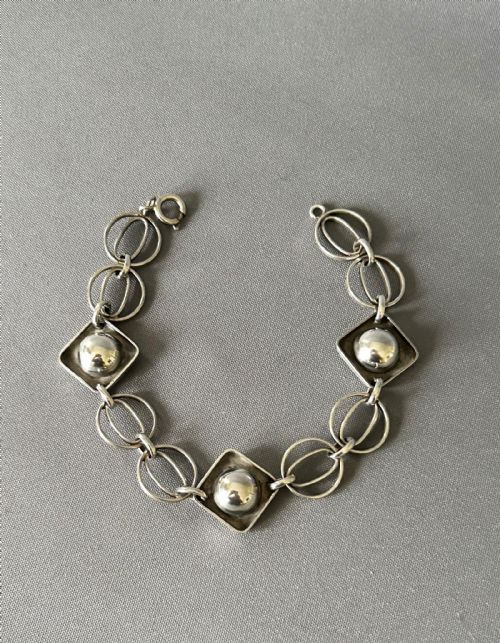
Modernist silver jewellery comprises necklaces, brooches, rings, bracelets, cufflinks and earrings created during periods such as the 1930s, 1940s, 1950s and 1960s. These pieces reflect design movements including Art Deco, Mid-Century Modern and Scandinavian Modern.
The most common examples on this page stem from mid-century Scandinavian workshops and 1930s European studios, often showcasing minimalist metalwork or bold geometric forms.
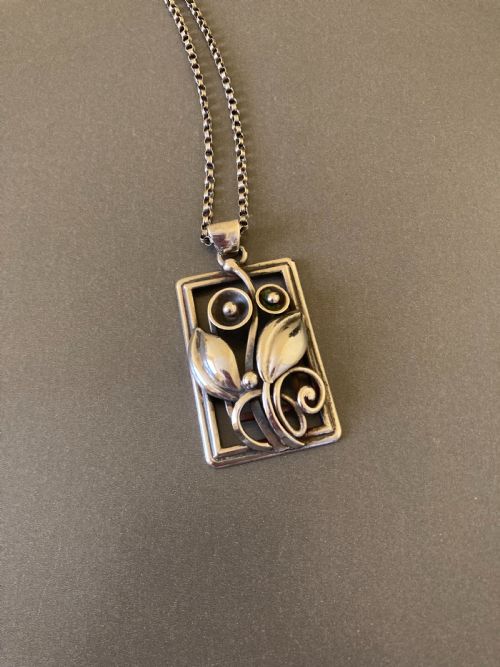
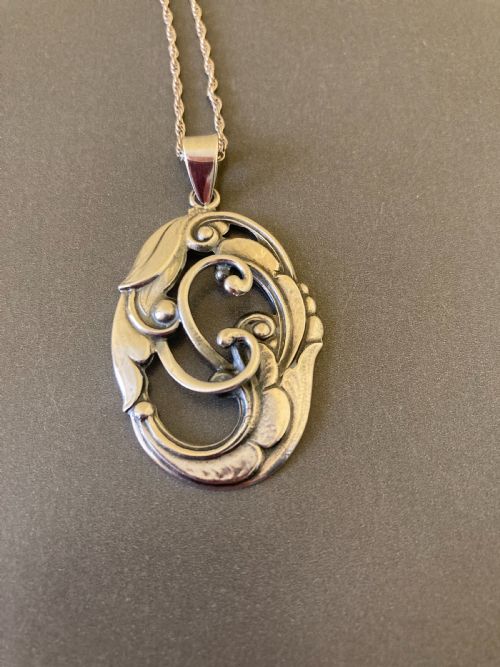
Makers integrated various objects such as pendants, dress clips and torques, providing functional accessories that prioritized form and architectural structure over traditional ornamentation.
Materials and construction
Metals form the foundation of these items, utilising sterling silver, standard silver, chrome, silver plate and gold gilt alongside base metals. Artisans shaped these materials into panel links, solid bangles and structured settings.
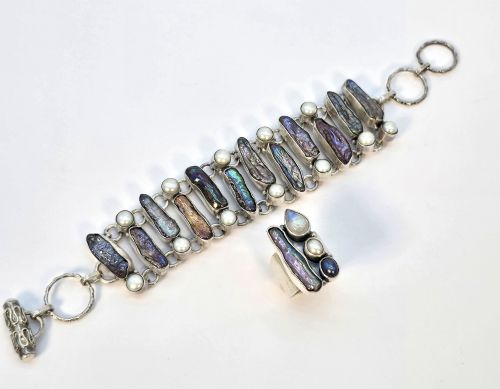
Coloured accents and embellishments frequently appear in the form of enamel, glass, Galalith and gemstones including amber, amethyst, moonstone, opal, topaz, zircon and pearls. These elements are set securely within the metal framework to create strong visual contrast.
A daring gentleman in the 1930s could coordinate his cuffs with matching modernist enamel cufflinks.
Distinguishing quality in design and execution
Quality rests upon the precision of the metalwork, the integrity of the stone settings and the clarity of applied enamel or glass. Stronger pieces display deliberate weight, crisp terminal ends and balanced proportions.
Signed items from known makers or specific geographic regions often demonstrate superior finishing in the hinges, clasps and links compared to unmarked or mass-produced contemporaries.
Aksel Holmsen·Georg Jensen·G. Hoppe·Randers Silver·Alton·Beto·David-Andersen·Jakob Bengel
The Modernist Silver Jewellery Glossary
- Galalith
- A early semi-synthetic plastic material derived from casein, frequently utilised in 1930s statement necklaces and geometric jewellery.
- Torque
- A rigid neck ring that is open-ended at the front, often supporting a suspended pendant or terminating in decorative terminals.
- Dress clip
- An ornamental clip designed to fasten onto the neckline, lapel or strap of a garment without piercing the fabric.
- Sterling silver
- An alloy of silver containing precisely specified proportions of pure silver and other metals to ensure durability in wearable items.
- Skonvirke
- A Scandinavian design style that influenced regional silversmithing with organic motifs and handcrafted textures.
Modernist Silver Jewellery: Frequently Asked Questions
How do I clean vintage silver jewellery?
Clean sterling silver items gently using a soft cloth designed for precious metals to preserve the original finish and any intentional patina.
Avoid harsh chemical dips, particularly on pieces containing enamel, galalith or softer organic stones like amber and pearls.
How can I identify the date of a piece?
Dating relies on stylistic clues such as the geometric abstraction of 1930s Art Deco or the organic lines typical of 1950s and 1960s Scandinavian Modern design.
Maker's marks, stamped silver standards and specific material choices like Galalith also provide clear chronological anchors.
What is the difference between silver and silver plate?
Solid silver items consist of precious metal throughout, such as sterling silver or standard silver grades, ensuring long-term durability.
Silver-plated pieces feature a thin layer of silver applied over a base metal foundation, which can show wear over time with heavy friction.