

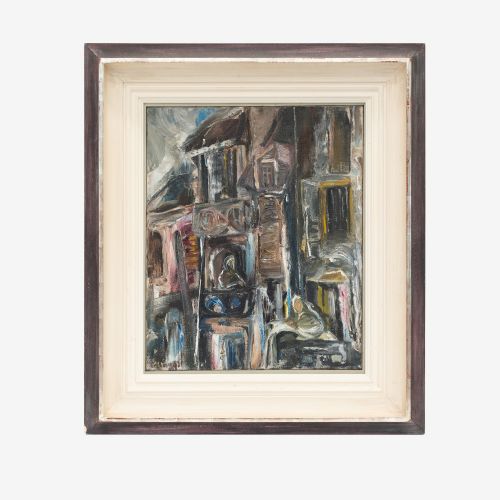


Modernist Fine Art Painting
These modernist fine art painting examples capture the bold spirit of early twentieth-century experimentation across canvas and board.
Modernist Fine Art Painting
When you search for a modernist fine art painting, you encounter works spanning the nineteen-twenties to the nineteen-fifties. The selection includes French modernism, St Ives School pieces, and Fauvist compositions.
Most examples take the form of oil paintings on canvas or board, framed in wood or gilt wood. Subjects range from portraits and nudes to abstracted landscapes and still life arrangements.
What varies in quality
Distinction across the range lies in the strength of composition and the provenance of the artist. Pieces associated with named practitioners or specific regional movements carry greater historical weight.
The integration of paint handling with the support material, whether canvas, board, or framed gilt wood, defines the visual execution of each piece.
A flapper in her nuisette shares space with a black madonna, proving interwar artists painted whatever caught their wandering eyes.
Carl Felkel·Lilian Colbourn·Raymond Moritz·Denis Mitchell·William McCance·Andre Delfau
The Modernist Fine Art Painting Glossary
- Fauvism
- A style characterised by vibrant colours and bold brushwork. This approach emerged in the early twentieth century.
- St Ives School
- A group of artists based in Cornwall associated with British modernism. Denis Mitchell and related figures belong to this tradition.
- Encaustic
- A technique involving heated beeswax mixed with coloured pigments. It creates a distinct textured surface on canvas.
- Gilt wood frame
- A wooden framing structure covered with a thin layer of gold leaf. These frames often accompany period paintings.
Modernist Fine Art Painting: Frequently Asked Questions
What defines a modernist fine art painting?
These works break away from traditional academic realism in favour of abstraction, bold colour, and experimental forms.
The pieces span decades from the nineteen-twenties to the nineteen-fifties, created across Britain, France, and America.
How should I display these framed works?
Most pieces come in period wooden or gilt frames that suit the mid-century aesthetic.
Hang them on neutral walls away from direct sunlight to protect the oil paint and canvas.
How do I identify the period of a painting?
Dates often appear within the titles or signatures, corresponding to styles like Art Deco and Fauvism.
Materials such as canvas, board, and original frames also provide clues to the production era.
What subjects do these paintings cover?
The selection includes portraits, nudes, floral still lifes, and abstracted landscapes.
Interiors and architectural scenes from locations like Paris and Provence also feature prominently.