


Modern Expressionist Portrait
A modern expressionist portrait captures raw feeling through bold strokes, distortion and intense colour, offering an arresting focal point for any room.
Modern Expressionist Portrait
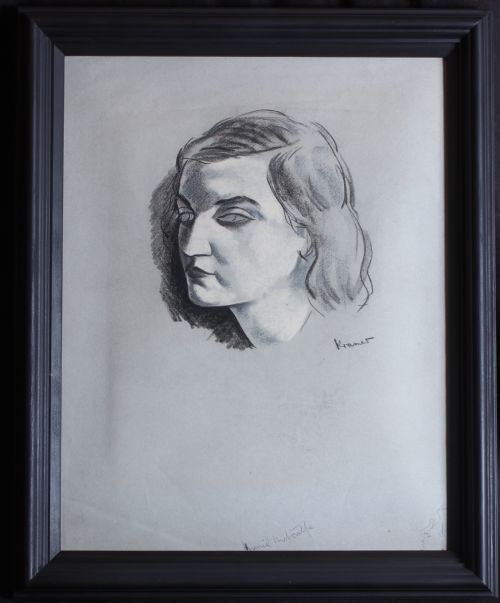
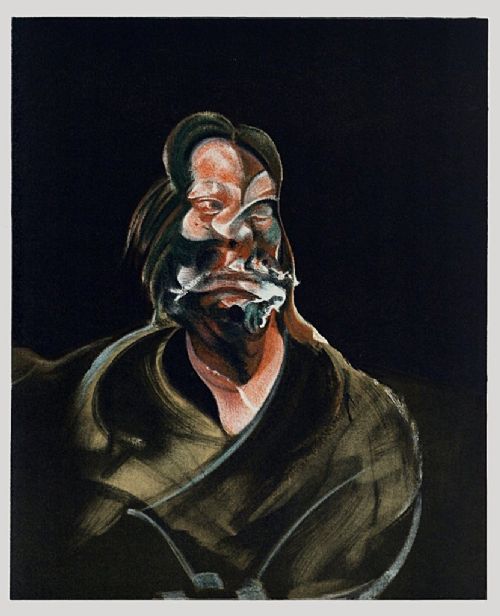
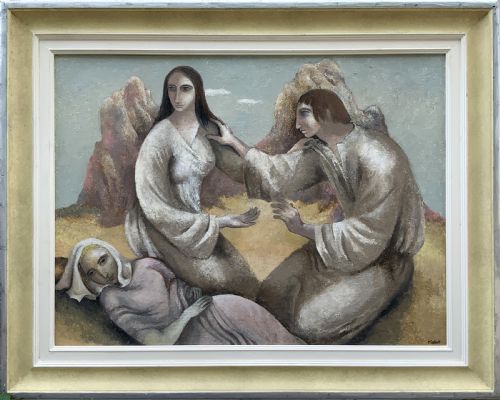
A modern expressionist portrait brings together twentieth-century avant-garde visions, ranging from mid-century modernist works to cubist and abstract interpretations. These paintings and prints capture human subjects and nudes through distorted forms and psychological depth rather than strict academic likeness.
The pieces on this page span several decades of the twentieth century, with examples originating from the nineteen-twenties through to the nineteen-sixties. Buyers encounter various formats here, including oil paintings on canvas or board, lithographs, and fine art prints.
Origins stretch across British, American, French, and Spanish workshops, reflecting international movements such as the Bloomsbury Group and New Figuration. The focus rests heavily on oil paint and canvas works, alongside graphic prints and studies on paper.
Materials and Technique
Artists working within this genre relied primarily on oil paint applied thickly to canvas, board, or paper, often building heavy impasto textures that stand proud of the surface. This technique allows the physical handling of the pigment to convey emotional weight and urgency.
Graphic works utilise ink and lithographic processes to achieve stark lines and graphic contrasts, capturing immediacy through printmaking. Supports range from stretched canvas and mounted boards to delicate paper sheets, each dictating how the artist manipulated the medium.
The selection includes paintings, lithographs, prints, and studies on paper by British, American, French, and Spanish creators.
Factors of Quality
Quality in a modern expressionist portrait rests on the conviction of the brushwork and the confidence with which the artist distorts anatomical form. Superior pieces demonstrate an assured handling of pigment and space that commands the viewer's attention.
The relationship between the subject and the application of colour determines the lasting impact of the work. Stronger examples avoid hesitant marks, presenting instead a cohesive and visceral visual statement.
Jean Hippolyte Marchand·Bernard Meninsky·Raymond Arthur Roadnight·Richards Rubin
The Modern Expressionist Portrait Glossary
- Impasto
- Paint applied thickly to a canvas or board, standing in relief and retaining the marks of the brush or palette knife. This technique adds tactile dimension to the surface.
- Cubism
- An early twentieth-century avant-garde art movement that revolutionised European painting and sculpture. It breaks subjects down into geometric planes and multiple viewpoints.
- Lithograph
- A print made from a planographic process in which an image is drawn onto stone or metal with a greasy medium. Ink adheres only to the drawn areas during printing.
- New Figuration
- A mid-century movement returning to figurative subjects through expressive and non-traditional methods. It merges abstraction with recognisable human forms.
- Avant-garde
- Works that are experimental, radical, or unorthodox with respect to art, culture, or society. These pieces push beyond established academic conventions.
Modern Expressionist Portrait: Frequently Asked Questions
What defines a modern expressionist portrait?
These works prioritise emotional intensity and psychological depth over realistic representation. Artists use bold colours, visible brushstrokes, and distorted forms to convey the inner state of the sitter.
The style emerged strongly across the twentieth century, drawing on movements like cubism and fauvism. Every piece offers a unique interpretation of the human face and figure.
How do I hang and display these paintings?
Give these works breathing room on a neutral wall to let the expressive colours and heavy paint textures stand out. Proper lighting from an adjustable picture light enhances the impasto surface.
Keep them away from direct sunlight and excessive humidity to protect the oil paint and canvas supports. Framing should complement the mid-century aesthetic without overpowering the artwork.
How do I date a mid-century portrait?
Examine the materials, stretcher frames, and any inscriptions or signatures left by the artist on the reverse. Canvas types and backing boards often provide clues to the decade of creation.
Stylistic markers also help, as techniques shifted from avant-garde experiments in the nineteen-twenties toward bolder abstract expressionism by the nineteen-sixties.
What is the difference between an oil painting and a print?
An oil painting is a unique, handmade work where the artist applies pigment directly to canvas or board. Each stroke and layer of impasto is singular to that physical object.
Prints and lithographs are multiples produced from an original plate, stone, or block. They offer a graphic quality with flat areas of ink rather than raised layers of paint.