




Mirrored Wall Shelf
A mirrored wall shelf brings together reflected light and practical display space, uniting function and decoration on any room's walls.
Mirrored Wall Shelf
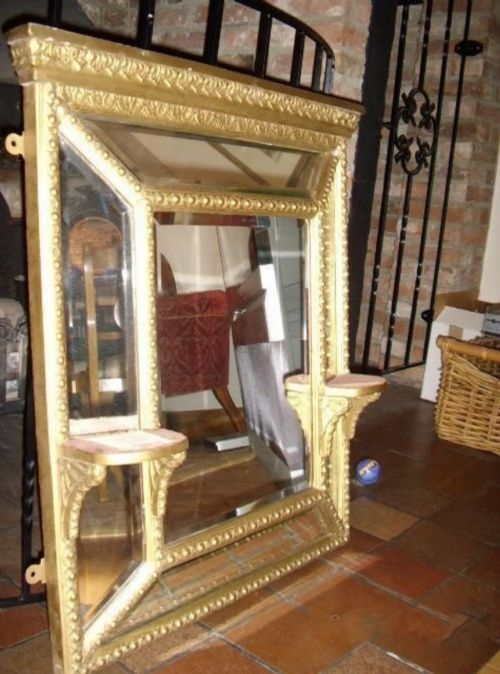
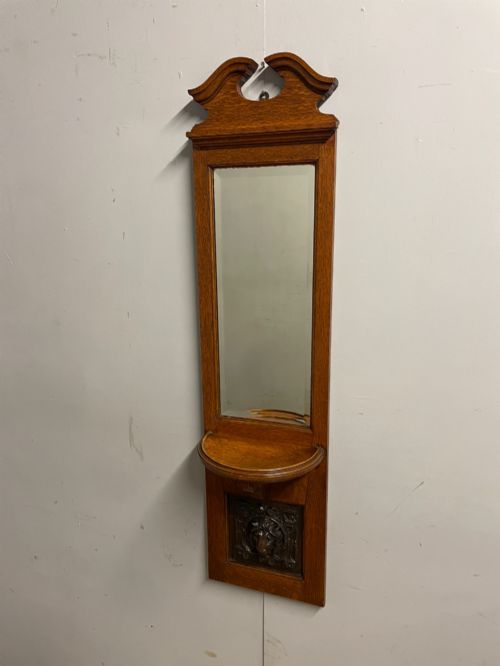
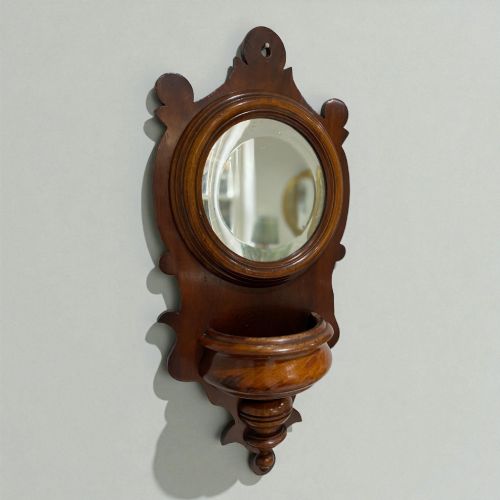
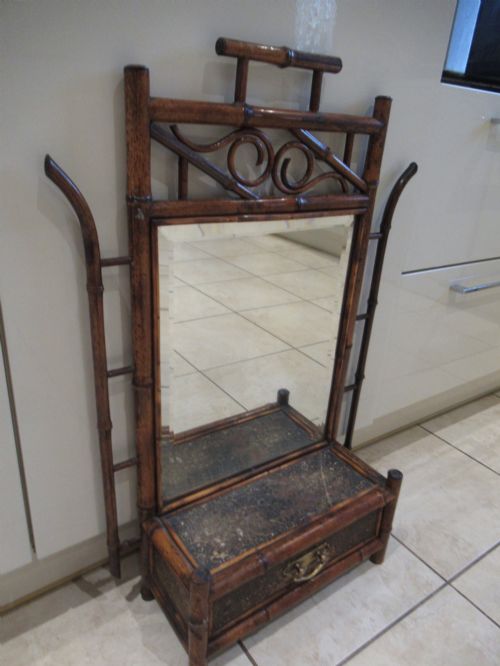
A mirrored wall shelf combines a functional glass mirror with integrated ledges, brackets, or small cabinets designed for displaying ornaments or holding everyday items. These pieces frequently appear in Victorian and Edwardian iterations, spanning walnut, oak, and giltwood constructions.
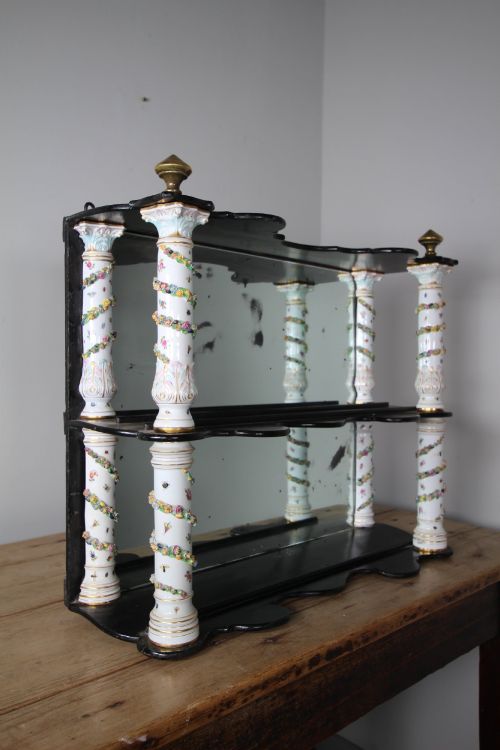
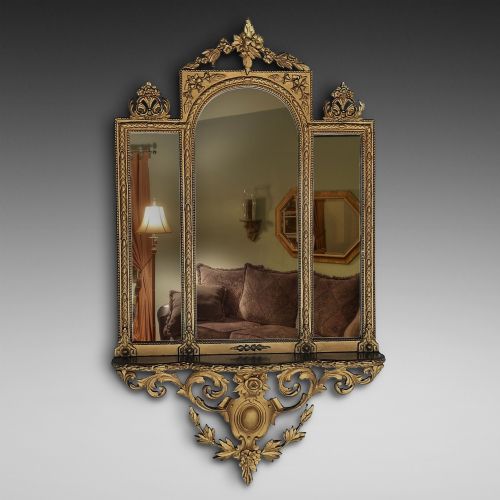
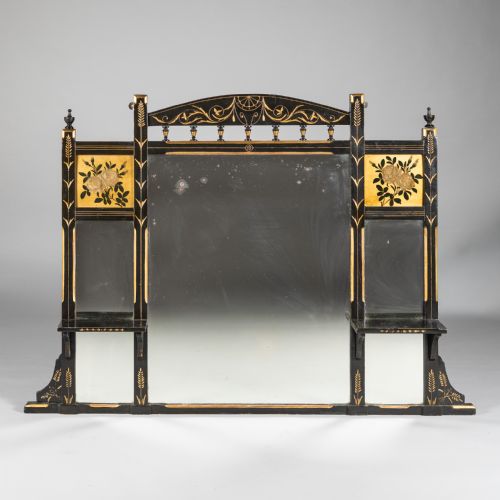
Buyers encounter forms ranging from compact hall and bedroom mirrors with shelves to larger Aesthetic Period ebonised overmantels and French-influenced rococo revival étagères. The selection on this page demonstrates how domestic furniture evolved to maximise light and surface area in smaller spaces.
Origins stretch across nineteenth-century English workshops, continental European ateliers, and specific revival styles such as the Aesthetic Movement and Art Deco. Each variation serves the dual purpose of reflecting illumination while supporting small decorative objects.
How they were made
Carpenters and cabinetmakers utilised dense timbers including mahogany, walnut, oak, and ebonised wood for structural frames and shelving brackets. Giltwood and gesso found application in ornate decorative finishes, particularly during the Victorian rococo revival.
Mirror plates incorporated bevel cutting techniques, set within rebated wooden frames or secured behind brass mounts and iron brackets. Inlaid details using contrasting veneers added surface pattern to late nineteenth and early twentieth-century examples.
Mirrored Wall Shelf Retail Price Guide 2026
Typical asking prices for mirrored wall shelf among the pieces listed under this phrase on Sellingantiques today, from the lower quarter to the upper quarter. They describe what is for sale here now, not the wider market.
Several examples include built-in valet hooks and key cabinets, proving Victorians loved multitasking furniture just as much as we do.
What varies in quality
Quality rests upon the crispness of carved wooden ornament, the depth and execution of gesso work, and the integrity of the joinery connecting shelves to the main mirror frame. Finishes range from simple polished oak to intricate parcel-gilt and hand-painted French decorative schemes.
The original condition of the mirror glass itself influences the character of the piece, alongside the retention of original brass display brackets, display ledges, and structural hanging fixings.
Cottier and Co·Liberty and Co·Strahan of Dublin
The Mirrored Wall Shelf Glossary
- Giltwood
- Timber coated with a thin layer of gold leaf over a prepared gesso ground. This technique creates a bright reflective surface common on ornate nineteenth-century frames.
- Gesso
- A plaster-like mixture applied to wooden frames and carved into relief ornamentation before gilding. It provides a smooth base for detailed decorative moulding.
- Ebonised
- Wood treated to imitate ebony through staining or painting dark black. This finish gained popularity during the Aesthetic Period for striking contrast.
- Overmantel
- A large mirror designed to hang directly above a fireplace mantelpiece. These often incorporate display shelves or extensive gilt framing.
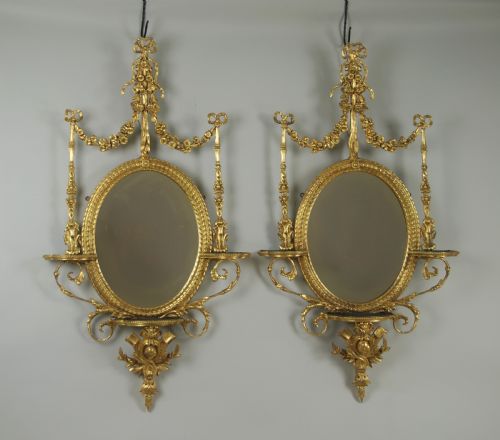
- Girandole
- A branched wall-mounted light fixture incorporating a mirror plate. They frequently feature decorative candle sconces alongside small display shelves.
Mirrored Wall Shelf: Frequently Asked Questions
Where should I hang a mirrored wall shelf?
These pieces suit entrance halls, bedrooms, and reception rooms where they can reflect natural light and hold small daily items.
Ensure the wall construction and hanging brackets safely support the combined weight of the timber frame and glass.
How do I clean an antique mirror plate?
Wipe the glass gently with a soft cloth dampened with distilled water or a mild vinegar solution. Avoid spraying liquid directly onto the edges where moisture can seep behind the silvering.
Keep wooden frames dry and dust them regularly with a soft, lint-free cloth.
What is an Aesthetic Period shelf mirror?
Aesthetic Period pieces reflect late nineteenth-century design reforms that prioritized artistic visual qualities over heavy historical revivalism. They often feature ebonised wood, parcel-gilt highlights, and geometric or Japanese-inspired motifs.
These designs focus on balanced asymmetry and refined decorative display rather than overt ornamentation.
How do I identify a Victorian wall shelf?
Victorian examples typically feature deep timber mouldings, rich walnut or mahogany grains, and sometimes elaborate gesso ornamentation. Construction methods include hand-cut joints and heavier framing timbers.
Later Edwardian versions often present lighter woods, simpler inlaid decoration, and more restrained proportions.