
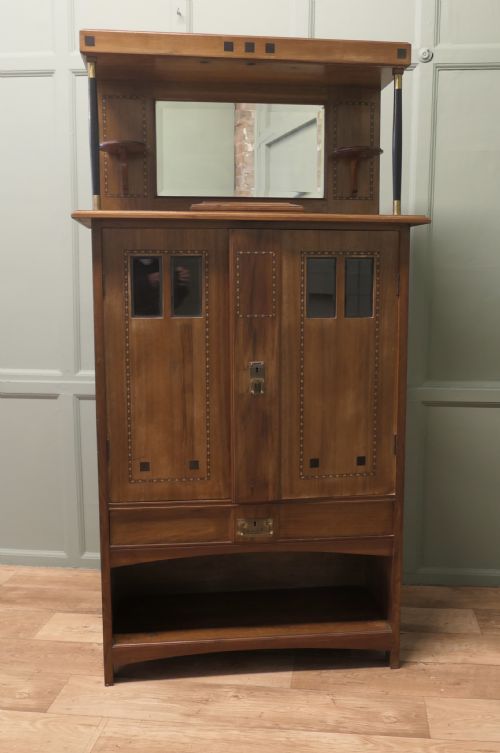
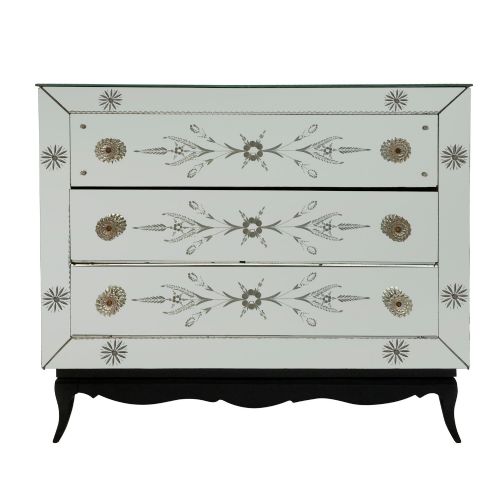
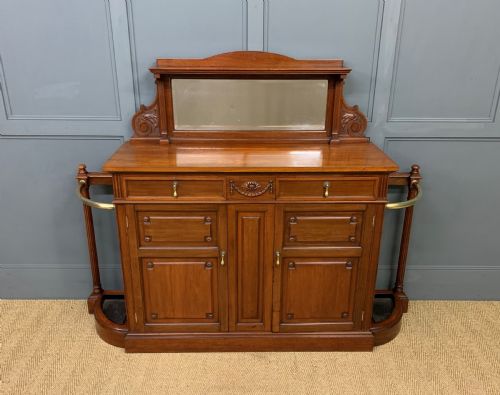
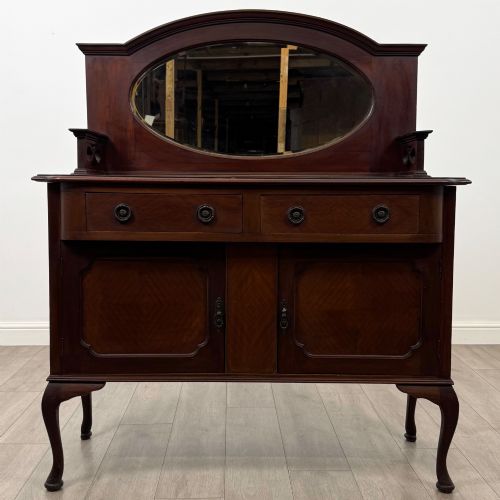


Mirrored Storage Cabinet
These mirrored storage cabinet pieces combine reflective glass with period timbers to brighten rooms while concealing belongings.
Mirrored Storage Cabinet
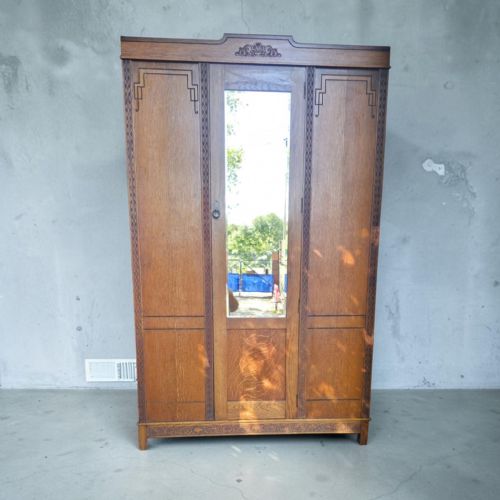
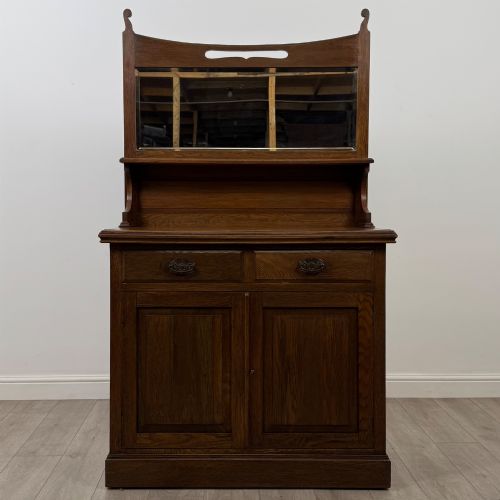
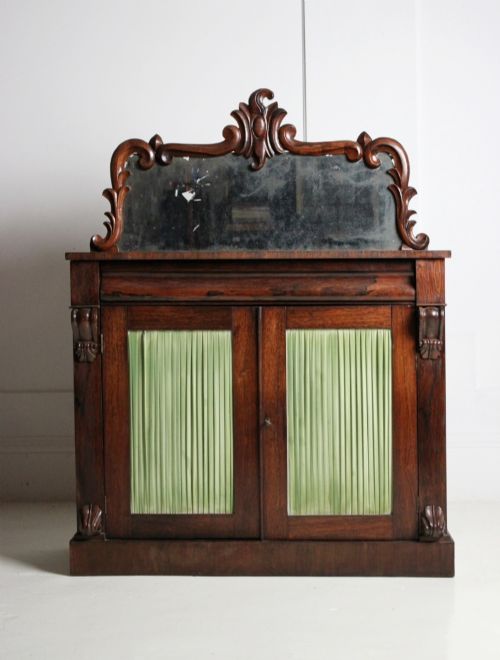
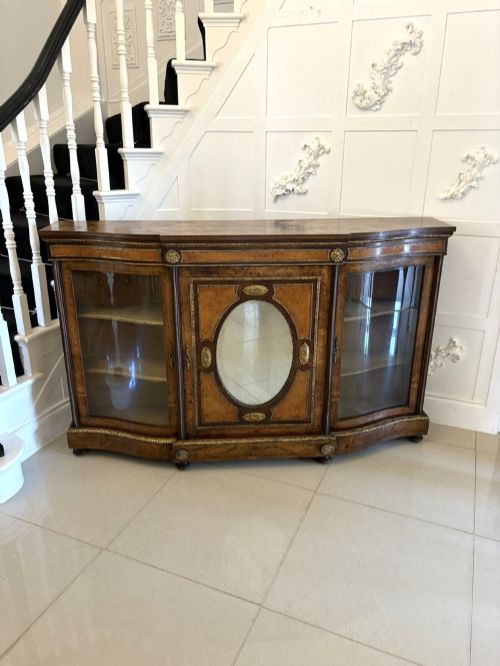
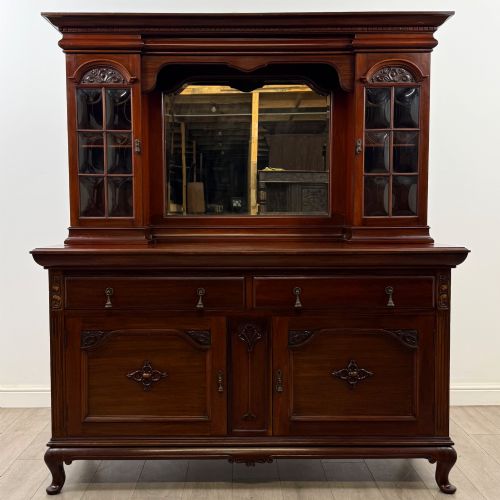
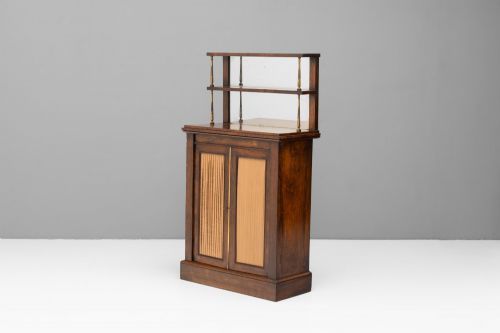
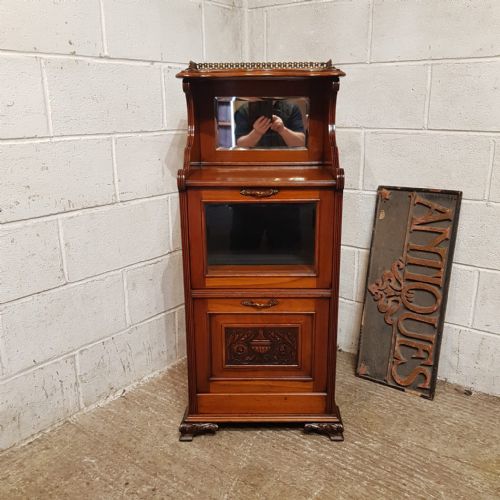
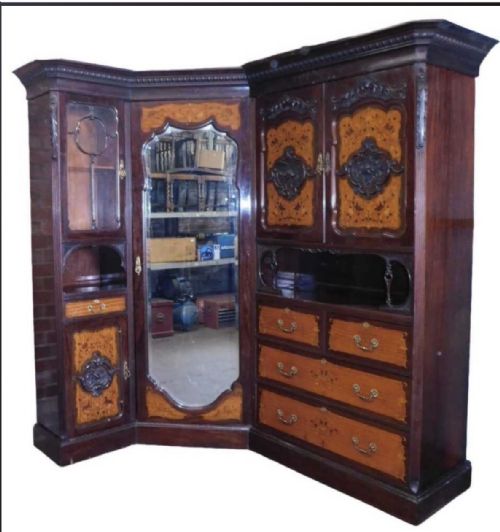
A mirrored storage cabinet serves as both a functional repository and a decorative surface, utilising reflective glass within its door panels or backboards. Buyers searching for a mirrored storage cabinet encounter various forms including credenzas, sideboards, music cabinets, and wardrobes spanning the Victorian, Edwardian, and Regency periods. The most prevalent versions on this page are Victorian and Edwardian examples fashioned from burr walnut, mahogany, or rosewood.
These pieces originated to serve dining rooms, halls, and sitting rooms as places to store glassware, linens, or sheet music while bouncing light around the interior. Cabinetmakers built them to balance utility with visual presence, integrating mirrors to amplify the sense of space in 19th-century and early 20th-century homes. Surviving items range from compact music cabinets to large credenzas and mirror-backed sideboards.
Materials and technique
Cabinetmakers constructed these pieces using dense hardwoods such as mahogany, walnut, rosewood, and burr walnut, frequently applying fine veneers to curved and flat surfaces alike. Structural integrity relied on traditional joinery, while decorative appeal came from brass mounts, ormolu, and intricate inlaid woodwork using satinwood and other contrasting timbers. Mirror glass was integrated into doors, panels, and upper back sections, held securely within rebated wooden frames.
Surface finishes were achieved through hand-applied polishes that highlighted the natural grain and figure of the timber, particularly on burr walnut and flame mahogany examples. Carved details appeared on heavier Victorian and oak pieces, contrasting with the cleaner lines seen on later Edwardian and Secessionist items.
Object forms range from music cabinets and compact wardrobes to large credenzas, sideboards, and mirror-backed display units.
What separates the grades
Quality in these cabinets is determined by the selection of timber veneers, such as richly figured burr walnut or carefully matched flame mahogany, which dictate the visual depth of the piece. The finesse of the inlay work, the precision of the brass or ormolu mounts, and the integration of the mirror glass separate standard utility furniture from high-end cabinetmaking.
Construction standards also vary in the weight of the timber used for internal carcases and drawers, as well as the complexity of the cabinetry, such as serpentine fronts or integrated mirror backs with carved pediments.
Shoolbred & Co.·Howard and Sons
The Mirrored Storage Cabinet Glossary
- Credenza
- A low-standing cabinet or sideboard, frequently featuring mirrored doors or back panels, used historically in dining spaces. These pieces often display elaborate veneer work and Ormolu mounts.
- Chiffonier
- A compact sideboard or cabinet developed in the 19th century, typically featuring a raised shelf or mirror at the back above enclosed storage cupboards. They are commonly constructed from rosewood or mahogany.
- Burr walnut
- A prized timber harvested from the wart-like growths on walnut trees, yielding intricate, swirling grain patterns. It was heavily utilised on high-grade Victorian cabinets.
- Music cabinet
- A specialised storage piece fitted with internal shelves or drop-down compartments designed to hold sheet music. Edwardian and Victorian examples often incorporate glass or mirrored doors.
- Ormolu
- Gilded bronze ornamentation applied to furniture mounts and decorative details. It adds metallic contrast to dark timbers like walnut and rosewood.
Mirrored Storage Cabinet: Frequently Asked Questions
Where were these cabinets used?
These cabinets were placed in dining rooms, drawing rooms, and hallways to store tableware, linens, and documents.
The reflective glass served to brighten darker Victorian and Edwardian interiors by bouncing natural light across the room.
How do I date a cabinet?
Dating relies on identifying the prevailing style, timber choices, and construction methods associated with periods like the Regency, Victorian, or Edwardian eras.
Heavily figured burr walnut and elaborate inlay typically point towards the mid-to-late 19th century, while lighter oak and satinwood often indicate early 20th-century manufacture.
What is a credenza?
A credenza is a low form of cabinet or sideboard that often includes mirrored elements and intricate marquetry.
Originally designed for dining rooms, they provide substantial surface space and enclosed storage behind panelled doors.
How do I care for antique timber?
Antique timbers require stable indoor humidity and protection from direct sunlight to prevent veneer cracking and fading.
Regular dusting with a dry cloth maintains the finish without building up heavy wax residues on the polished surfaces.