





Mirrored Hall Rack Brass
These mirrored hall rack brass pieces combine glass, timber, and metalwork to organise an entranceway with period character.
Mirrored Hall Rack Brass
When you search for mirrored hall rack brass, you enter the world of nineteenth and early twentieth century entrance furniture. These items combine a looking glass with timber frameworks and metal hanging fixtures designed to hold hats, coats, and accessories.
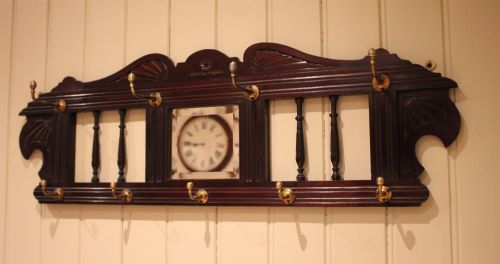
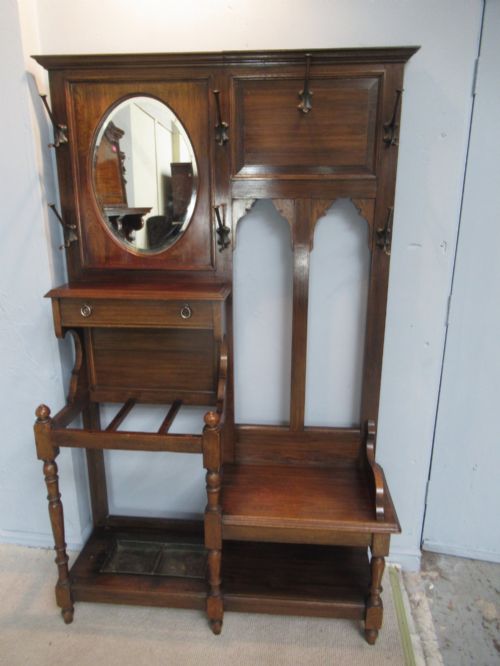
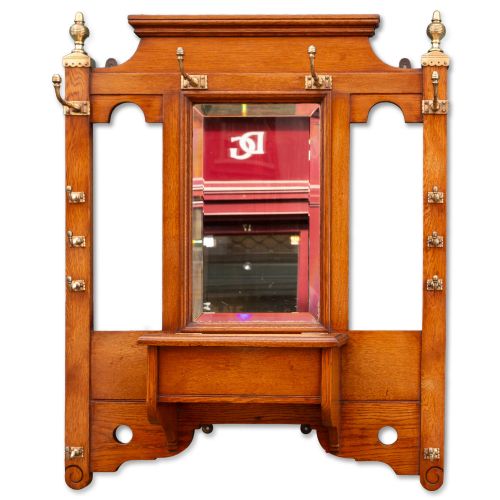
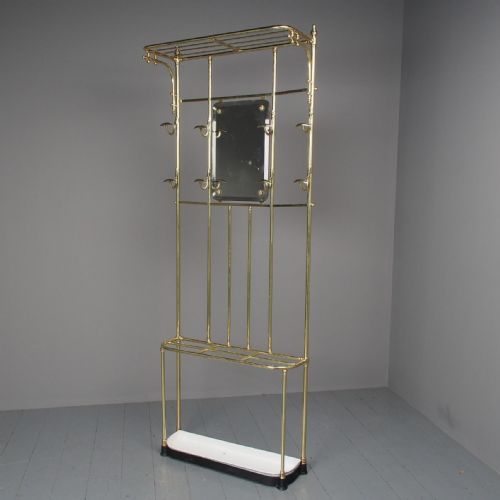
The versions you are most likely to meet on this page range from Victorian mahogany wall racks to Edwardian oak hall stands and French portmanteaus. They serve the practical purpose of checking one's appearance before leaving the house while keeping hallway clutter under control.
Makers utilised various woods including mahogany and oak, mounting brass hooks alongside ceramic or marble elements. Styles span from late Victorian and Dutch Revival to French Bistro and Victorian Equestrian.
How they were made
The construction of these pieces relies on solid timbers such as mahogany and oak, often shaped into wall-mounted frames or freestanding hall trees. Woodworkers joined these structures to support heavy glass mirror plates and protruding metalwork.
Brass formed the primary material for hooks and decorative mounts, fixed securely to wooden backboards. Bevelled glass plates were set into frames alongside ceramic details and sometimes marble surfaces, creating robust furniture for busy reception areas.
Mirrored Hall Rack Brass Retail Price Guide 2026
Typical asking prices for mirrored hall rack brass among the pieces listed under this phrase on Sellingantiques today, from the lower quarter to the upper quarter. They describe what is for sale here now, not the wider market.
Some pieces lean into equestrian interests with horseshoe-shaped frames, ready for muddy riding gear.
What varies in quality
Quality in these items rests upon the depth of the woodwork and the integrity of the original glass plate. Finer examples feature deep bevelled mirror glass and substantial brass hooks cast with care rather than stamped from thin sheet metal.
The choice of timber also defines the tier of the piece, with richly figured mahogany and golden oak sitting above simpler utility versions. Original fittings and uncompromised structural joinery separate standard hallway furniture from finer decorative examples.
The Mirrored Hall Rack Brass Glossary
- Portmanteau
- A combination piece of entrance furniture incorporating a mirror, coat hooks, and sometimes stick stands or a small shelf. These items originated in France and provide an all-in-one storage solution for reception areas.
- Hall Tree
- A large freestanding piece of furniture designed for an entrance hall, featuring a mirror, umbrella stands, and multiple clothes hooks. They were popular in Victorian and Edwardian households.
- Bevelled Plate
- A mirror glass whose edges are cut and polished at an angle to create a framed optical border. This technique adds depth and reflects light distinctively.
- Horseshoe Mirror
- A looking glass framed in the shape of a horseshoe, frequently associated with Victorian equestrian style and brass hanging hooks. It brings a distinct sporting motif to hallway decor.
Mirrored Hall Rack Brass: Frequently Asked Questions
How do I date these pieces?
Dating relies on observing the timber types, mirror bevelling techniques, and stylistic markers such as Victorian or Edwardian ornamentation.
Examining the construction methods and the fastening of the brass hooks also helps determine the period.
Where should I hang a hall rack?
These racks are designed for entrance halls, reception areas, and narrow corridors where guests arrive.
They provide a convenient spot for outerwear and a mirror for final checks before stepping outside.
What woods were commonly used?
Mahogany and oak are the most frequent timbers found in these hallway furnishings.
Golden oak appears alongside darker nineteenth-century mahogany and general hardwood structures.