
Mirrored Dressing Table
A mirrored dressing table brings functional elegance to a bedroom, offering a dedicated space for grooming framed by glass and timber.
Mirrored Dressing Table
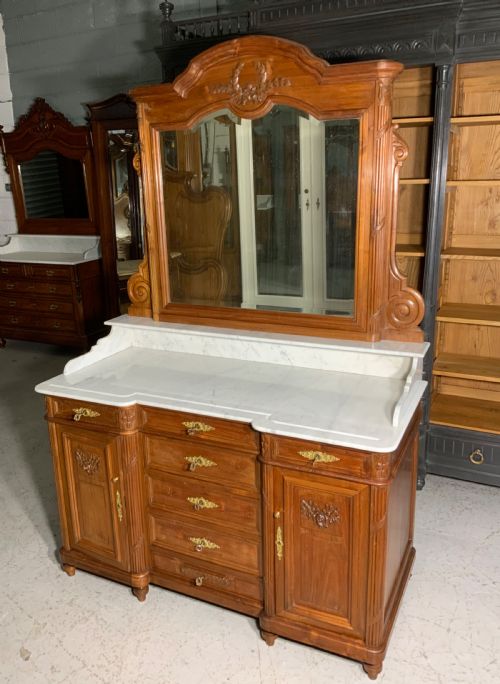
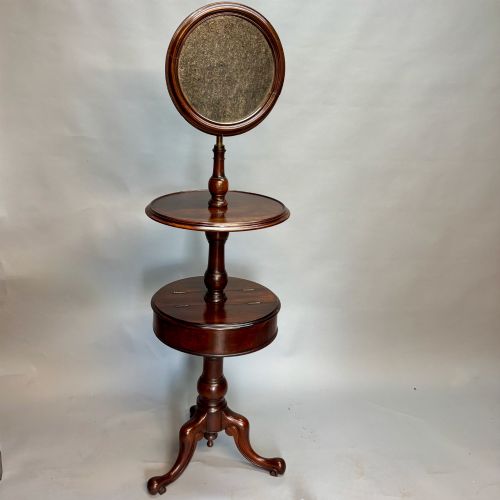
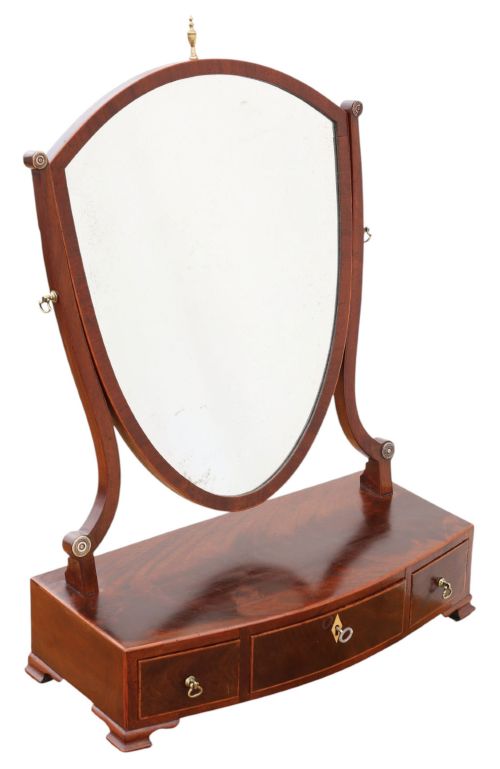
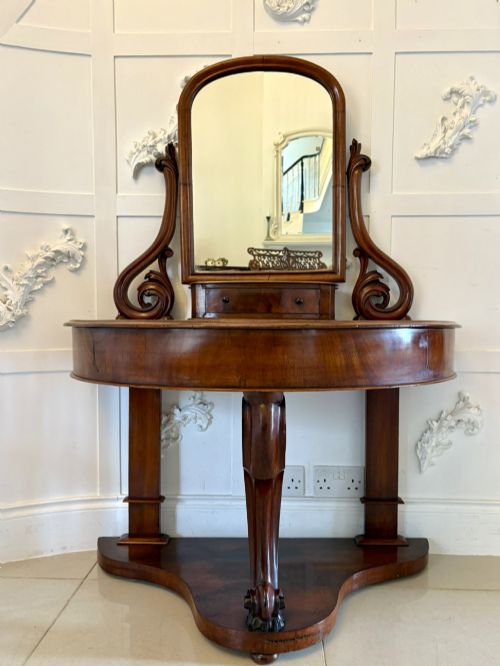
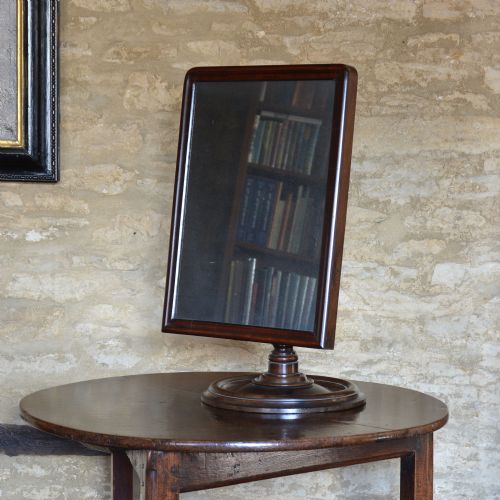
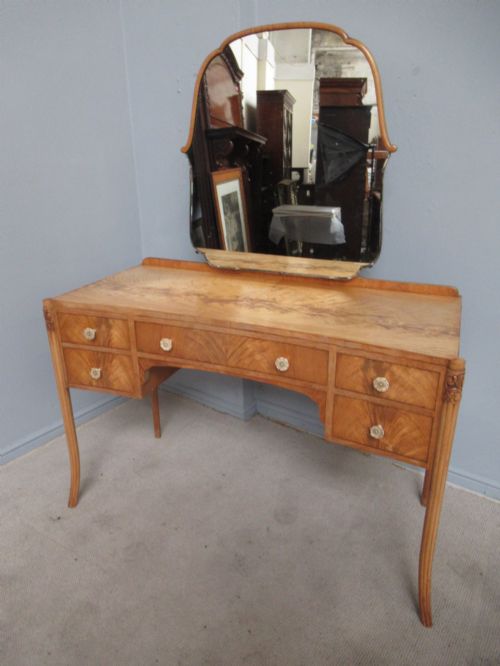
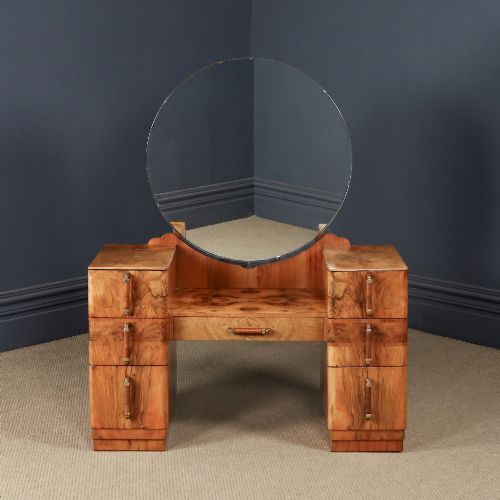
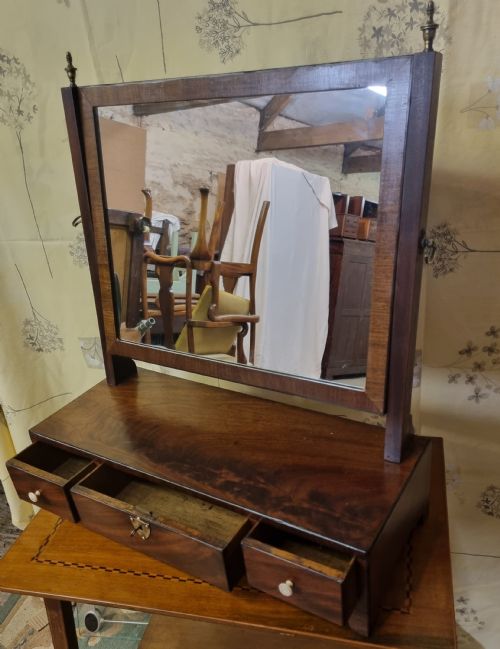
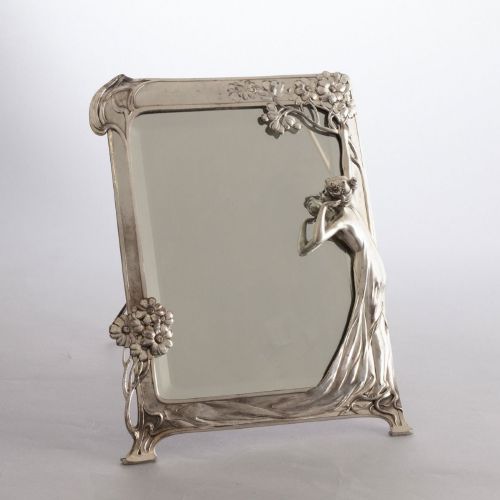
A mirrored dressing table combines a writing or vanity surface with an adjustable or fixed mirror, appearing in forms ranging from compact tabletop toilet glasses to grand pedestal pieces and full bedroom suites. When searching for a mirrored dressing table, buyers encounter varied iterations spanning Georgian proportions, Victorian mass, and the clean geometric lines of the Art Deco era.
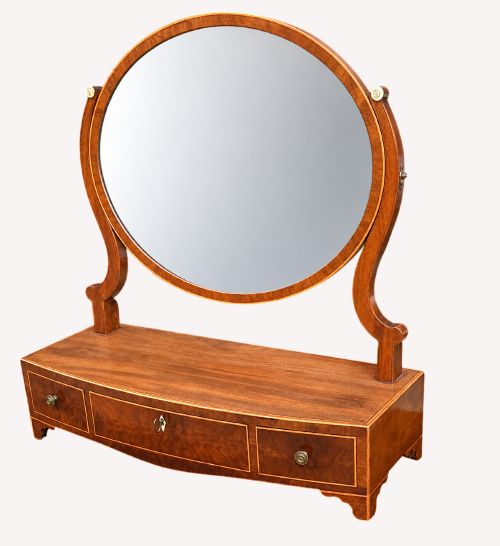
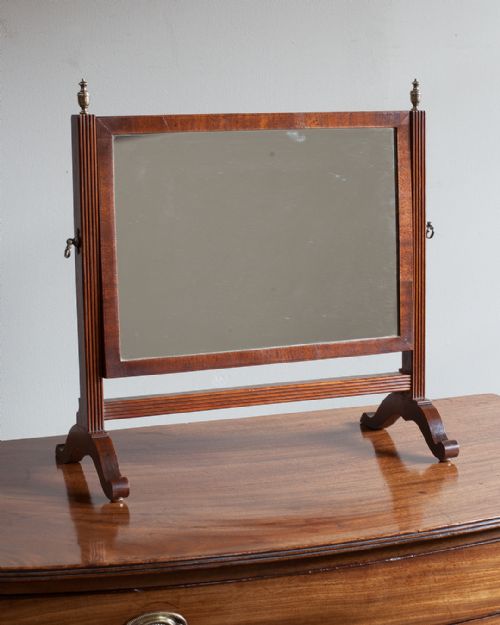
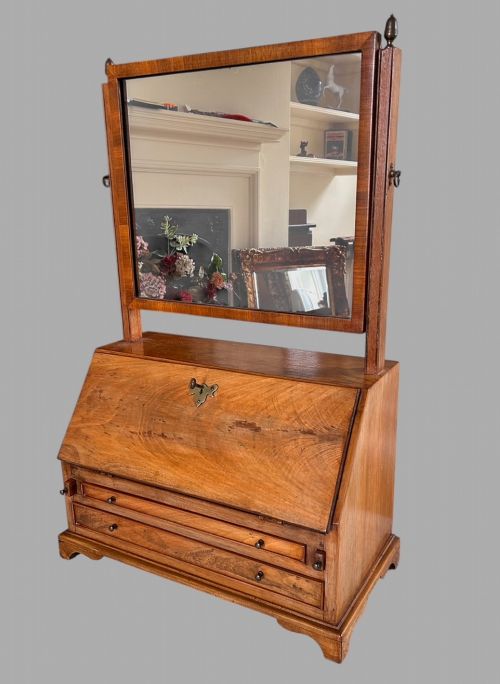
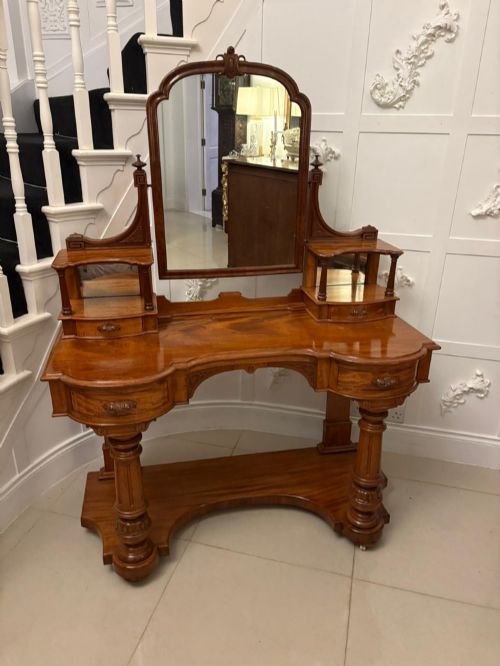
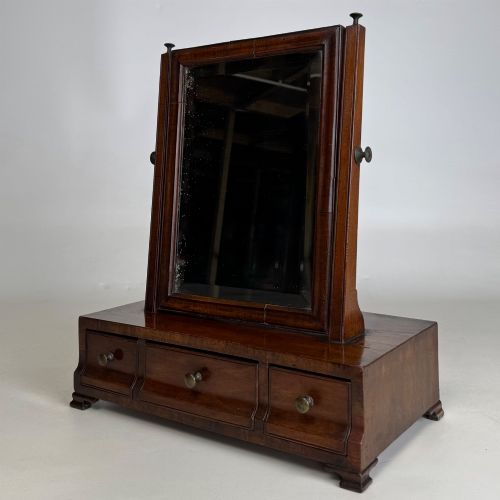
The selection on this page demonstrates significant evolution in form, moving from simple 18th-century swing mirrors and shaving stands to elaborate multi-mirror pedestals and French-influenced designs. Walnut, mahogany, and oak form the structural backbone of these pieces, often paired with specialist glass and metal mounts.
Smaller variants such as toilet mirrors and table-top bureaus sit alongside substantial freestanding vanity desks fitted with triple mirrors. This variety allows a buyer to select a piece scaled precisely for a contemporary interior while retaining historical craftsmanship.
How they were made
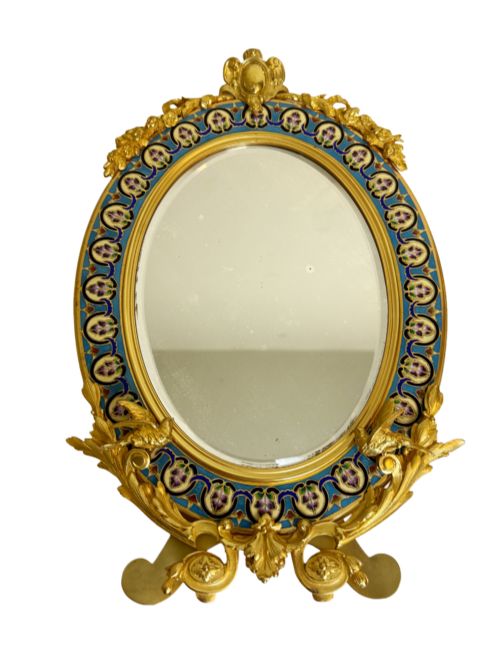
Cabinetmakers utilised dense timbers like mahogany, walnut, and oak for stability, often applying figured veneers such as burr walnut or satinwood to create decorative movement on large surfaces. Boxwood stringing, brass mounts, and champleve or gilt bronze detailing frequently accent the primary wood.
Mirror glass sits within dedicated frames, suspended on swing pivots or secured to pedestal superstructures with wooden or brass hardware. Joinery relied on traditional techniques such as dovetails for drawer construction and mortise and tenon joints for frames.
Several examples include hidden compartments behind swing mirrors for storing small valuables away from prying eyes.
What varies in quality
Quality rests in the depth of timber selection, the crispness of carved details, and the integrity of the original mirror glass. Pieces featuring figured veneers, subtle boxwood inlay, and substantial cast brass hardware demonstrate higher craftsmanship than plain utility versions.
The condition of the mirrored glass itself and the smoothness of the swing mechanisms or drawer actions indicate the level of care taken during manufacture and subsequent preservation.
Maples of London and Paris·Heal and Sons·P and MA Nicholson·WMF
The Mirrored Dressing Table Glossary
- Swing mirror
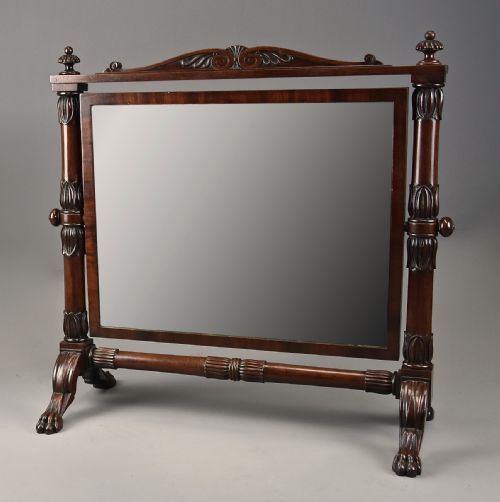
- A glass plate suspended within a movable frame on pivots, allowing the user to alter the angle of reflection. This mechanism is typically supported by upright arms mounted on a small box base or directly to a table.
- Toilet mirror
- A smaller tabletop glass designed originally for personal grooming at a washstand or chest of drawers. These date largely from the 18th and 19th centuries.
- Cheval mirror
- A full-length freestanding mirror mounted in a frame that allows the entire glass to swing vertically. The name derives from the French word for horse, referencing the four-legged frame.
- Pedestal dressing table
- A large vanity desk featuring banks of small drawers on either side of a central kneehole space, frequently surmounted by a fixed or triple mirror. This form became popular during the Victorian and Edwardian periods.
- Burr walnut
- A highly decorative wood veneer obtained from the gnarled growth on walnut trees. It displays swirling, organic patterns prized by cabinetmakers for statement furniture.
Mirrored Dressing Table: Frequently Asked Questions
How do I date a dressing table mirror?
Dating relies on timber choice, edge bevelling on the glass, and construction methods. Earlier examples utilise secondary woods like oak or pine alongside hand-cut dovetails, while later pieces introduce machine-sawn elements and different veneer cuts.
Hardware styles also shift across periods, moving from simple brass knobs to elaborate cast mounts or integrated handles depending on the decade of manufacture.
Are the mirror plates original?
Many older pieces retain their original mercury or early silvered glass, which often exhibits characteristic light foxing or speckling. Silvering methods changed over time, helping to distinguish 18th-century plates from Victorian replacements.
Examining the backing boards and the way the glass is secured in the rebate provides further clues regarding its age and originality.
How do I maintain antique mirror glass?
Keep the glass clean by using a soft, dry microfiber cloth to remove dust without disturbing the silvered backing. Avoid harsh chemical sprays that might seep beneath the frame and damage the edges of the glass plate.
Ensure the room environment remains stable in humidity to prevent warping in the surrounding wooden frames and degradation of the mirror backing.