

Mirror Backed Credenza
A mirror backed credenza brings nineteenth-century depth and reflected light into a room, uniting functional storage with decorative display.
Mirror Backed Credenza
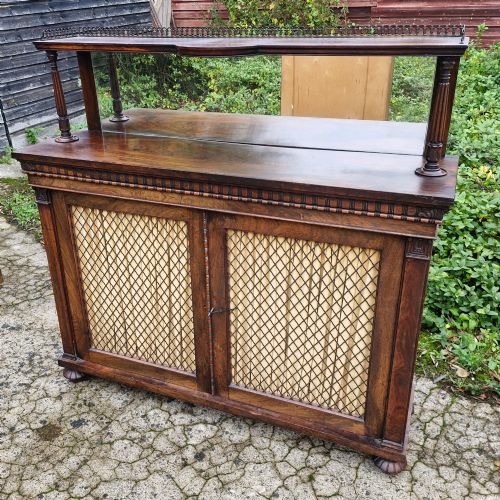
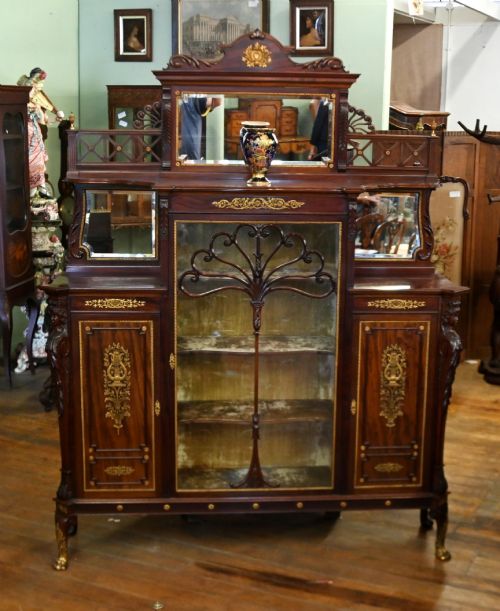
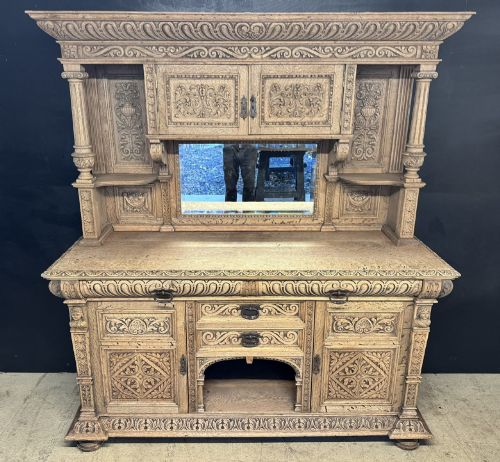
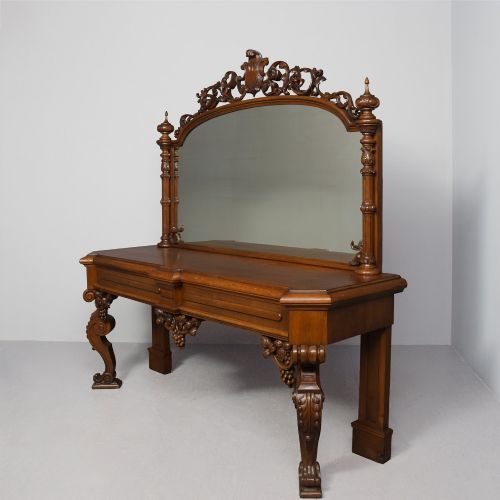
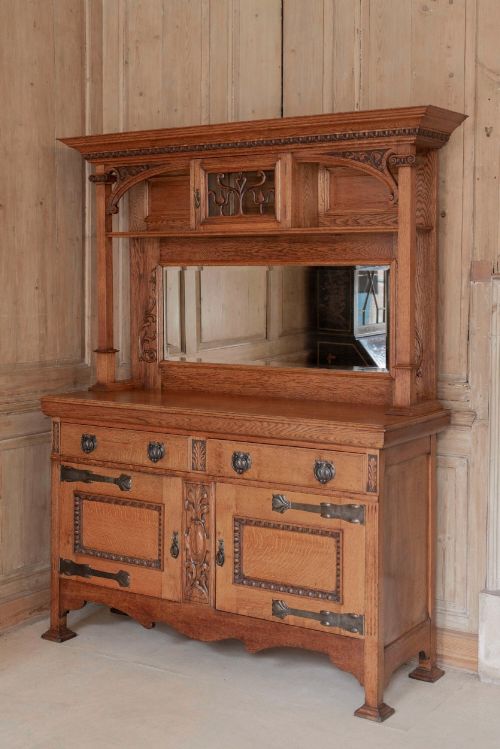
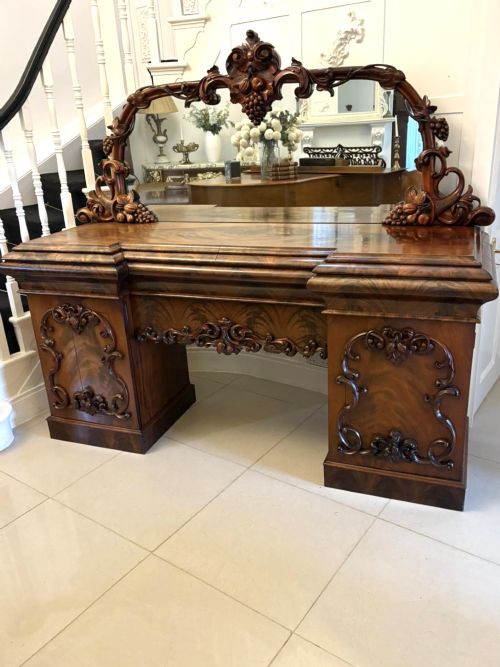
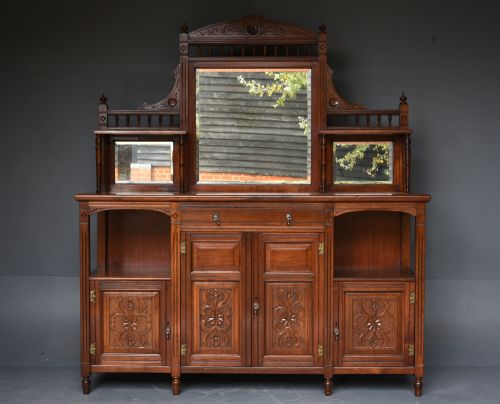
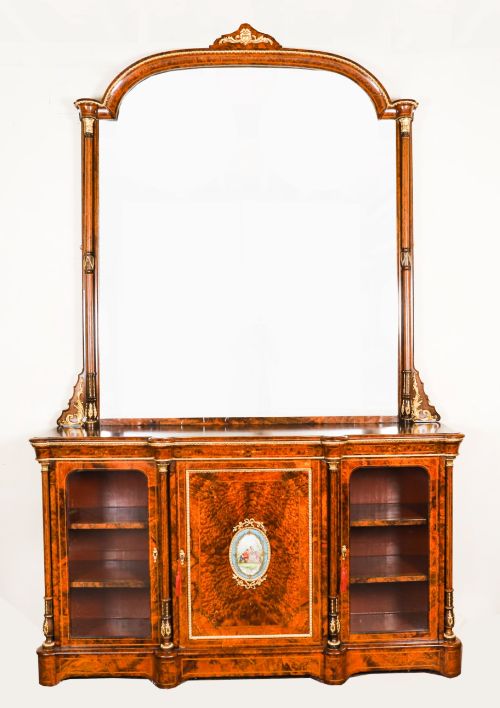
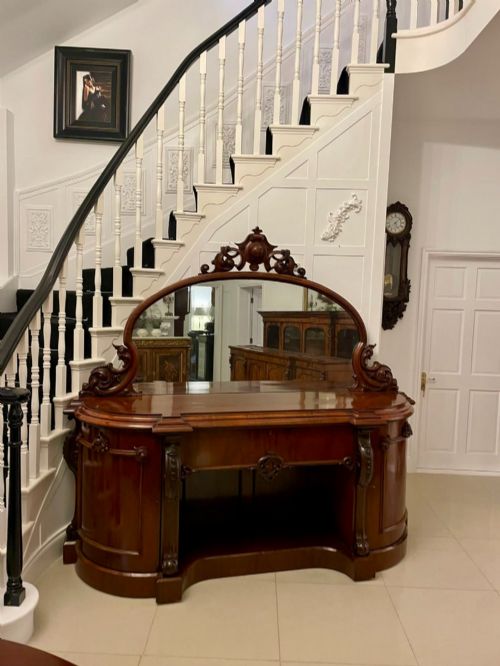
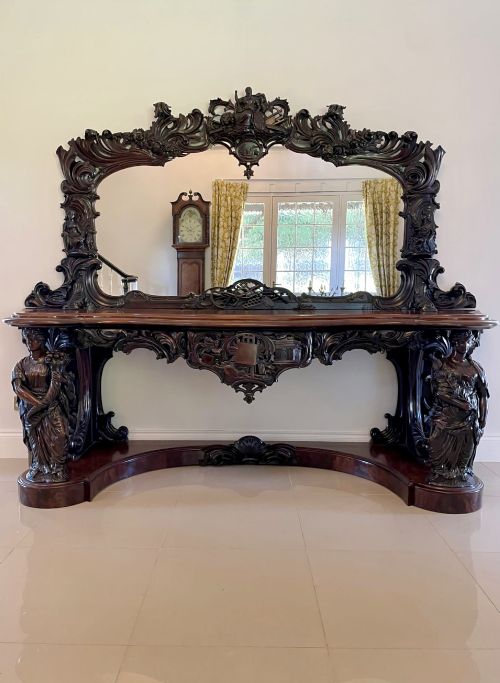
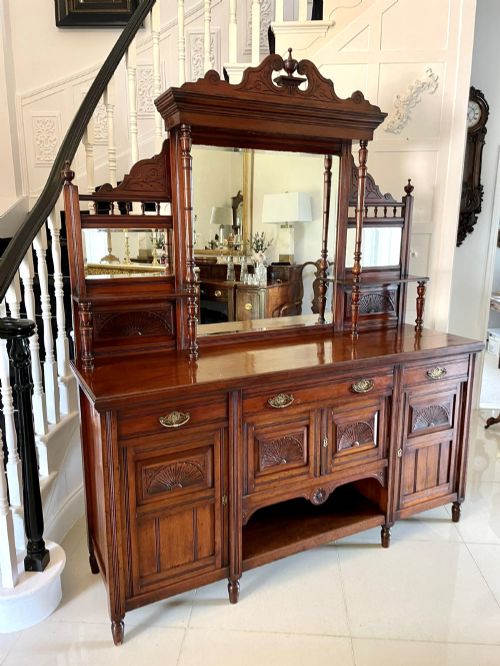
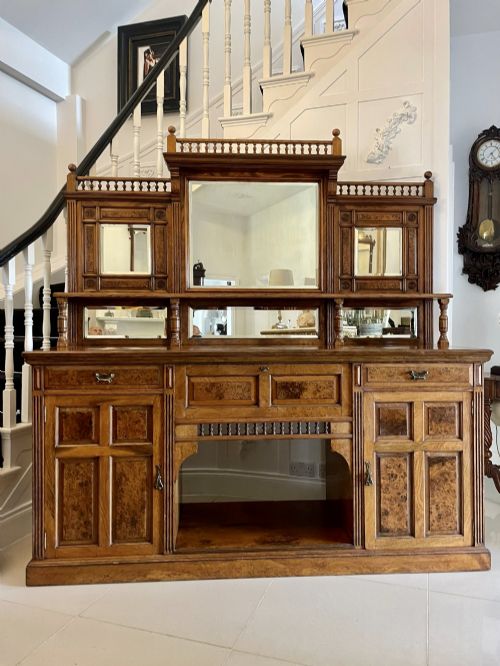
When you search for a mirror backed credenza, you encounter substantial nineteenth-century furniture designed for formal reception rooms. These pieces combine a low storage base, often fitted with cupboards or drawers, with an upright superstructure holding a glass mirror.
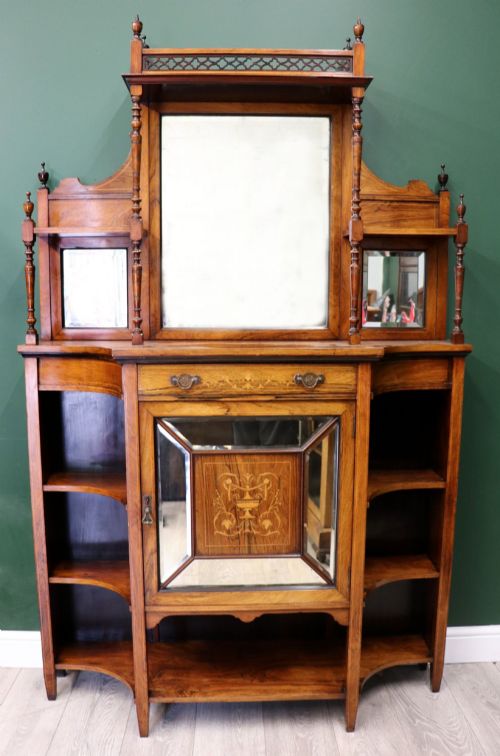
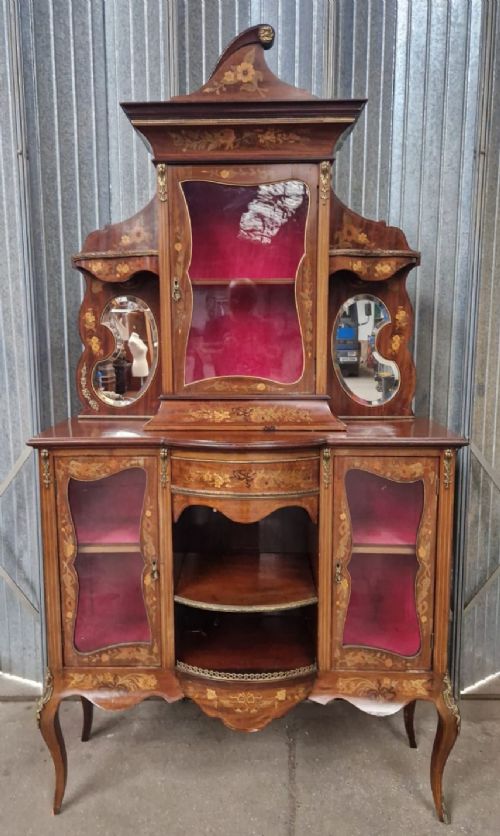
The versions most commonly met on this page date from the Victorian period, spanning walnut, mahogany, and oak examples built to anchor a dining room or parlour. Alongside traditional credenzas, the selection includes related low sideboards, chiffoniers, and display cabinets sharing the signature mirrored backing.
Origins stretch from the Regency era through to Edwardian interpretations, touching upon Arts and Crafts designs and Aesthetic Movement pieces. The unifying element is the integration of polished wood and mirrored glass to amplify light and display decorative objects.
How They Were Made
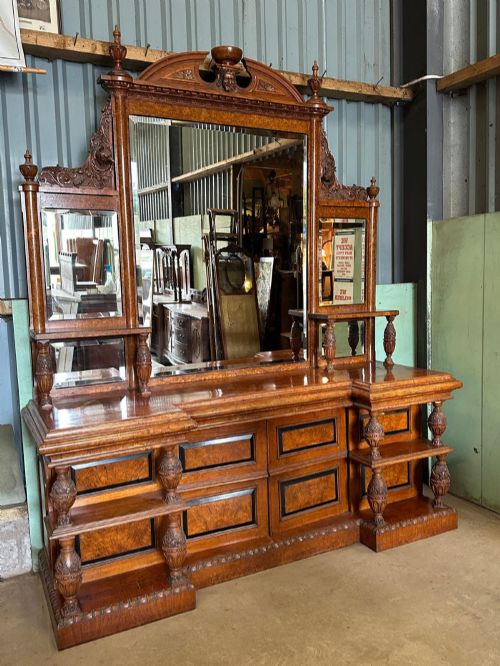
Cabinet makers utilised dense hardwoods such as mahogany, walnut, and rosewood, often selecting figured veneers like burr walnut or pollard oak for the primary surfaces. These timbers were selected for their rich grain patterns, then polished to a deep lustre.
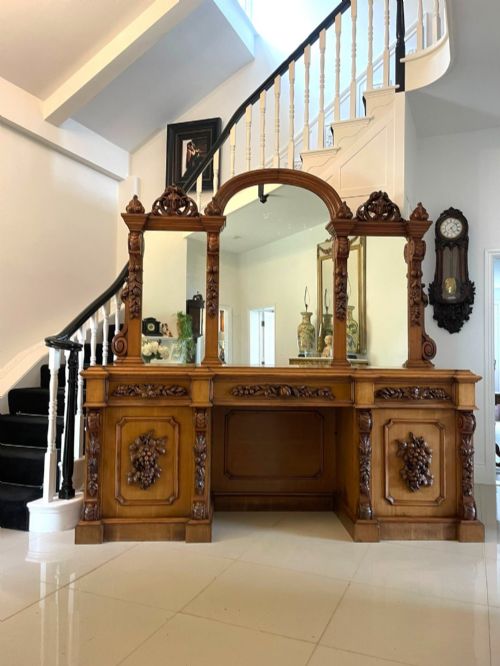
The structural integration of the mirror involved heavy wooden framing, frequently decorated with hand carvings, marquetry inlays, or brass fittings. Glass plates of the period were set securely into the wooden backboards to reflect the room and enhance the perceived space.
Mirror Backed Credenza Retail Price Guide 2026
Typical asking prices for mirror backed credenza among the pieces listed under this phrase on Sellingantiques today, from the lower quarter to the upper quarter. They describe what is for sale here now, not the wider market.
Listings feature Victorian walnut, mahogany, and pollard oak examples alongside Edwardian and Regency pieces.
What Varies in Quality
Distinction in these pieces rests upon the selection of timber and the ambition of the carving. Exemplars employ heavily figured burr veneers and crisp, deep hand-carved ornamentation rather than superficial applied mouldings.
The integration of the mirror superstructure and the refinement of internal cabinetry separate standard production from exhibition pieces. Superior examples exhibit meticulous joinery, thoughtful marquetry, and substantial marble tops where specified.
Shoolbred & Co·Gillows·Pauly et Cie
The Mirror Backed Credenza Glossary
- Credenza
- A low dining room cabinet used for serving food and displaying plate. It typically sits lower than a traditional sideboard.
- Chiffonier
- A compact sideboard popular in the nineteenth century, usually featuring enclosed shelving beneath and a mirrored or shelved superstructure above.
- Pollard oak
- Oak timber taken from trees that have been pollarded, producing a tightly clustered, knotted grain pattern prized for cabinet work.
- Marquetry
- Decorative veneer work forming intricate pictorial patterns using various coloured woods and other materials.
- Aesthetic Movement
- A late nineteenth-century design style emphasising visual and compositional beauty over narrative subject matter in decorative arts.
Mirror Backed Credenza: Frequently Asked Questions
What is a mirror backed credenza used for?
These cabinets served primarily as dining room sideboards for holding porcelain, silver, and glassware, while the surface provided space for serving dishes during meals.
The mirrored back was designed to reflect candlelight and brighten nineteenth-century interiors while visually enlarging the reception room.
How do I date a mirror backed credenza?
Dating relies on identifying stylistic markers, timber choices, and construction techniques associated with periods like the Victorian era or the Regency years.
Heavily carved burr walnut often points to mid-nineteenth-century work, whereas linear inlay and simpler frames frequently suggest later Edwardian or Arts and Crafts production.
Are these credenzas suitable for modern homes?
Their substantial proportions make them effective anchor pieces in dining rooms, large hallways, or spacious sitting rooms where they provide considerable surface and cupboard storage.
The reflective glass helps bounce natural daylight around contemporary living spaces while offering a display ledge for books and objects.
How do I tell a credenza from a chiffonier?
A credenza is typically a low, symmetrical cabinet designed specifically for formal display and storage, often featuring a central cupboard flanked by curved glass or side doors.
A chiffonier is generally a more compact piece originating earlier in the century, historically used for holding bottles and table linen beneath a simpler back.