


Miniature Side Chair
These miniature side chair examples are diminutive seating pieces scaled down for children or display, offering period charm for collectors.
Miniature Side Chair
When you search for a miniature side chair, you encounter scaled-down seating forms built across the Victorian and Georgian eras. These pieces appear in variants such as child chairs, occasional chairs, and corner chairs.
The selections on this page lean heavily toward Victorian and 19th Century examples. Mahogany, rosewood, and walnut form the structural backbone of these smaller items.
How they were made
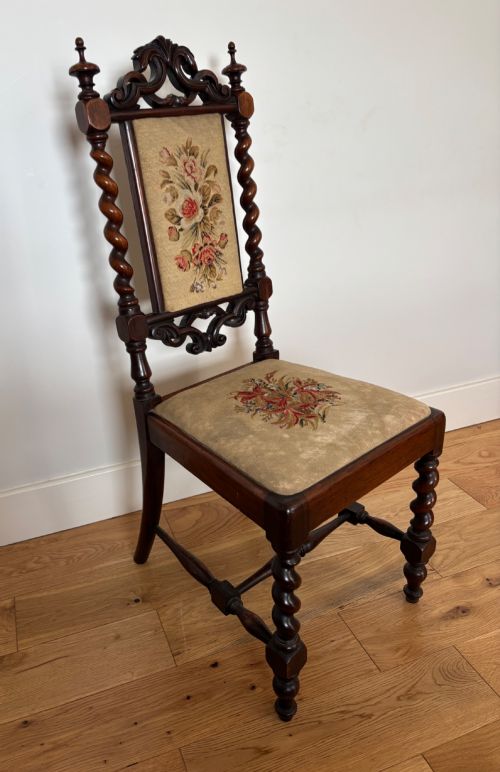
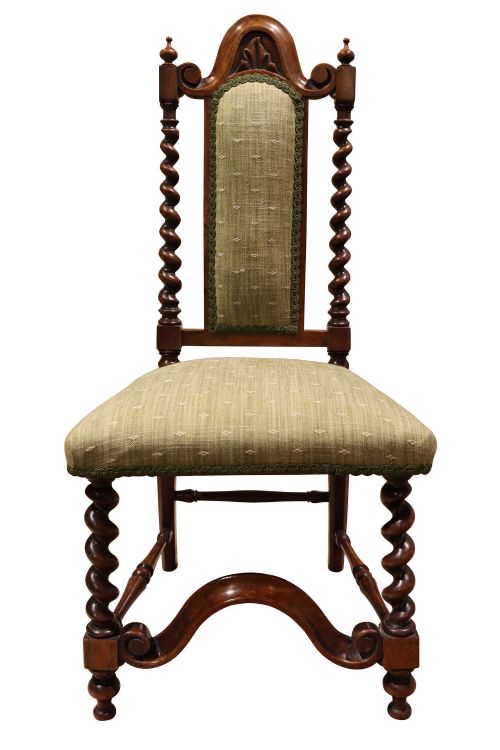
Cabinetmakers utilised dense timbers like mahogany, walnut, and rosewood to construct these miniature side chair frames. Turning techniques, such as barley twist details, and carved woodwork define the structural work.
Upholstery methods involved buttoned leather, fabric, and needlepoint inserts. Brass accents occasionally complete the decorative scheme on these smaller frames.
Listings span the Georgian and Victorian periods, incorporating materials such as mahogany, rosewood, walnut, leather, and needlepoint.
What varies in quality
The standard of a miniature side chair rests upon the precision of its timber carving and the fidelity of its period style. Pieces exhibiting Queen Anne or Georgian revival details demonstrate deliberate adherence to historical proportions.
The choice of covering material elevates the piece, distinguishing plain wooden examples from those finished with buttoned leather or detailed needlepoint. Frame integrity and timber selection dictate the overall merit of each item.
The Miniature Side Chair Glossary
- Barley twist
- A type of woodturning shaped in a spiral resembling a twisted barley sugar stick. It appears frequently on 19th-century supports.
- Needlepoint
- A form of canvas work embroidery used for upholstery on seat pads. It provides a tactile surface texture.
- Side chair
- An upright chair without arms designed for placement at the side of a room or against a wall. Scaled-down versions serve as children's seating.
- Aesthetic Movement
- A late 19th-century design current focusing on art for art's sake. Ebonised finishes often characterise pieces from this period.
Miniature Side Chair: Frequently Asked Questions
What is a miniature side chair?
A miniature side chair is a small-scale seating item produced during the Georgian and Victorian periods. These objects served as functional children's seating or occasional decorative pieces.
Craftsmen applied the same joinery and upholstery techniques to these smaller forms as they did to full-sized furniture. Mahogany, walnut, and rosewood are typical timber choices found across these examples.
How do I date a miniature side chair?
Dating relies upon stylistic markers such as Queen Anne revival motifs or Aesthetic Movement ebonised surfaces. Material choices like rosewood and walnut also point toward specific 19th-century decades.
Examining the construction methods, including turned elements and upholstery styles like buttoned leather, helps narrow the timeframe of manufacture.
Were these chairs made for children?
Many of these items functioned as actual child chairs within period households. Their smaller proportions accommodated younger occupants during dining or parlour gatherings.
Others served as sample pieces or display items for cabinetmakers to demonstrate skill. Both categories share identical stylistic traits to adult furniture of the same era.
What woods were used for miniature side chairs?
Mahogany, walnut, and rosewood dominate the material record for these scaled-down seats. Oak also appears in pieces influenced by earlier Georgian styles.
Cabinetmakers selected these hardwoods for their durability and ability to hold fine carved details. Secondary timbers may support the internal frame structures.