
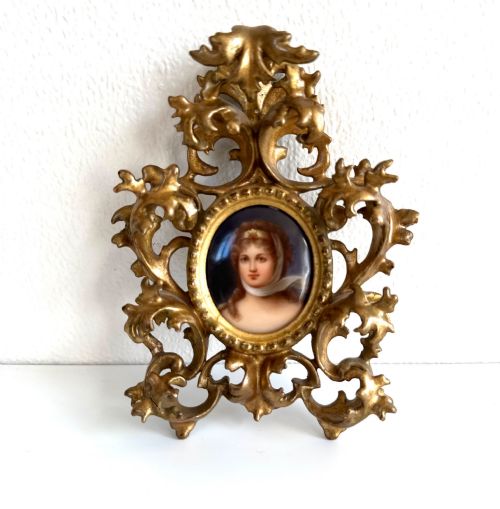
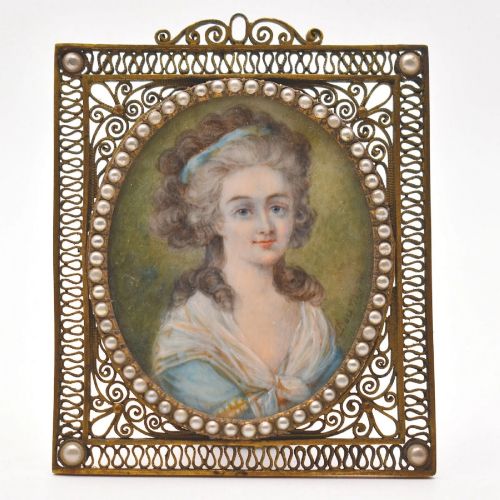


Miniature Portrait Woman
A miniature portrait woman captures the intimate likeness of a female sitter on a small scale, offering a glimpse into personal history through delicate artistry.
Miniature Portrait Woman
A miniature portrait woman is a small-scale painting depicting a female subject, created across various centuries and artistic movements. Buyers searching this phrase encounter delicate works rendered in media such as watercolour, gouache, and porcelain.
The selection ranges from Georgian and Regency studies to Art Deco depictions by named artists like Susie Lassam. Pieces appear housed in protective surrounds including gilt metal, brass, maple frames, and ormolu mounts.
Victorian and 19th-century examples dominate the offerings, alongside porcelain plaques from Berlin and Limoges. Collectors find both framed wall art and portable keepsakes reflecting distinct historical aesthetics.
How they were made
Materials recorded across the archive include glass, brass, gilt metal, seed pearls, and ivory.
What varies in quality
Quality rests in the precision of the brushwork and the expressive capability of the artist within a confined format. Finer works display subtle tonal gradations and lifelike depth in the sitter's expression.
The execution of the surrounding frame or mount also indicates standard, with hand-chased metalwork and original bezels enhancing the overall integrity of the piece.
Dumont·William Naish·Susie Lassam·Emma Kendrick·Edward Smyth·J Jackson
The Miniature Portrait Woman Glossary
- Gouache
- An opaque water-based paint that provides solid, matte areas of colour in miniature paintings. It is often combined with watercolour for highlights.
- Ormolu
- Gilded bronze used for decorative mounts and frames, particularly popular on 19th-century porcelain plaques. It adds a warm metallic border to the artwork.
- Plaque
- A flat panel of painted porcelain, frequently utilised for Limoges and Berlin portraits. These provide a smooth, durable surface for enamel colours.
- Seed pearl
- Very small natural pearls used to decorate the frames of Georgian and antique miniature portraits. They add a delicate perimeter to the artwork.
Miniature Portrait Woman: Frequently Asked Questions
How were miniature portraits displayed?
These small paintings were typically hung on walls in small groupings, kept inside fitted cases, or worn as jewellery such as rings and lockets.
Their portable nature allowed owners to carry likenesses of loved ones during travel or keep them private in domestic settings.
What materials did artists use?
Painters utilised watercolours, gouache, oils, and pastels applied to paper, card, ivory, or porcelain plaques.
Frames were constructed from brass, gilt metal, wood, or ormolu, frequently featuring glass to protect the delicate painted surface.
How do I date a miniature portrait?
Dating relies on the sitter's costume, hairstyle, and framing style, combined with the medium and any signature or inscription on the reverse.
Georgian and Regency works often show distinct empire-line dresses or powdered hair, while Art Deco pieces reflect 1920s aesthetics.
Are these portraits signed by artists?
Some miniatures bear artist signatures or contemporary inscriptions on the front or back, while many historical examples remain anonymous.
Signed works by known painters or ceramicists generally offer clearer attribution regarding their origin and date.