

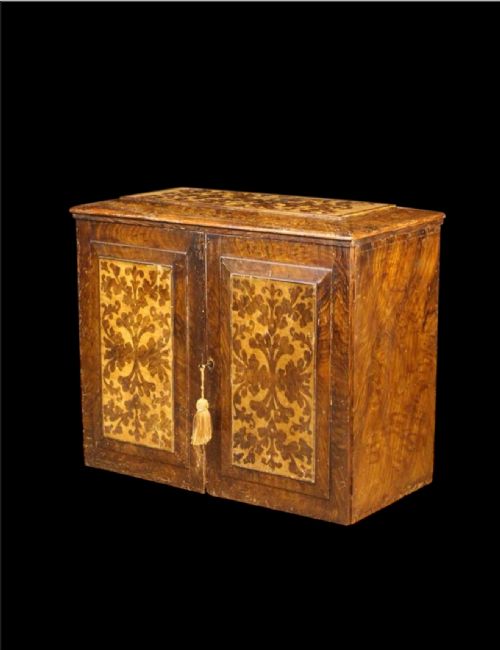


Miniature Inlaid Cabinet
A miniature inlaid cabinet offers tabletop presence and intricate craftsmanship, bringing centuries of fine cabinetmaking into a compact scale.
Miniature Inlaid Cabinet
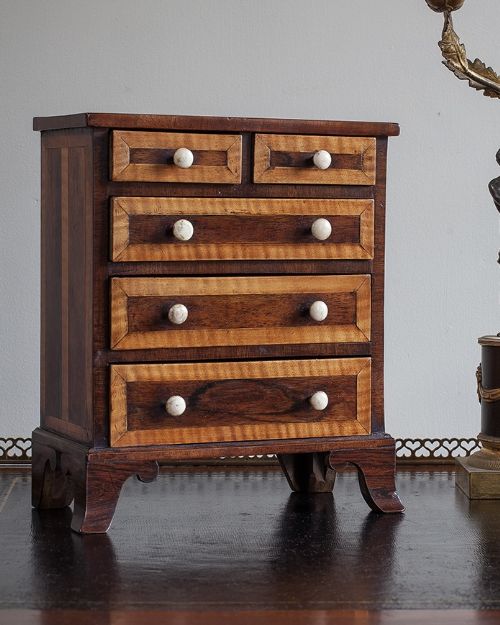
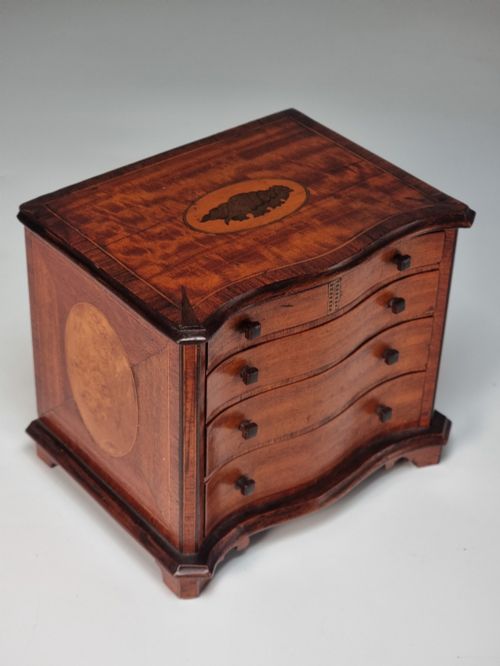
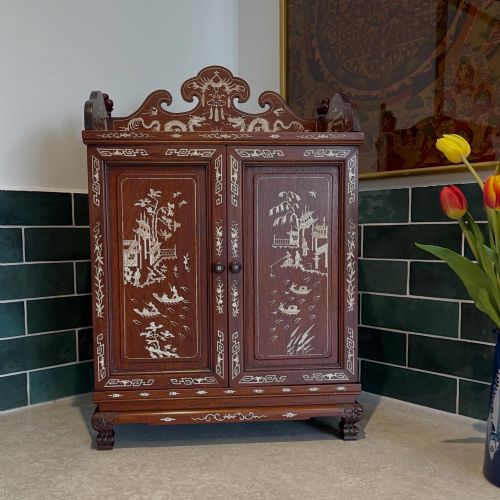
A miniature inlaid cabinet encompasses small-scale furniture designed for tabletops, including collector chests, miniature chests of drawers, table cabinets, and small display desks. These pieces mirror the forms of full-sized furniture, ranging from Georgian and Victorian chests to Anglo-Indian hardwood cabinets and Dutch marquetry pieces.
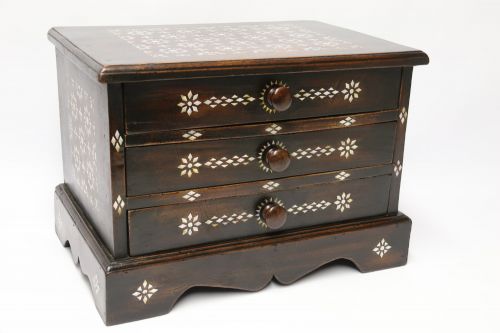
The version most commonly encountered on this page is the nineteenth-century mahogany or walnut miniature chest of drawers, often detailed with satinwood, brass, or mother-of-pearl inlay. Table cabinets and display desks also appear, representing diverse origins from English workshops to German and Chinese makers.
How They Were Made
Cabinetmakers utilised dense timbers such as mahogany, walnut, satinwood, rosewood, and amboyna as foundations for these small works, often applying intricate marquetry or contrasting stringing. Hardwoods provide stability for the fine joinery required at such a reduced scale.
Surface ornamentation integrates materials like mother-of-pearl, bone, and brass fittings or escutcheons to accent the grain of the wood. Ebonised finishes and boullework also surface on specific Victorian and continental pieces.
Miniature Inlaid Cabinet Retail Price Guide 2026
Typical asking prices for miniature inlaid cabinet among the pieces listed under this phrase on Sellingantiques today, from the lower quarter to the upper quarter. They describe what is for sale here now, not the wider market.
Listings span the seventeenth to the twentieth centuries, featuring walnut, mahogany, satinwood, and Anglo-Indian hardwoods.
What Varies in Quality
The precision of the inlay work and the choice of secondary timbers dictate the upper tier of these pieces, where contrasting veneers align tightly with the underlying structure. Superior examples demonstrate meticulous hand-cut joints in the drawers and crisp execution of brass mounts.
A. F. Lloyd, Bideford·Edwards & Roberts
The Miniature Inlaid Cabinet Glossary
- Marquetry
- Decorative veneer patterns applied to a furniture structure to form pictorial or geometric designs. This technique employs various coloured woods, bone, or shell.
- Escritoire
- A small writing desk fitted with drawers, pigeonholes, or a drop-front surface. These tabletop variants provide compact compartments for correspondence.
- Satinwood
- A durable, yellowish timber prized for its lustrous grain and smooth finish. It serves extensively for contrasting banding and inlay on mahogany carcasses.
- Boullework
- A style of marquetry utilising brass and tortoiseshell inlaid in counterchange patterns. Named after a French royal cabinetmaker, it appears on select nineteenth-century credenzas.
- Tabernacle
- A central architectural niche or compartment within a cabinet interior. In tabletop pieces, this element often revolves to reveal hidden drawers.
Miniature Inlaid Cabinet: Frequently Asked Questions
What were miniature inlaid cabinets used for?
These small pieces served various practical functions in historic interiors, ranging from storing small valuables and jewellery to holding collector specimens like coins or minerals.
Craftsmen also produced them as masterworks to demonstrate skill to a guild, or as specialised tabletop desks for writing and correspondence.
How do I date a miniature cabinet?
Dating relies on examining the timber species, construction methods, and characteristic styles associated with specific periods like the Georgian or Victorian eras.
Secondary woods inside drawers and the specific patterns of inlay or brass hardware provide further clues to the decade of manufacture.
Where should I place one in a room?
Their compact scale makes these cabinets suitable for tabletops, desks, chests of drawers, or dedicated display shelves where they can be viewed closely.
Placing them away from direct sunlight and heat sources protects delicate veneers and polished timber surfaces from drying out.
What is the difference between a collector chest and a table cabinet?
Collector chests typically feature multiple shallow drawers designed specifically for organising small specimens, medals, or coins within a compact case.
Table cabinets often incorporate doors, open display shelves, or writing slopes, focusing on general decorative storage rather than specialised drawer configurations.