






Miniature Enamel Mantel Clock
A miniature enamel mantel clock sits comfortably on a desk or bedside, offering precise timekeeping wrapped in refined metal and vibrant colour.
Miniature Enamel Mantel Clock
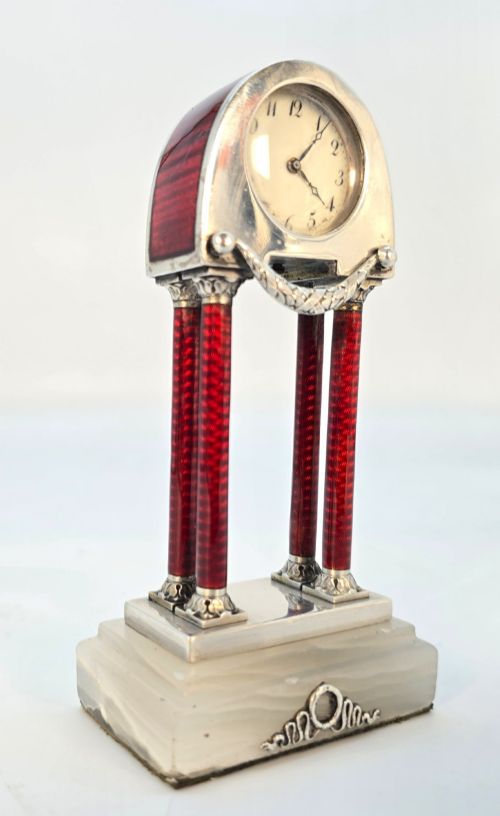
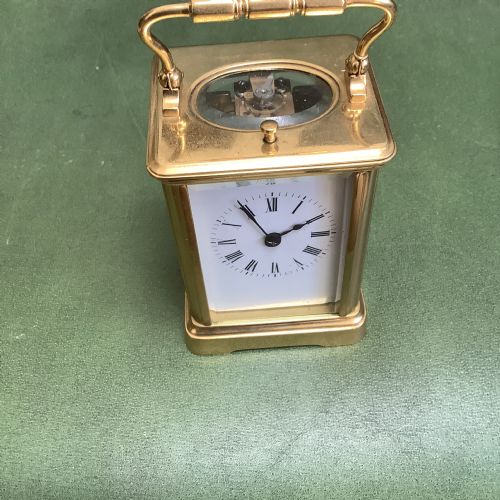
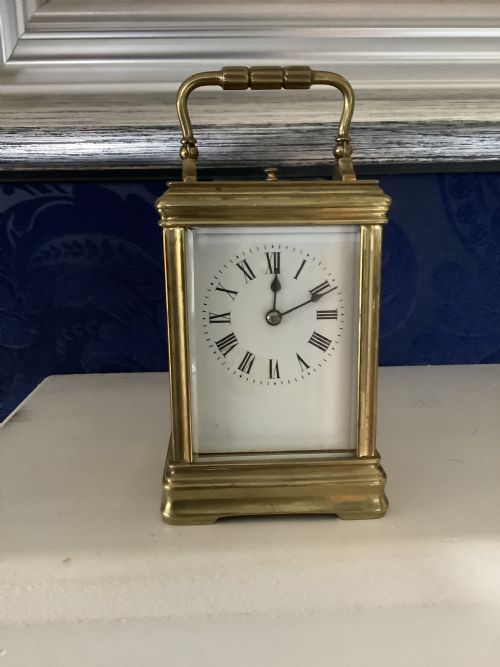
When you search for miniature enamel mantel clock, you encounter small timepieces designed for portable or desktop use during the Victorian, Edwardian, and late nineteenth-century periods. These objects take several distinct forms, including carriage clocks, boudoir timepieces, portico desk clocks, and bedside clocks.
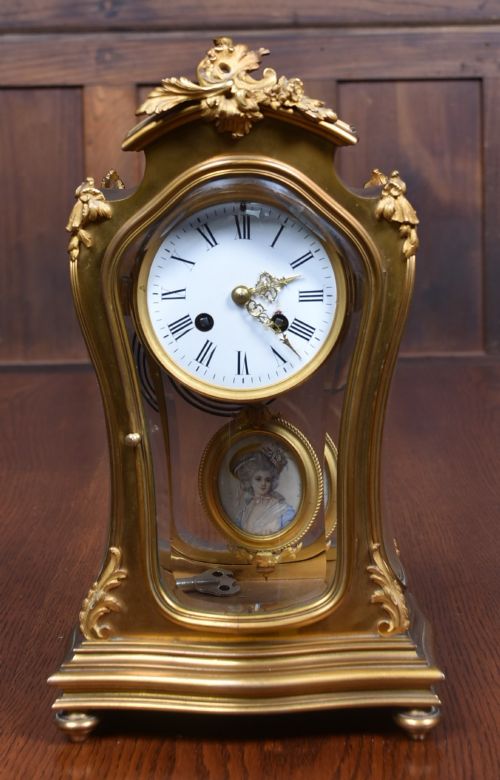
The pieces appearing on this page span British and continental workshops, with notable French and Viennese examples alongside London retailers. You will find items cased in brass, silver, and gilt bronze, often featuring detailed enamel dials or panels.
Forms range from simple architectural porticos to classic glass-panelled carriage cases and oval alarms. Each variant serves the dual purpose of a functional timekeeper and a decorative tabletop ornament.
How they were made
Maker workshops utilised durable metals such as brass, gilt bronze, and silver to construct sturdy structural cases that housed delicate mechanical movements. Artisans cast, chased, and engraved these metallic housings by hand to produce ornate surface textures and structural motifs.
Vitreous enamel was applied to dials and decorative panels, then fired at high temperatures to achieve smooth, permanent colour. Glass panels were fitted into brass frames to enclose the clockwork while allowing visibility of the escapement and hands from multiple angles.
Some tiny travelling clocks came with their own leather cases, ensuring they survived bumpy carriage rides without losing a minute.
What varies in quality
The standard of a miniature enamel mantel clock depends heavily on the crispness of the chasing and engraving upon the metal case. Superior examples display deep, sharp hand-carved detail rather than soft, mass-produced contours.
The execution of the enamel work further separates pieces, with flawless, evenly fired colour indicating superior craftsmanship. Furthermore, the presence of signed movements or named makers elevates the standing of an individual clock within its period.
Georg Adam Scheid·Richard Co·Henry Matthews·J C Vickery
The Miniature Enamel Mantel Clock Glossary
- Carriage clock
- A portable spring-driven timepiece originally designed for travelling by horse-drawn carriage. These clocks typically feature a rectangular brass case with glass panels and a swinging handle on top.
- Gilt brass
- Brass metal treated with a thin layer of gold wash or electroplating to impart a bright, reflective golden appearance. It provides the visual warmth of gold while maintaining the structural rigidity of brass.
- Portico clock
- A mantel clock designed with architectural supports resembling classical portico columns flanking the dial. This architectural style gained popularity across European workshops during the nineteenth century.
- Single fusee
- A mechanical movement employing a cone-shaped pulley connected to a chain or cord, designed to equalise the declining power of the mainspring as it unwinds. This mechanism improves timekeeping consistency throughout the running period.
- Boudoir timepiece
- A small clock intended for private domestic spaces such as a dressing room or bedroom. These pieces frequently incorporate decorative silver or enamel casing.
- Mignonette
- A term applied to particularly diminutive carriage clocks produced by French makers. They share the standard mechanics of larger pieces scaled down for intimate display.
Miniature Enamel Mantel Clock: Frequently Asked Questions
What is a miniature enamel mantel clock?
A small portable or desktop timekeeper housed in metal cases and decorated with fired enamel.
These pieces were produced during the nineteenth and early twentieth centuries for domestic use in bedrooms, studies, and boudoirs.
How do you wind a carriage clock?
Most carriage clocks are wound using a dedicated square-ended key inserted into an arbor on the backplate.
Care should be taken not to overwind the mainspring, turning the key steadily until resistance is felt.
Where were these clocks made?
Production centred primarily in France, Britain, and Austria during the Victorian and Edwardian eras.
French makers supplied many of the brass and gilt carriage models, while Viennese workshops specialised in detailed enamel and silver portico designs.
How do I care for antique enamel?
Enamel surfaces require gentle cleaning with a soft, dry cloth to remove dust without scratching the vitreous layer.
Contact with harsh chemicals or abrasive materials must be avoided to preserve the integrity of the coloured glaze.
What does eight day movement mean?
An eight day movement requires winding approximately once a week to maintain continuous operation.
This mechanical capability made nineteenth-century clocks more convenient for daily domestic routines than daily-wind alternatives.