
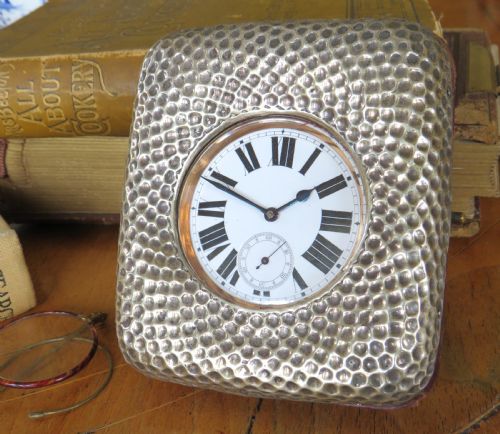


Edwardian Enamel Desk Clock
These edwardian enamel desk clock pieces bring together precision timekeeping and intricate metalwork, offering a refined addition to any desktop.
Edwardian Enamel Desk Clock
When you search for an edwardian enamel desk clock, you encounter portable and stationary timepieces spanning the late nineteenth and early twentieth centuries. These objects range from brass carriage clocks and silver boudoir pieces to pocket watch conversions and miniature portico designs.
The versions most likely to appear on this page originate from Edwardian workshops, alongside Victorian and Belle Epoque pieces from France, Britain, and Austria. They typically combine mechanical movements with decorative cases designed for travel or domestic desk use.
Materials and construction
Makers constructed these clocks using brass, sterling silver, nickel, and wood for the structural cases, often incorporating glass panels to reveal the internal movements. Enamel work, including guilloche and painted details, provides the colourful dials and decorative casing panels.
Movements rely on traditional brass and steel gear trains, sometimes driven by Swiss mechanisms or eight-day escapements. Silver cases frequently bear hallmarks indicating specific makers and assay offices, while pewter and gilt elements add further contrast.
Listings feature items spanning the Victorian, Edwardian, and Art Deco periods, utilising brass, silver, enamel, and glass.
Judging quality in desk clocks
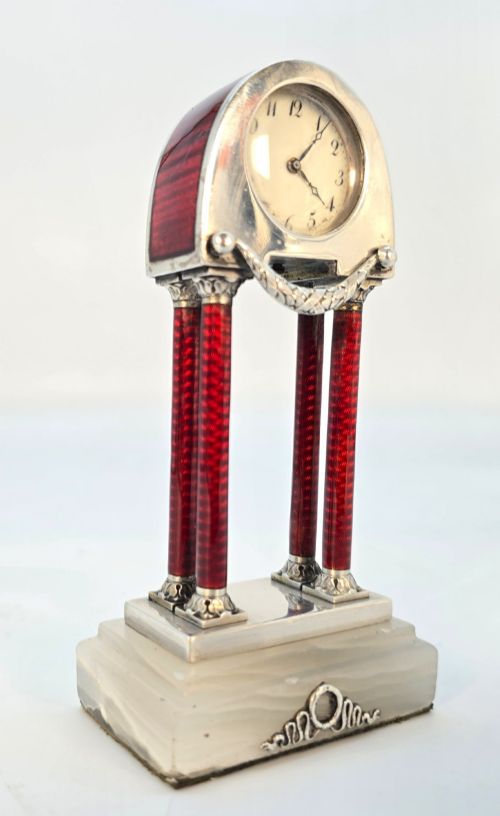
Quality rests primarily in the crispness of the enamel work and the refinement of the metal chassis. Fine examples display hand-painted floral motifs or flawless translucent guilloche enamel over engine-turned metal grounds without chips or hairline fractures.
The weight and finish of the outer case distinguish superior pieces, particularly when the brass or silver is heavily cast and meticulously chased. Movement sophistication, such as Swiss escapements and multi-day power reserves, also elevates a piece above standard production.
Georg Adam Scheid·Liberty and Co·Henry Matthews·J C Vickery London·James Grohe
The Edwardian Enamel Desk Clock Glossary
- Guilloche enamel
- A decorative technique where enamel is applied over a metal surface that has been machine-turned with intricate geometric patterns. This method allows light to reflect through the translucent colour layers.
- Carriage clock
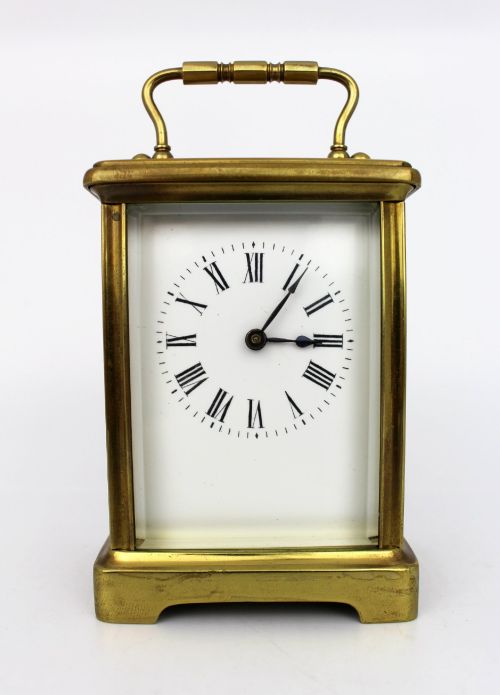
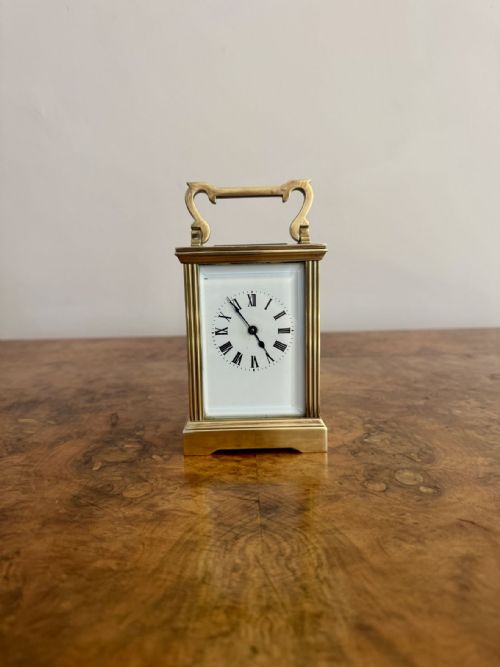
- A small, spring-driven clock originally designed for travel during the nineteenth century. These typically feature brass frames with bevelled glass panels and a carrying handle.
- Goliath pocket watch
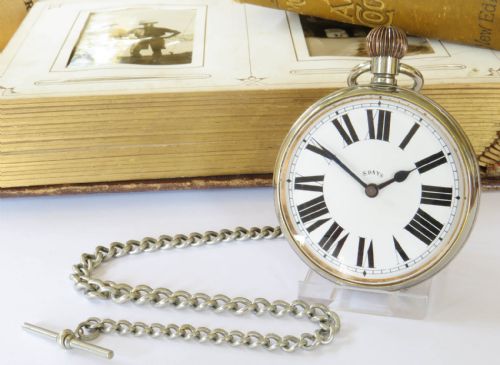
- An oversized pocket watch frequently housed in a dedicated travel case or desk stand to function as a desk clock. They usually feature robust eight-day movements.
- Crystal regulator
- A mantel clock featuring glass panels on all four sides that expose the mechanical movement suspended within. These often incorporate enamelled dials with painted decoration.
- Portico desk clock
- A small architectural timepiece styled after classical porticos with columns and pediments. They are frequently executed in silver with enamel accents.
Edwardian Enamel Desk Clock: Frequently Asked Questions
How do I wind an antique desk clock?
Most pieces utilise a small key inserted into the dial or back plate to tension the mainspring.
Care must be taken not to overwind the mechanism, stopping gently as resistance increases.
Were these clocks meant for travel?
Many carriage clocks and pocket watch conversions were built specifically for portability.
Sturdy brass cases and fitted leather travel boxes protected the delicate glass and enamel during transit.
How do I clean enamel clock faces?
Enamel surfaces require only a soft, dry microfibre cloth to remove dust and fingerprints.
Harsh chemical polishes must be kept away from enamelled areas to prevent surface scratching.
What is the difference between a timepiece and a clock?
In horological terms, a timepiece indicates hours and minutes without any striking mechanism.
A clock typically includes bells or gongs to sound the passing hours.