





Miniature Enamel Clock
These small timepieces combine metalwork and painted surfaces into portable treasures.
Miniature Enamel Clock
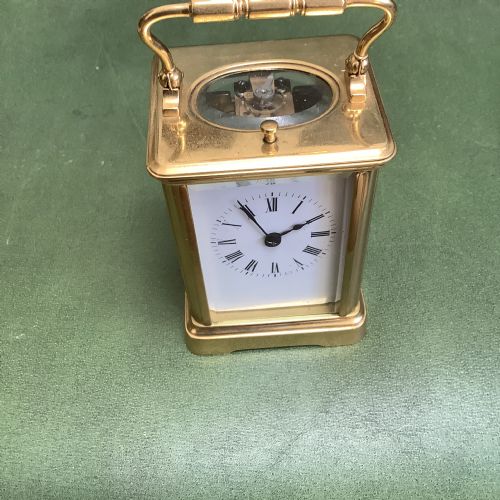
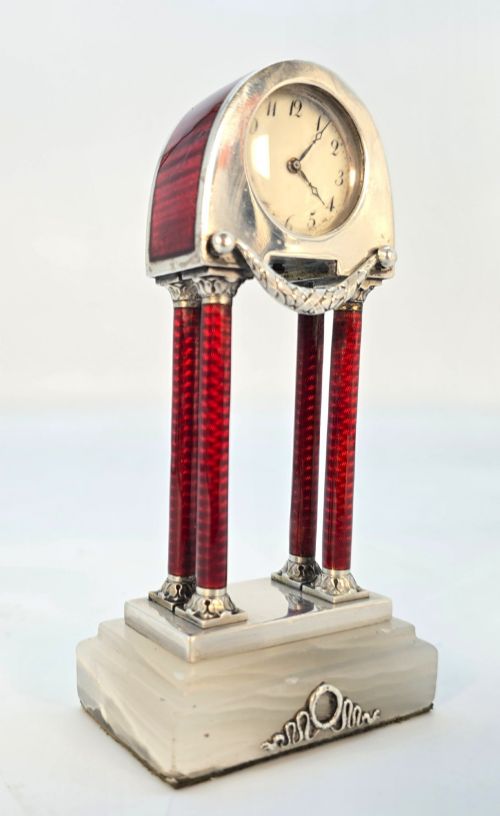
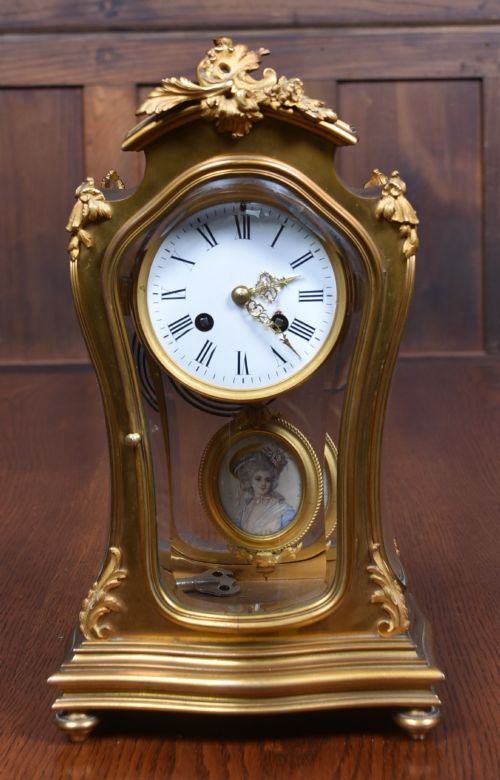
When someone searches for a miniature enamel clock antique, they are looking for small, portable timepieces housed in cases of brass, silver, or bronze, often decorated with colourful enamel work. These pieces span the Victorian, Edwardian, and Art Deco periods, originating primarily from French workshops, Vienna, and British makers.
The most common version to meet on this page is the brass or gilt brass carriage clock, alongside bedside travel clocks and silver boudoir timepieces featuring enamel dials or panels. Formats range from simple strut easel clocks to elaborate architectural carriage clocks with alarms and travelling cases.
Materials and construction
Makers utilised heavy cast brass, gilt bronze, and sterling silver to form the structural cases, often housing mechanical movements driven by springs or eight-day escapements. Glass panels protect the dial and expose the inner workings, while leather is occasionally used for fitted travelling cases.
Decorative surfaces rely on enamel techniques such as champlevé, guilloché, and painted Limoges panels fused onto metal bases. Engraving and chasing further embellish the gilt brass and silver housings, particularly on pieces from French and Viennese workshops.
Miniature Enamel Clock Retail Price Guide 2026
Typical asking prices for miniature enamel clock among the pieces listed under this phrase on Sellingantiques today, from the lower quarter to the upper quarter. They describe what is for sale here now, not the wider market.
The selection spans the nineteenth century through the Edwardian era, Art Deco period, and 1920s.
Quality differences in miniature clocks
The standard of a piece is determined by the crispness of the cast brass or silver work and the depth of the engraving on the case. Finer examples display meticulous hand-chasing and heavy gilding rather than simple pressed metal.
On the dial and panels, the quality of the enamel work dictates value, separating smooth, flawlessly fired surfaces from those with chips or hurried brushwork. Movement complexity, such as the inclusion of alarms, striking trains, or signed mechanisms, also separates standard items from exceptional ones.
Georg Adam Scheid·Richard co·Henry Matthews·J C Vickery
The Miniature Enamel Clock Glossary
- Champlevé
- A technique where troughs are hollowed out in the metal surface and filled with enamel powder before firing. This method creates bold patterns framed by thin lines of exposed metal.
- Guilloché
- A decorative mechanical technique that etches precise, intricate geometric patterns into a metal substrate. Translucent enamel is then applied over the pattern to allow the engraved design to catch the light.
- Carriage clock
- A small, spring-driven timepiece designed for travel, traditionally featuring a rectangular brass case with a glass top and a carrying handle. Many examples include a matching leather travelling case.
- Strut clock
- A timepiece supported by a hinged prop or stand at the back, allowing it to rest securely on a desk or dressing table. These often feature silver, enamel, or leather-backed frames.
- Ormolu
- Finely chopped gold applied to a bronze base using a mercury amalgamation process, yielding a rich, golden finish. It appears frequently on French nineteenth-century clock cases.
Miniature Enamel Clock: Frequently Asked Questions
Were these clocks meant for travel?
Many of these timepieces were specifically designed for journeys, as evidenced by their robust brass frames, protective glass panels, and original leather travelling cases. Their small scale allowed affluent travellers to maintain exact schedules while away from home.
Other formats, such as delicate silver boudoir pieces and strut clocks, were intended strictly for stationary placement on desks or dressing tables rather than transit.
How do I tell Edwardian from Victorian pieces?
Victorian examples often display heavy, ornate brass casting, elaborate rococo revival styling, and deep champlevé or engraved ornamentation. The proportions tend to be robust and architectural.
Edwardian pieces frequently embrace lighter silver cases, floral enamel motifs, or cleaner lines influenced by emerging twentieth-century tastes. Hallmarks and maker marks can also help pinpoint the exact decade of production.
How should I clean the enamel panels?
Enamel surfaces should be dusted gently with a soft, dry microfibre cloth to remove surface particles without scratching the vitrified glass layer. Moisture and harsh chemical cleaners must be avoided entirely.
Metal surrounds require separate, careful maintenance using appropriate cleaners that will not bleed onto or damage the delicate surrounding enamel work.