
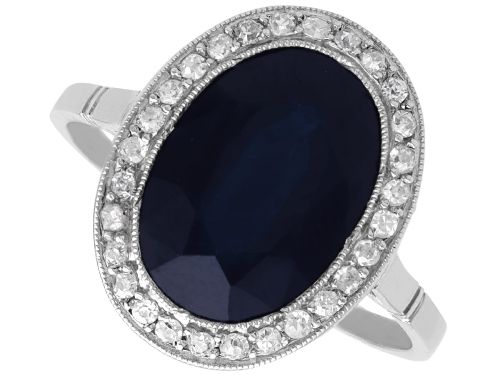
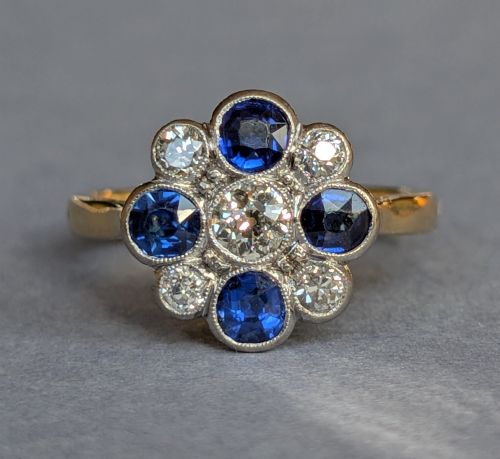
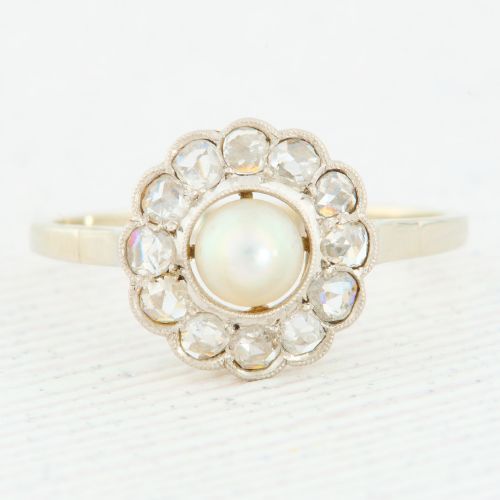


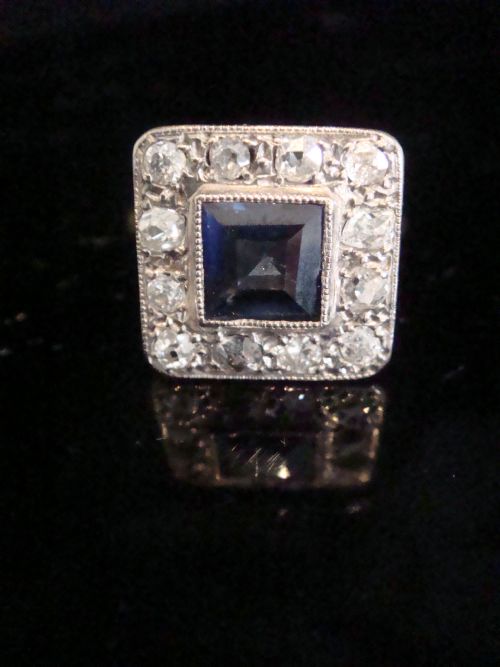


Millegrain Diamond Target Ring
A millegrain diamond target ring draws the eye with its concentric tiers of stones, offering brilliant geometry and enduring elegance.
Millegrain Diamond Target Ring
The pieces span the Edwardian era through the 1930s Art Deco period, alongside examples from 1900, 1940, and 1950. Art Deco and Edwardian designs set the aesthetic tone, pairing concentric arrangement with precise stone placement.
Most examples combine diamonds with platinum, 18ct gold, 18ct white gold, or 18ct yellow gold. Sapphires, natural pearls, emeralds, aquamarines, and synthetic sapphires frequently join the central diamond arrangements.
How they were made
Craftsmen built these rings using durable mountings of platinum and 18ct gold, including white and yellow variations, to securely hold old cut diamonds, rose diamonds, and calibre cut stones. Metals like platinum provided the strength needed for delicate claw settings and detailed edges.
The characteristic millegrain technique involves rolling a small textured wheel along the metal edges to produce a precise row of tiny raised beads. This textured border frames the gemstones, softening the transition from metal to stone and catching the light.
Listings feature platinum, 18ct gold, white gold, and yellow gold combined with diamonds, sapphires, emeralds, aquamarines, and pearls across Edwardian and Art Deco styles.
What varies in quality
Quality rests in the precision of the concentric tiers and the uniformity of the millegrain beadwork along the metal borders. Master jewellers maintained strict symmetry in circular, clover, and foliate cluster layouts, ensuring every stone sat in balanced relation to the centre.
The choice and cut of materials also set pieces apart, from old cut diamonds and calibre cut sapphires to natural pearls and emeralds. Higher tiers of work display careful matching of stone sizes and clear colour saturation in accompanying sapphires or emeralds.
The Millegrain Diamond Target Ring Glossary
- Millegrain
- A decorative technique featuring a raised line of tiny metal beads along the edge of a setting. This borders the stones and adds a subtle texture.
- Target ring
- A cluster ring design featuring concentric rings of stones around a central gem. The circular pattern resembles a shooting target.
- Old cut diamond
- A precursor to the modern brilliant cut, shaped by hand with fewer facets and a smaller table. These stones produce a softer, warmer candlelit sparkle.
- Calibre cut
- Gemstones specifically shaped and cut to fit tightly together in a geometric pattern. They often line the borders of Art Deco mountings.
- Pave set
- A method of setting numerous small stones close together with minimal visible metal. The surface appears paved with diamonds.
Millegrain Diamond Target Ring: Frequently Asked Questions
What is a target ring?
A target ring is a cluster design where a central gemstone sits within one or more concentric rings of contrasting or complementary stones. This concentric arrangement creates a bold visual focus on the finger.
Most examples date from the Edwardian and Art Deco periods, utilising platinum or 18ct gold to support the geometric tiers.
How do I wear a millegrain ring?
These rings work well as standalone statement pieces on the hand due to their intricate concentric borders and detailed metalwork. Their low profile in many cluster designs makes them suitable for daily wear.
When pairing with a wedding band, look for shaped bands that accommodate the circular or target cluster outline without damaging the millegrain edges.
How do I date an Edwardian ring?
Edwardian rings typically combine platinum settings with 18ct yellow or white gold, often incorporating old cut diamonds and natural pearls. The style leans towards delicate garland motifs and light airy metalwork.
Examining the underside construction and the specific cut of the diamonds helps separate Edwardian work from later 1930s Art Deco geometric designs.
What does millegrain mean?
Millegrain translates from French as a thousand grains, referring to the tiny beaded texture rolled into the platinum or gold edges of a setting. This decorative border frames the stones.
The technique gained popularity during the Edwardian and Art Deco eras to soften harsh metal lines and add refined detail to cluster rings.