



Military Officer Picture
A military officer picture captures individual service through periods ranging from Georgian portraiture to wartime illustration.
Military Officer Picture
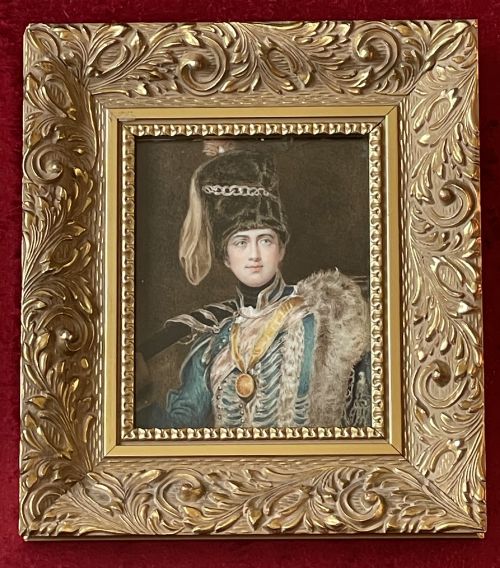
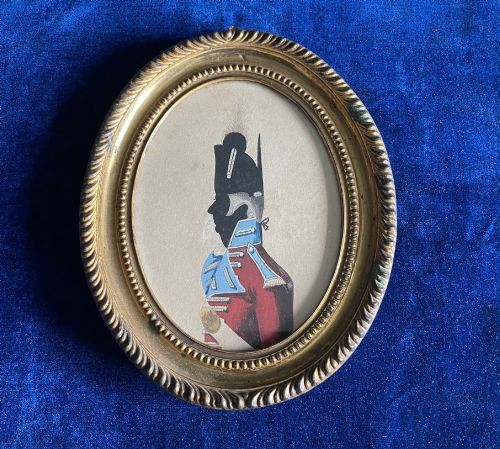
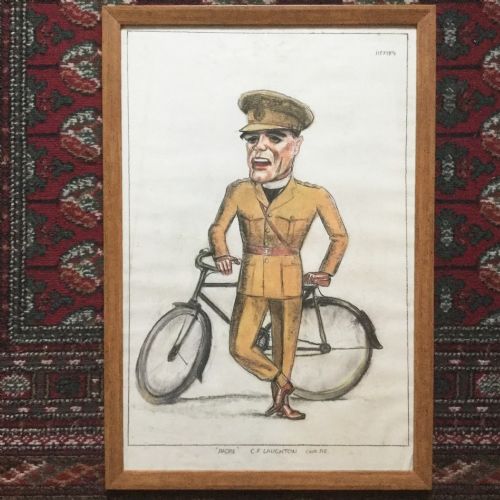
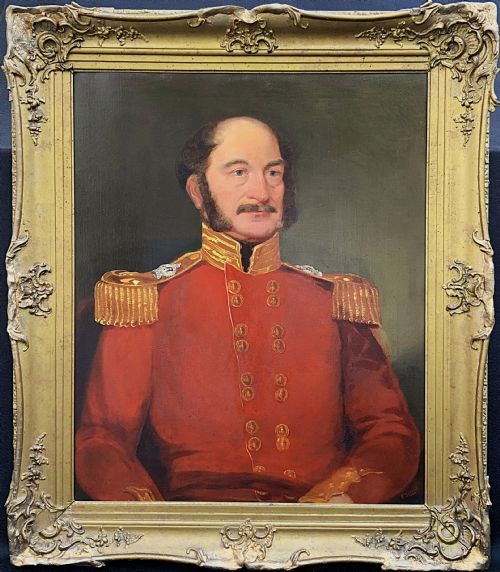
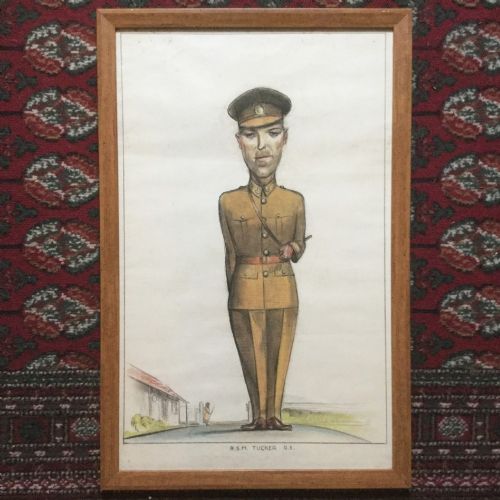
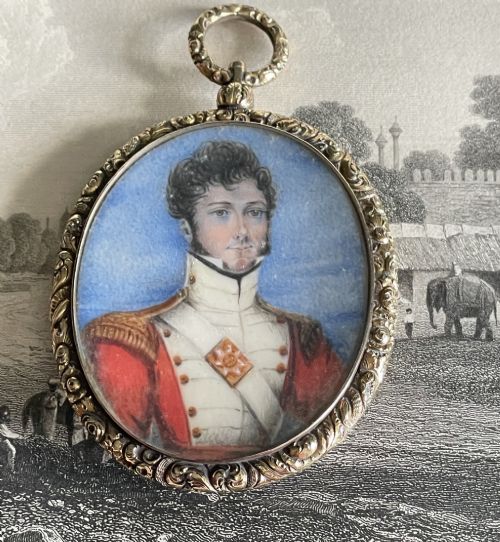
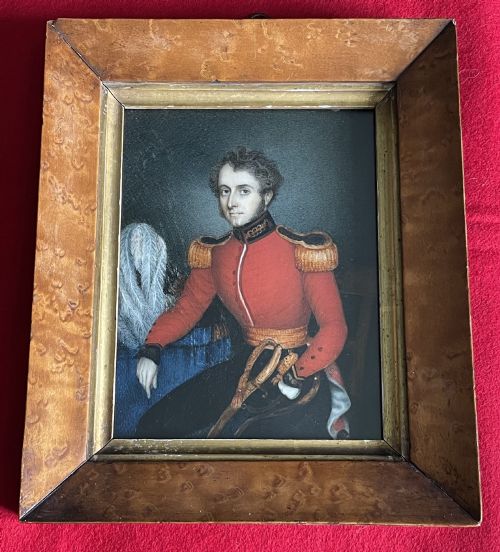
A military officer picture depicts commanding figures across centuries, spanning the eighteenth century through to the twentieth. These artworks preserve the likeness of officers from regiments, naval forces, and colonial postings in diverse formats.
The selections available here range from detailed miniature portraits and watercolours to large oil paintings on canvas and wartime pastel sketches. Each piece records the uniform, rank, and individual identity of the sitter within specific historical conflicts or periods.
Common representations include subjects from the Regency and Victorian eras alongside Anglo-Indian service personnel and twentieth-century commanders. Buyers encounter everything from formal framed oil portraits to intimate portrait miniatures framed behind glass.
Materials and methods
Artists relied upon oil on canvas, watercolour, pastel, and gouache applied to paper or wood panels. Frames frequently incorporate period wood and giltwood surrounds to house the works.
Early nineteenth-century pieces utilise fine miniature techniques on paper, whilst later twentieth-century examples employ rapid pastel and gouache sketching for wartime illustration.
Military Officer Picture Retail Price Guide 2026
Typical asking prices for military officer picture among the pieces listed under this phrase on Sellingantiques today, from the lower quarter to the upper quarter. They describe what is for sale here now, not the wider market.
Listings feature works spanning the eighteenth century, Regency, Victorian era, and 1940s wartime illustration.
Distinguishing quality
The preservation of the medium, whether oil pigment, delicate watercolour, or pastel, dictates the visual impact. Original framing matching the period also elevates the integrity of the piece.
Gerrit Schipper·Henry Wyatt·Wiliam Ousey Lindley
The Military Officer Picture Glossary
- Portrait miniature
- A small-scale painting executed on paper, vellum, or ivory, often housed in a protective case or frame. These intimate works required immense precision using fine brushes.
- Giltwood
- Wood carved and coated with gold leaf or a gold-coloured finish, commonly used for nineteenth-century picture frames. This material adds reflective warmth to the perimeter of the artwork.
- Gouache
- An opaque water-based paint that dries to a matte finish, frequently combined with pastel in twentieth-century sketches. It provides dense colour saturation compared to transparent watercolour.
- Regency
- A British stylistic period spanning the early nineteenth century defined by neoclassical elegance. Works from this era often display refined draughtsmanship and restrained palettes.
Military Officer Picture: Frequently Asked Questions
How do I date a military officer picture?
Dating relies heavily on uniform details, facial hair styles, and the cut of the tunic shown in the painting or photograph. Regimental insignia and medal ribbons also provide clues to the active service years of the sitter.
Physical indicators such as the framing materials, the type of paper or canvas support, and any written inscriptions on the reverse help confirm the precise period of creation.
Where were portrait miniatures displayed?
Portrait miniatures of military officers were designed to be carried personally, worn as lockets, or kept on small desk stands. Their portable nature allowed family members to keep the likeness of a deployed officer close.
Over time, many of these small works were placed into stationary wall frames for domestic display alongside larger oil paintings and framed drawings.
How should I care for a paper-based military picture?
Works executed on paper, including watercolours, pastels, and photographs, must be kept away from direct ultraviolet light to prevent fading. Framing with acid-free mount board protects the edges from degradation.
Maintaining a stable room temperature prevents moisture accumulation behind the glass, which can otherwise cause foxing or mould growth on historical paper supports.