


Military Officer Case
A military officer case brings tactile history to your desk or hall, offering sturdy construction designed for field service and distant travel.

Military Officer Case
A military officer case encompasses travel trunks, correspondence boxes, hat boxes, and scientific instruments made for active service from the Victorian era through the twentieth century. These pieces reflect the practical requirements of officers on campaign, combining robust utility with disciplined craftsmanship.
The selections available here range from toleware tin hat boxes and black leather correspondence cases to precision compasses and telescopes housed in fitted leather. Victorian and Edwardian examples predominate, alongside pieces from the First World War and later periods.
Forms vary from rigid leather travel trunks by makers such as Drew and Sons or Allen of London to cylindrical toleware hat boxes designed to protect bicorn or service caps in transit.
Materials and construction
Makers utilised durable materials such as thick cowhide leather, heavy toleware tin, and solid brass mounts to withstand the rigours of military transport. Wood frames provide the structural core for larger trunks and correspondence boxes, whilst glass and brass form the essential components of optical instruments and compasses.
Surfaces show painted finishes, notably on toleware hat boxes, alongside hand-stitched leather seams and brass carrying handles designed for reliable field use. Internal fittings often include wooden blocks, fabric linings, or tailored leather straps to secure delicate contents during movement.
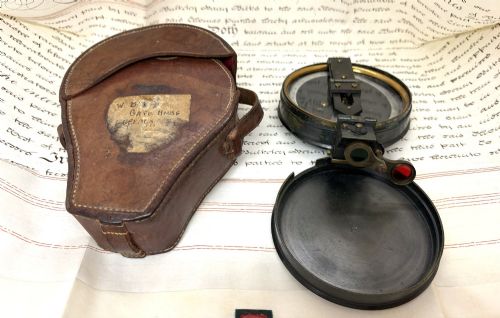
Several items retain named inscriptions, preserving the forgotten journeys of nineteenth-century officers.
Assessing quality and origin
Quality in a military officer case is visible in the integrity of the structural materials, the weight of the brass hardware, and the precision of fitted internal components. Pieces bearing the stamp of established London outfitters demonstrate superior workshop standards.
Condition and completeness distinguish individual examples, particularly when original leather straps, interior paper labels, or matching outer cases remain intact. The presence of named inscriptions or documented provenance adds historical context to the physical object.
French Ltd·P. Orr, Madras·Hawkes & Co·Drew & Sons·Allen of London
The Military Officer Case Glossary
- Toleware
- Lacquered or enamelled metalware, typically tin, used here for rigid hat boxes that resisted moisture and dust during transport.
- Bicorn
- A historical form of cocked hat worn by officers, requiring specialised cylindrical or shaped containers for preservation.
- Campaign case
- Portable luggage and storage equipment constructed to withstand the demands of military relocation and field operations.
- Prismatic compass
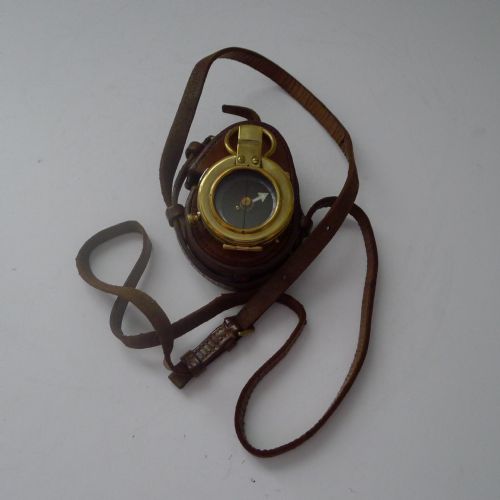
- A navigational instrument incorporating a prism to allow the user to take simultaneous bearings of objects, frequently utilised by officers in the field.
- Verner's Pattern
- A standard military design of compass widely issued to British Army officers during the early twentieth century.
Military Officer Case: Frequently Asked Questions
What periods do these pieces date from?
The listings span the Victorian era through the early decades of the twentieth century, including pieces marked by nineteenth-century dates and First World War eras.
Design characteristics align with the prevailing manufacturing standards of each decade, from mid-Victorian leatherwork to standardised twentieth-century military equipment.
How were these cases used on campaign?
Officers utilised these items to transport personal correspondence, uniforms, hats, and navigational instruments across varied terrains and climates.
Sturdy materials protected sensitive items like glass lenses and paper documents from dust, moisture, and rough handling during transit.
How do I identify a maker's mark?
Maker details generally appear as stamped impressions on leather surfaces, paper labels glued to interiors, or engraved inscriptions on brass instrument plates.
Prominent outfitters often signed their work to signal quality to military personnel purchasing private kit.
Are compasses and telescopes still functional?
Many optical instruments and compasses retain their mechanical components and usable lenses, though they are primarily valued as historical artefacts.
Internal prisms and dials reflect the manufacturing tolerances required for active military navigation.