


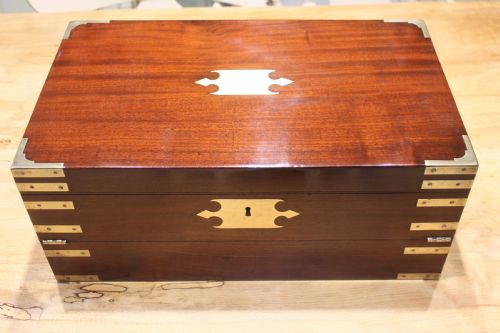

Military Campaign Desk Box
A military campaign desk box is a portable field writing desk built for officers on the move, combining brass mounts and folding sections for rugged travel.
Military Campaign Desk Box
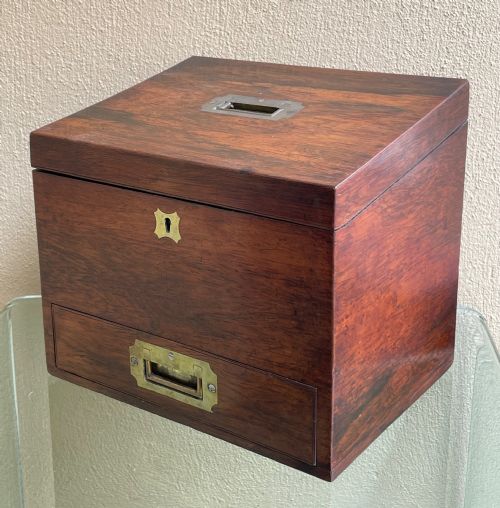
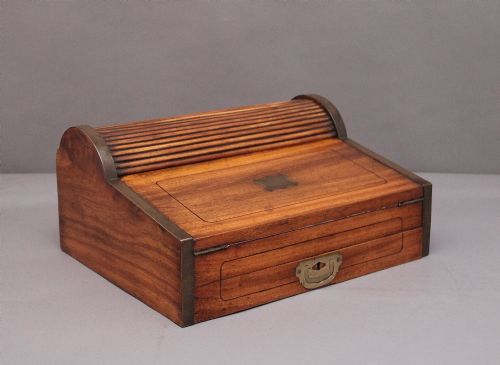
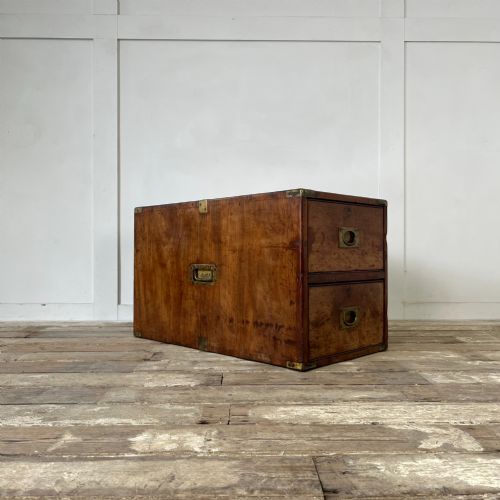
A military campaign desk box is a portable writing station designed for officers on active service, offering secure storage for correspondence and documents while travelling. When you browse this selection, you encounter forms ranging from folding writing slopes and lap desks to desktop storage chests and correspondence boxes.
The pieces appearing here span the Georgian, Regency, and Victorian periods, alongside later examples up to the early twentieth century. Mahogany, camphor wood, and rosewood form the main body of these pieces, often fitted with compartments for stationery and secret drawers.
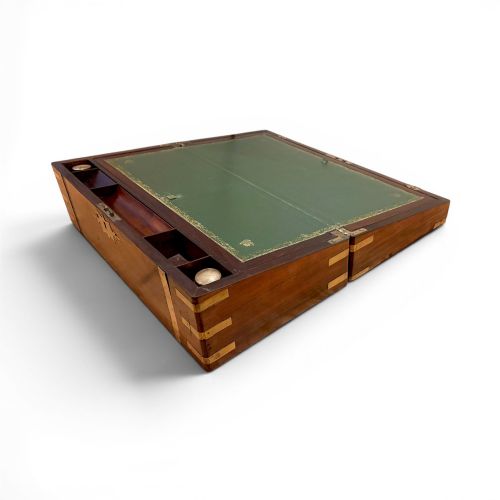
Among the variations available, mahogany writing slopes bound in brass corners and strapwork appear most frequently. You also find camphor wood boxes suited for colonial service, alongside folding desks featuring leather writing surfaces and candle sconces.
Materials and Construction
Cabinet makers built these boxes from dense timbers like mahogany, rosewood, and camphor wood to withstand the rigours of transit. These woods were chosen for stability and resilience in fluctuating climates during military operations.
Brass corners, strapwork, and flush-fitting drop handles reinforced the structural joints and protected the edges from heavy impacts. Internal fittings included secret drawers, pen trays, and fitted compartments lined with leather for field administration.
Listings feature mahogany, camphor wood, rosewood, and teak, reflecting the global reach of nineteenth-century military operations.
Indicators of Quality
Quality rests in the precision of the brass work and the tightness of the joinery, which ensured the wood did not warp in transit. Superior examples display carefully fitted interior compartments, secret drawers that operate smoothly, and original working locks with keys.
The choice of timber also defines the grade of the piece, with figured mahogany, burr veneers, and fragrant camphor wood marking out finer commissions. Simpler utilitarian boxes lack the decorative brass banding and elaborate internal stationery fittings found on officer-grade pieces.
The Military Campaign Desk Box Glossary
- Writing slope
- A portable box with a hinged sloping lid that folds down to form a writing surface. Inside, compartments hold inkwells, pens, and paper.
- Campaign box
- A portable container made for military officers on the move, typically reinforced with brass corners and flush handles to resist damage.
- Camphor wood
- An aromatic hardwood native to Asia, frequently used for colonial campaign furniture because its natural scent repelled insects.
- Secret drawer
- A concealed compartment hidden behind removable panels or triggered by a secret catch, used for storing valuables.
- Brass bound
- Furniture reinforced with brass strips and corner pieces screwed into the wood to protect edges from heavy knocks during travel.
Military Campaign Desk Box: Frequently Asked Questions
What is a military campaign desk box?
A military campaign desk box is a portable writing chest used by officers on active service to store stationery and write letters while away from permanent headquarters.
These boxes feature folding surfaces, internal compartments, and protective brass mounts designed to withstand frequent transport.
How were these boxes used in the field?
Officers used them as mobile desks for writing dispatches, keeping records, and managing correspondence during military campaigns.
The fitted interior held ink, pens, and paper securely while closed for travel.
How do I date a campaign box?
Dating relies on timber choices, brass hardware styles, and construction methods spanning the Georgian, Regency, and Victorian eras.
Earlier pieces often use plain mahogany with simple mounts, while mid-Victorian examples frequently feature camphor wood and more elaborate brass strapwork.
Why are some boxes made of camphor wood?
Camphor wood was utilised for boxes destined for colonial service because its natural aroma deterred moths and insects.
This timber held up well in humid climates encountered by British forces abroad.