



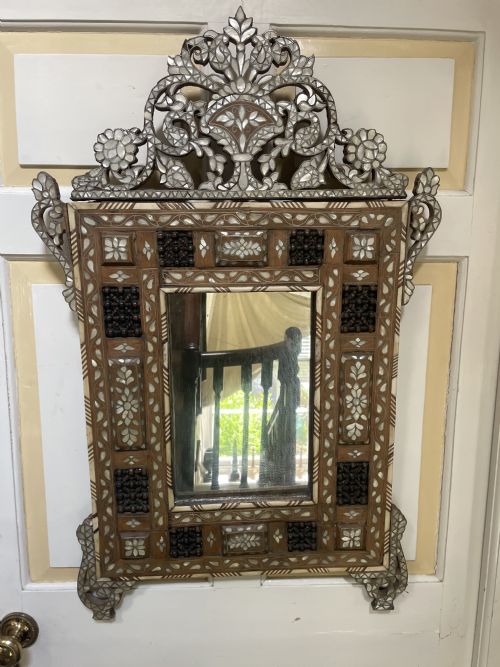


Middle Eastern Wall Hanging
These middle eastern wall hanging selections bring intricate textile panels, hammered chargers and inlaid wooden frames directly from regional workshops into domestic spaces.
Middle Eastern Wall Hanging
A middle eastern wall hanging spans embroidered silk textiles, block-printed cloths, and heavy metal chargers designed to be mounted for display. Buyers searching this term encounter everything from nomadic saddle-bags and velvet coverlets to intricately carved wooden frames housing mirrors.
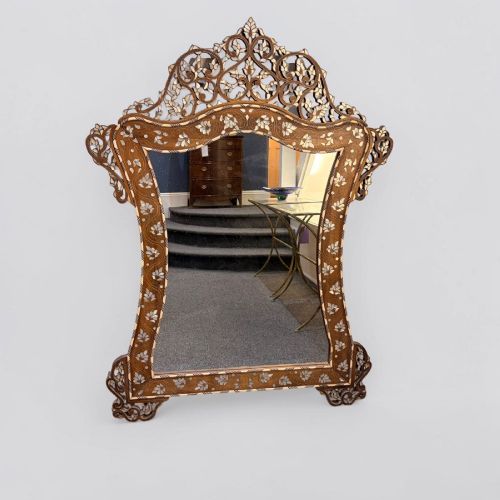
The selection leans heavily on late nineteenth-century and early twentieth-century examples originating from Persian, Syrian, and Egyptian traditions. Walnut and fruitwood frames inlaid with mother of pearl and bone sit alongside hammered copper vessels and delicate felt embroideries.
Textiles form a major part of these offerings, including Qajar block-printed cloths and Ottoman metal-thread coverlets. These diverse objects share a common history of ornamental wall display and domestic adornment across the Middle East.
Materials and technique
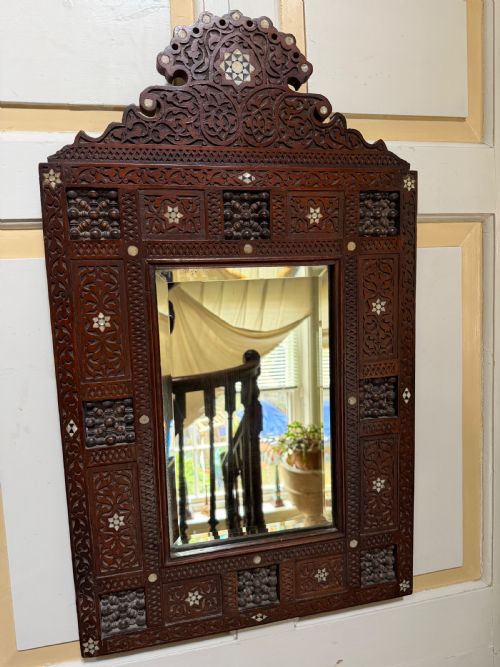
Makers utilised walnut, fruitwood, and hardwoods as the structural foundation for carved frames and mirrors, often integrating turned mashrabiya panels. Surfaces were decorated with detailed inlay work using nacre-shell, mother of pearl, and bone.
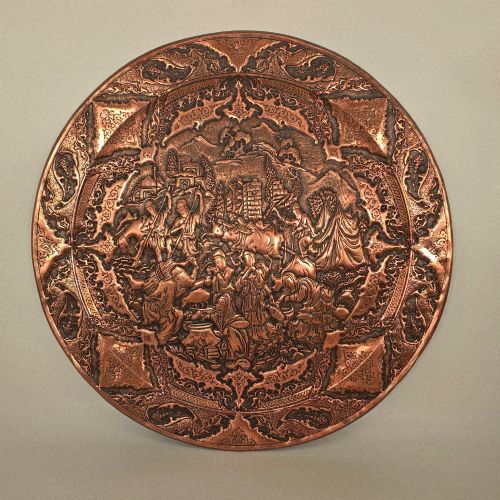
Metalwork pieces rely on copper and brass shaped into large chargers and trays. Artisans employed engraved repoussé techniques to hammer complex decorative patterns directly into the metal surface.
Textile works combine natural fibres like cotton, silk, and felt with metallic thread. Techniques range from delicate Rasht embroidery to block printing and painting on fabric.
Middle Eastern Wall Hanging Retail Price Guide 2026
Typical asking prices for middle eastern wall hanging among the pieces listed under this phrase on Sellingantiques today, from the lower quarter to the upper quarter. They describe what is for sale here now, not the wider market.
Materials in these listings span walnut, glass, mother of pearl, copper, brass, cotton, silver, and silk.
Quality variations
The distinction between standard and superior pieces rests on the complexity and precision of the handwork. Inlaid wooden frames show quality through the density and tightness of the nacre-shell and bone geometric patterns.
Metal chargers demonstrate excellence in the depth and clarity of the engraved repoussé work across the surface. Textile panels reveal their standing through the fineness of the silk needlework and the preservation of metallic threads.
The Middle Eastern Wall Hanging Glossary
- Repoussé
- A metalworking technique where the artisan hammers the design from the reverse side to form a raised pattern on the front. This method creates depth and texture on copper and brass chargers.
- Mashrabiya
- An architectural element of turned wooden lattice panels used in window screens and furniture frames. In these mirrors, it provides intricate geometric ventilation and visual screening.
- Nacre-shell
- Iridescent inner layer of mollusc shells used for decorative inlay. Artisans cut this material into tiny geometric tiles for wooden frames.
- Rasht embroidery
- A traditional Persian textile art involving chain-stitch embroidery on felt or wool backings. These panels typically feature dense floral medallions and intricate borders.
- Qajar
- Pertaining to the Iranian dynasty ruling from the late eighteenth to the early twentieth century. Objects from this era often display distinct block-printed and painted textile designs.
Middle Eastern Wall Hanging: Frequently Asked Questions
How do I hang a heavy copper charger safely?
Metal chargers require sturdy wall fixings that can support the weight of solid copper or brass. Utilise a secure wire bracket or display hanger designed specifically for heavy plates to distribute the load evenly.
Ensure the mounting anchor is fixed directly into wall studs or uses appropriate cavity wall plugs. Avoid hanging these pieces in areas with high moisture or direct sunlight to protect the metal surface.
How should I clean an inlaid wooden frame?
Wooden frames with mother of pearl and bone inlay need gentle maintenance using a soft, dry cloth to remove dust. Avoid chemical polishes and liquid cleaners that can loosen delicate shell pieces or damage the wood.
If the wood requires nourishment, apply a minimal amount of appropriate furniture wax using a clean cloth. Work carefully around the inlaid sections to prevent residue buildup in the recesses.
Are these textile panels fragile?
Historical textiles composed of silk, cotton, and felt require careful handling due to their age. Direct sunlight will fade natural dyes and weaken silk threads over time.
Mount these fabrics away from heat sources and high-traffic zones where they might catch. Professional framing behind UV-filtering glass offers the best protection for display.
What defines Egyptian Cairo Ware?
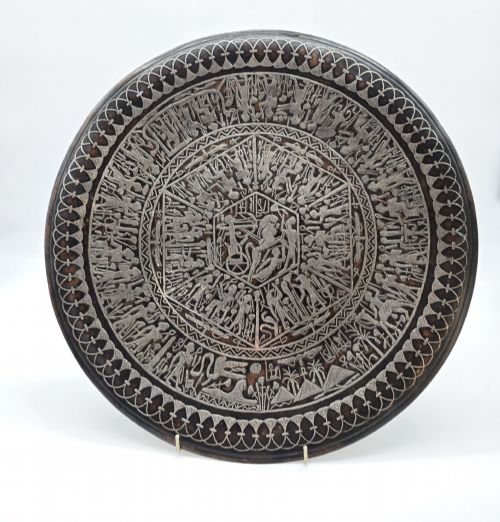
Cairo Ware typically refers to metalwork produced in Egypt around the turn of the twentieth century, often featuring inlaid silver or copper details on brass or bronze bases. These objects display traditional Islamic geometric and calligraphy motifs.
Craftsmen in Cairo workshops created these decorative vessels and chargers for both local use and the export market. The craftsmanship combines traditional hammering with mixed-metal inlay techniques.