



Middle Eastern Oil Painting
A middle eastern oil painting brings warmth and a distinct sense of place into a room through rich pigments and evocative regional subjects.
Middle Eastern Oil Painting
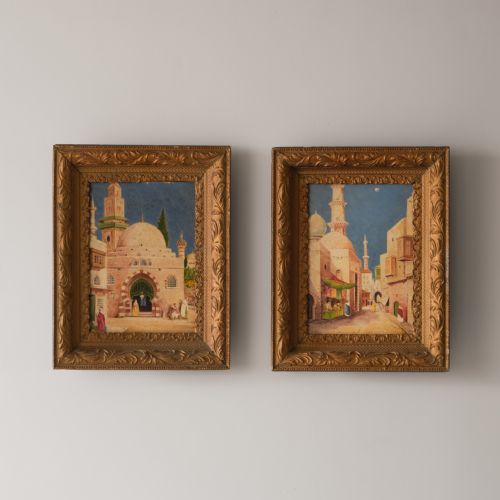
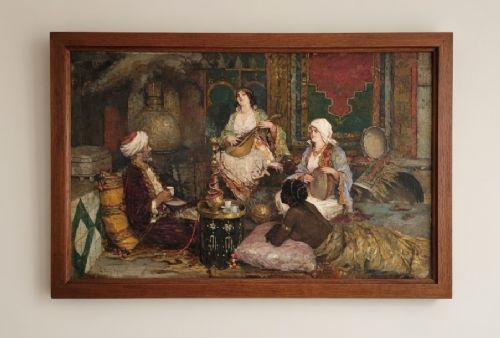
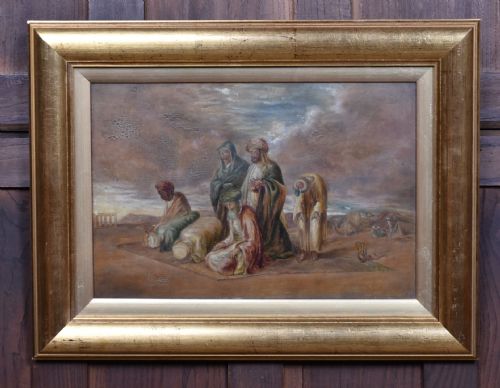
A middle eastern oil painting spans several distinct eras and aesthetic movements, from nineteenth-century Orientalism to mid-century impressionism and naive works. Buyers encounter depictions of deserts, village scenes, traditional figures, and architectural landmarks.
The selections on this page range from nineteenth-century academic canvases to early twentieth-century portraits and mid-century townscapes. These works capture the light, atmosphere, and daily life of the region through varied artistic interpretations.
Works in this category include both framed paintings on canvas and pieces executed on wooden board. Many carry the signatures of notable international and regional artists who recorded their travels and heritage.
How they were made
Artists built these compositions using oil paint and oil pigment applied to prepared canvas or wooden board surfaces. The medium allows for smooth blending of desert skies and textured rendering of local attire and architecture.
Many works retain their original frames, often constructed from wood and finished in gilt wood to complement the palette of the painting. The combination of durable ground materials and stable oil paint ensures the longevity of these regional scenes.
Camels occasionally appear as uncredited co-stars in desert landscapes, maintaining a dignified calm while artists struggle with blowing sand and shifting light.
What varies in quality
The strength of a middle eastern oil painting rests in the confidence of the brushwork and the artist's ability to render light and atmosphere convincingly. Stronger examples display thoughtful composition and precise handling of pigment, whereas simpler naive works rely on direct charm and regional character.
Framing and material support also differentiate pieces within the range. Works executed on canvas or stable wooden boards paired with period gilt wood frames generally represent the more substantial end of the spectrum.
Gabriel Puig Roda·William James Muller·V. Zirakian·Hugo Vogel·Abdul Kadir Al Rassam·Richard Wilson
The Middle Eastern Oil Painting Glossary
- Orientalism
- Artistic style focusing on Middle Eastern and North African subjects, typically produced by European artists travelling in the region. This tradition emphasises local colour, bustling markets, and desert landscapes.
- Qajar Dynasty
- Iranian artistic period spanning the late eighteenth to early twentieth centuries, known for distinct portraiture and narrative painting styles. Works from this tradition often feature fine detail and rich courtly pigments.
- Oil Paint
- Slow-drying medium consisting of pigments suspended in a drying oil, commonly linseed. It permits subtle blending and rich impasto effects across canvas and board supports.
- Gilt Wood
- Timber frame treated with a thin layer of gold leaf or metallic gilt finish. These frames frequently accompany nineteenth and twentieth-century paintings to enhance the visual depth of the artwork.
Middle Eastern Oil Painting: Frequently Asked Questions
How do I care for an oil painting?
Keep the artwork away from direct sunlight and dramatic fluctuations in temperature or humidity. Dust the surface gently with a soft, dry brush without applying pressure to the pigment.
Avoid using liquid cleaners or water on the canvas or board. Professional framing with conservation glass helps protect the paint layer over time.
What periods do these paintings cover?
The available selection spans from the eighteenth century through the nineteenth century and into the mid-twentieth century. Each era brings distinct stylistic approaches, from academic Orientalism to regional impressionism.
Nineteenth-century works often reflect European travel traditions or early local academies, while mid-century pieces capture evolving modern perspectives in towns and villages.
Are these paintings on canvas or board?
Artists utilised both traditional stretched canvas and wooden board as supports for their oil pigments. Each material responds differently to age, with boards offering a rigid surface and canvases providing traditional textile flexibility.
Both supports were widely used across different decades and regional schools, depending on the artist's preference and portability needs.
How do I identify a naive painting?
Naive works typically feature simplified perspectives, direct brushwork, and an unpretentious approach to form and scale. They are created outside formal academic training traditions, offering an honest and charming view of local life.
These pieces often focus on specific regional subjects like old townscapes or desert scenes, rendered with vibrant local colour rather than strict academic rules.